Robert Groesbeck, Co-CEO, Planet 13 (CSE:PLTH)
Robert Groesbeck is the Co-CEO of Planet 13 Holdings, a publicly traded (CSE:PLTH) (OTCQB:PLNHF) vertically integrated national cannabis company based in Nevada.
The company’s 112,000-square-foot Las Vegas dispensary is the largest world’s largest cannabis superstore and entertainment complex. Planet 13 has award-winning cultivation, production and dispensary operations in Las Vegas and dispensary operations in Orange County, California.
Mr. Groesbeck has been in the Las Vegas area for the majority of his life. He has been a long-time entrepreneur, starting and/or assisting in the creation of a number of businesses.
Mr. Groesbeck was designated as one of the top forty Southern Nevada Business Executives under the age of forty, on the basis of his professional achievement and community service by the Las Vegas Business Press.
Mr. Groesbeck has extensive experience in the legal field. He has practiced law for over 25 years and has knowledge about multiple aspects of the law.
He also served as the Mayor of the City of Henderson from 1993 to 1997.
Mr. Groesbeck earned his B.S. in Criminal Justice from the University of Nevada, an MBA from National University and a J.D. from Western Michigan University.
In this 2,991 word interview, exclusively in the Wall Street Transcript, the Planet 13 (CSE:PLTH) executtive Mr. Groesbeck details the start up and strategic positioning of the modern marijuana public company.
“We looked at it like Nevada in the 1930s when gambling became legal. It was something that only happens once in a lifetime.
Same with alcohol when it came off prohibition. And there were a lot of challenges. It was new for everybody, but similar to cannabis.
And we thought, “Hey, let’s give it a shot.” And if we’re going to do it, we’re going to go all the way and do something special…We didn’t know pesky things like 280E of the Internal Revenue Code and the banking challenges of running a cash business — none of that was on our radar screen back then.”
The Planet 13 (CSE:PLTH) CEO Robert Groesbeck describes his company’s capabilities:
“…We’re an integrated cannabis company.
So we specialize in all things marijuana. And as a vertical operator, we grow products.
We have a large manufacturing facility. And through that facility, we sell all types of products, including vape pens, shatters, infused drinks, infused chocolates, and gummies.
So pretty much anything that can be infused with cannabis, we’re interested in taking a look at.
If it’s something that our customers and the customers that we wholesale to enjoy and like, we try to make a product that fits with their desire.”
Planet 13 has a lead product that Robert Groesbeck describes:
“It’s a peanut butter-infused chocolate square and we knew from our R&D and all the testing we did internally that we had something special, because one of the things with THC products, infused products in particular, there’s a tendency to have a pretty strong aftertaste.
And this particular product line has none. And our customers really enjoy that. It’s a high-quality chocolate and peanut butter.
And again, no aftertaste. So it’s really been received well by the public.”
The COVID 19 pandemic created an early challenge for Planet 13 (CSE:PLTH) and Mr. Groesbeck responded:
“…It was March of 2020 — we were basically given 24 hours to shut the facility down.
And to give you an idea, at our superstore in Las Vegas, at the time probably 85% of our customers were tourists. And so literally overnight that market went away.
The storefront was closed, and we were fortunate that in Nevada, we were deemed an essential business and that allowed us initially limited opportunities to do delivery and then later, curbside pickup. But without that delivery option, we would have been forced to shut down completely.
It was dramatic.
Prior to COVID, I think we had three delivery vehicles. It was a very limited operation. So during the shutdown, we went out and secured an additional 30 vehicles, and built up a very robust delivery platform within about 45 days to the point we were serving upwards of 1,000 customers a day through delivery only.
So it was a really stark pivot for us to go from a retail storefront to a delivery-only platform.
That was a true testament to our team and the desire to adapt and make it happen.
The other alternative for us would have been just to close the doors and reopen when the markets improved, but that wasn’t an option.
We had several hundred employees on payroll, and we wanted everybody employed during the pandemic, and we did.”
Planet 13 has identified a new growth market and Robert Groesbeck has aggressive plans:
“I think Florida is a huge market. It’s got some medical market only now, but you’ve got probably close to 600,000 card holders.
You have a state with a population of a little over 21 million people and then you’ve got well over 100 million tourists coming through the state, whether that’s in Orlando metro, Miami metro, or over into Tampa.
So there’s a huge upside for tourism. So it’s a natural fit for what we want to do.
And in Florida, of course, cannabis companies are required to be vertically integrated, which we’re very comfortable with, because we do a lot of growing and manufacturing.
We thought it made perfect sense for us to go in there and really build out a retail platform that right now is non-superstore, more of our neighborhood concept like our Medizin dispensary in Las Vegas.
And we’ll identify sites that are appropriate for superstores when Florida transitions to adult use.”
Robert Groesbeck identifies the “Superstore” as a key Planet 13 differentiation:
“Originally, we were just a superstore model; we were a single-store operator.
Now we’ve moved into California. We’ll be in Florida as you mentioned earlier. We’ll be in Illinois too.
Originally our goal was just to do superstores and do a handful of those throughout the country in large, urban, metro areas that have large tourist draws.
We’re going to continue to push the superstore brand, but we’re also going to go into these select markets with a more of what we call a neighborhood or a traditional dispensary store, smaller footprint, in that 2,500-square-foot range. So that’s our plan.
It’s worked well.
That’s really what differentiates us, though, from most of the competition. We’re really the only operator in the space that really built facilities of this magnitude.
And I’m sure there will be others that will follow and that’s to be expected, but we’re going to continue to focus on what we do best.”
Get the complete Planet 13 Holdings (CSE:PLTH) growth strategy by reading the entire 2,991 word interview with Robert Groesbeck, exclusively in the Wall Street Transcript.

John Buckingham, Principal and Portfolio Manager, Kovitz
John Buckingham is Principal and Portfolio Manager at Kovitz. He began working at AFAM Capital in 1987 and Kovitz in 2018, as part of the Kovitz acquisition of AFAM.
He has more than 30 years of investment management experience and is Editor of The Prudent Speculator. He chairs the California Investment Team.
In this 4,608 word interview, exclusively in the Wall Street Transcript, John Buckingham details his investing philosophy and top stock picks for the rest of 2021 and into 2022.
“Kovitz is a wealth management firm providing asset management, financial planning, retirement projections — pretty much the full gamut of anything that a high net worth client would need. The firm has more than $7 billion of assets under management.
My operation is based in Orange County, California. We oversee about $875 million of the firm-wide assets. Our strategies are value oriented. We’ve been implementing them since 1990 — so, more than three decades.
And the principles, if you will, that we follow are espoused in The Prudent Speculator investment newsletter.
…We are very much value driven. We strive to find investments, of course, that will appreciate in value over time.
We try to buy stocks at a discount to what we perceive to be their true worth. We take a very long-term view of things. We’re looking at three years to five years or longer in our holding period.
We are not market timers.
We don’t try to navigate the ups and downs by making significant asset allocation shifts. We do not believe that investors can time the market and we think it’s far better to have portfolios positioned across asset allocation mixes properly, in advance of the inevitable volatility that folks will see.”
John Buckingham is a bull on dividend stocks in the current economy:
“…We think that dividends are extraordinarily attractive in the current low interest rate environment. And we like that our portfolios are yielding, in some instances, more than what you could get on a fixed-income strategy.
And of course, with fixed income, the definition is sort of fixed, meaning your coupon payments are not likely to change over time. But the nice thing with dividends — no guarantees of course — is that dividends have historically grown over time.
And so, we very much think that dividend-paying stocks are extraordinarily attractive, especially in this environment.”
John Buckingham details some of his dividend stock picks.
“…On the dividend theme, is inexpensive names with dividend yields in excess of the 30-year U.S. Treasury yield.
The 10-year U.S. Treasury, of course, is a benchmark that many people will compare their yields or income opportunities to. So the 10-year is at 1.6% or so, and the 30-year is higher than that at 2.1%. So, we have dividend payers that are yielding well in excess of 2% and have reasonable valuations. I’ll give you those.
One is the health care provider CVS Health (NYSE:CVS). There, we have a forward, that is, next-12-months — NTM — p/e of 11 and a dividend yield of 2.4%. And with all of these names, we think earnings are likely to grow over time.
It’s not like we’re buying something that we’re not expecting the “E” portion of the p/e to be stagnant. We expect it to grow. And obviously, if the “E” grows and the “P” doesn’t grow, then your p/e becomes lower.
But if the “P” grows along with the “E,” then your 11 multiple can stay 11 and you can still do well. We think it deserves to trade for more than 11 times earnings. So we think we will get a p/e expansion out of some of these stocks in addition to the “E” continuing to grow. And by the way, we get a nice dividend yield too.
Another name in that theme is Whirlpool (NYSE:WHR), which is the big appliance maker. They are trading at a forward p/e of 8 and a 2.8% dividend yield. And obviously, there are supply chain issues going on right now with most companies, as they manufacture things and need parts and components.
So again, we think earnings are likely to grow over time with Whirlpool from where they have been recently.
Another name is the insurance giant MetLife (NYSE:MET). Here’s a NTM p/e of 9 and a 3% dividend yield. And then finally, the advertising heavyweight Omnicom (NYSE:OMC).
There you have a forward p/e of 12 and dividend yield of 3.7%. So that’s the inexpensive names with generous dividend yields above the current yield on the 30-year U.S. Treasury.”
Kovitz portfolio manager John Buckingham has many stock picks for investors:
“…We believe in broad diversification amongst our names, but also amongst market capitalizations. We’re equal opportunity stock pickers. So we don’t mind if a company has a large cap or a small cap, and we will go where the bargains are. These days, there are some small-cap companies in our mind that are also very attractive.
First name is a specialty retailer Big Lots (NYSE:BIG). There your NTM p/e is 9, 2.6% dividend yield. The stock has come down considerably.
The nice thing about Big Lots, in addition to being highly profitable these days, is management is buying back a mountain of stock — a significant portion of the shares outstanding has been retired and is likely to continue to be retired. And the balance sheet is in very good shape and, again, a single-digit forward p/e ratio.
Next company is the homebuilder MDC Holdings (NYSE:MDC).
We know that housing has gone through the roof, no pun intended.
But we still think that there is upside to be had in homebuilders here. Believe it or not, MDC is trading for a forward p/e ratio of 5 and the dividend yield is 3.3%.
We think MDC is a conservatively managed builder, not highly speculative. They generally cater more towards first-time buyers, as opposed to luxury buyers, and we think that, as the economy rebounds as we come out of COVID, there is going to be substantial demand for the folks buying their first home.
Next name would be a chip equipment maker, Kulicke and Soffa (NASDAQ:KLIC). They make semiconductor capital equipment.
That space has done very well, but Kulicke and Soffa has retreated from over $70 down to around $50. And frankly, there really hasn’t been anything to account for that, aside from investors souring a bit on the semiconductor space.
So Kulicke’s forward p/e is 8 and there you get a 1.1% dividend yield.
So again, a smaller-cap name that might be overlooked and that we think will deliver substantial earnings growth for the next few years.”
Get many more stock picks from John Buckingham of Kovitz by reading the entire 4,608 word interview, exclusively in the Wall Street Transcript.
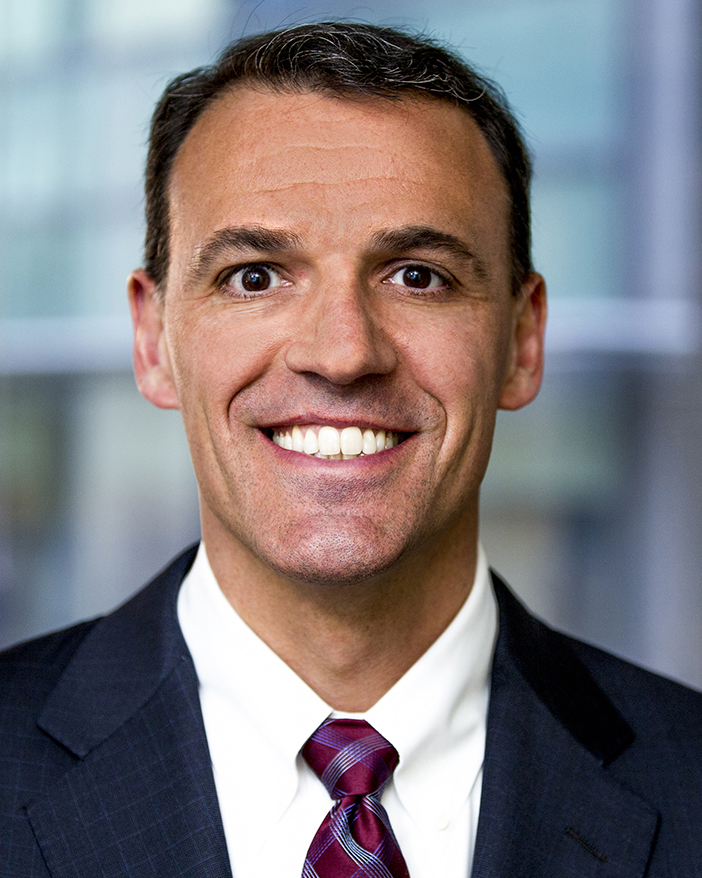
George Schultze, CIO, Schultze Asset Management
George J. Schultze is the Chief Investment Officer and Founder of Schultze Asset Management, LP. Earlier, he worked at Fiduciary Partners (a fund of funds), Mayer Brown & Platt, and Merrill Lynch. He graduated from Columbia Business School and Columbia Law School, as well as Rutgers University.
In this 3,508 word interview, exclusive to the Wall Street Transcript, the Schultze Asset Management CIO details his firm’s investing philosophy and details his top picks for the rest of 2021 and 2022.
“…One thing that we’ve said over the years is that the sectors tend to pick us, rather than us picking the sectors. And by that I mean, usually we find opportunities when industries and companies go through changes, big changes. And sometimes those changes lead to distress.
And those macro trends that caused that distress are largely out of our control. But because of that, I like to say that sectors and industries tend to pick us rather than the other way around.
For example, last year, when COVID set in, there developed a great new opportunity of investing long in the energy space, whether it was natural gas or oil companies.
And that opportunity in that sector presented itself due to macroeconomic events that were largely out of our control. But with that we tend to look where there’s trouble or there’s massive change happening, disruptive type of change. And that’s usually where we have found the best opportunities over the years.”
An example from this opportunity is expanded upon by the distresses investing mavens at Schultze Asset Management:
“One company, actually from last year, that we took a deep dive into and ultimately made an investment in during its bankruptcy was a company called Chesapeake Energy (NASDAQ:CHK).
That company went through bankruptcy and while it was headed into and going through the bankruptcy proceedings, there was an opportunity to short-sell their common stock.
But then, through their bankruptcy plan of reorganization, which was heavily, heavily negotiated, there developed an opportunity to invest long in the company’s distressed debt. And that distressed debt was ultimately swapped for new equity as the company reorganized and came out of bankruptcy.
And so on the other end of that process, the company was able to emerge from bankruptcy reorganization in February 2021 through a reorganization that eliminated approximately $8 billion in debt.
And since then, this company, which is one of the largest independent exploration and production companies in the U.S. with oil and gas assets across the country, became a success story. Now it’s listed again.
This stock has just been on a tear as the equity market begins to understand the situation again and gets more comfortable with the company’s new balance sheet and changed capital structure, as well as with all the positive developments that have happened in the commodity natural gas producing space.”
The Schultze Asset Management distressed investing methodology takes advantage of the bankruptcy process in the United States:
“…Most lenders to U.S. companies tend to prefer to just remain lenders. Most of them don’t have an appetite to alternatively become equity holders in the same business. And that’s largely for structural reasons, whether they are CLO funds, ETFs, mutual funds, banks, or insurance companies and those types of credit investors.
They generally will enter into a loan agreement or a bond agreement to finance the company’s business. But they don’t wish to swap that loan or bond into new equity.
In fact, when they do their analysis and get comfortable with a company’s valuation, it’s really from the perspective of a lender who, again, does not look for the upside potential, as well as the downside risks, that comes with equity ownership.
And so with that, those investors tend to become forced sellers when a company becomes distressed, when it becomes inevitable that former lenders will somehow have to take back equity in the restructuring in exchange for their old lender claims against the company. And that’s really the heart of where the opportunity lies.
These investors become forced sellers. And, as a distressed investor, you can look at those loans, claims, and bonds and consider whether their trading prices — whether it’s $0.80 on the dollar, $0.70 on the dollar, or all the way down to $0.10 on the dollar, sometimes even less — whether at that price the creation of the new stock that will eventually be issued through the bankruptcy or restructuring is an interesting speculation.
And that’s the heart of the arbitrage that we’re looking for in distressed situations.”
Another example of this process is detailed by Schultze Asset Management CIO George Schultze:
“…One that recently went through a similar restructuring is a company called Alpha Metallurgical (NYSE:AMR). It was recently renamed. And it is the nation’s largest metallurgical coal miner. It too went through a reorganization and emerged from that process by eliminating nearly $8 billion of debt in its own right.
And today, what’s interesting for Alpha Metallurgical is that the company has re-focused its business away from the production of steam coal, which is used to burn and make electricity.
It has refocused its business over to metallurgical coal, which is used to make steel. It’s not really an eco-friendly product, but it’s a product that’s a critical component in making steel. In other words, you can’t make steel without metallurgical coal as an input.
And if you think about it that way, there are really two coal industries in the U.S. One is the kind of coal that you burn to make electricity, whereas the other one is a necessary and mandatory component to produce steel.
That coking coal forms part of the process that ultimately yields steel. And we think what’s interesting here with this company is that the United States is on the verge of a potential big infrastructure spend. And that’s sorely needed with bridges, tunnels and roads across the nation crumbling. And we therefore think a company like Alpha Metallurgical will benefit from that future spend, and you’ve seen it already.
Over the last year, AMR’s stock price has rallied tremendously — from under $10 a share to right now trading at about $63 a share.
Having said that, we still think it’s cheap, but it’s also benefited from this big reduction in debt by having restructured just a few years ago.
Alpha Metallurgical eliminated about $8 billion in prior loans and bonds that were held against the company through its restructuring.”
Get more examples of distressed investing, Schultze Asset Management style, by reading the entire 3,508 word interview with George Schultze, exclusively in the Wall Street Transcript.
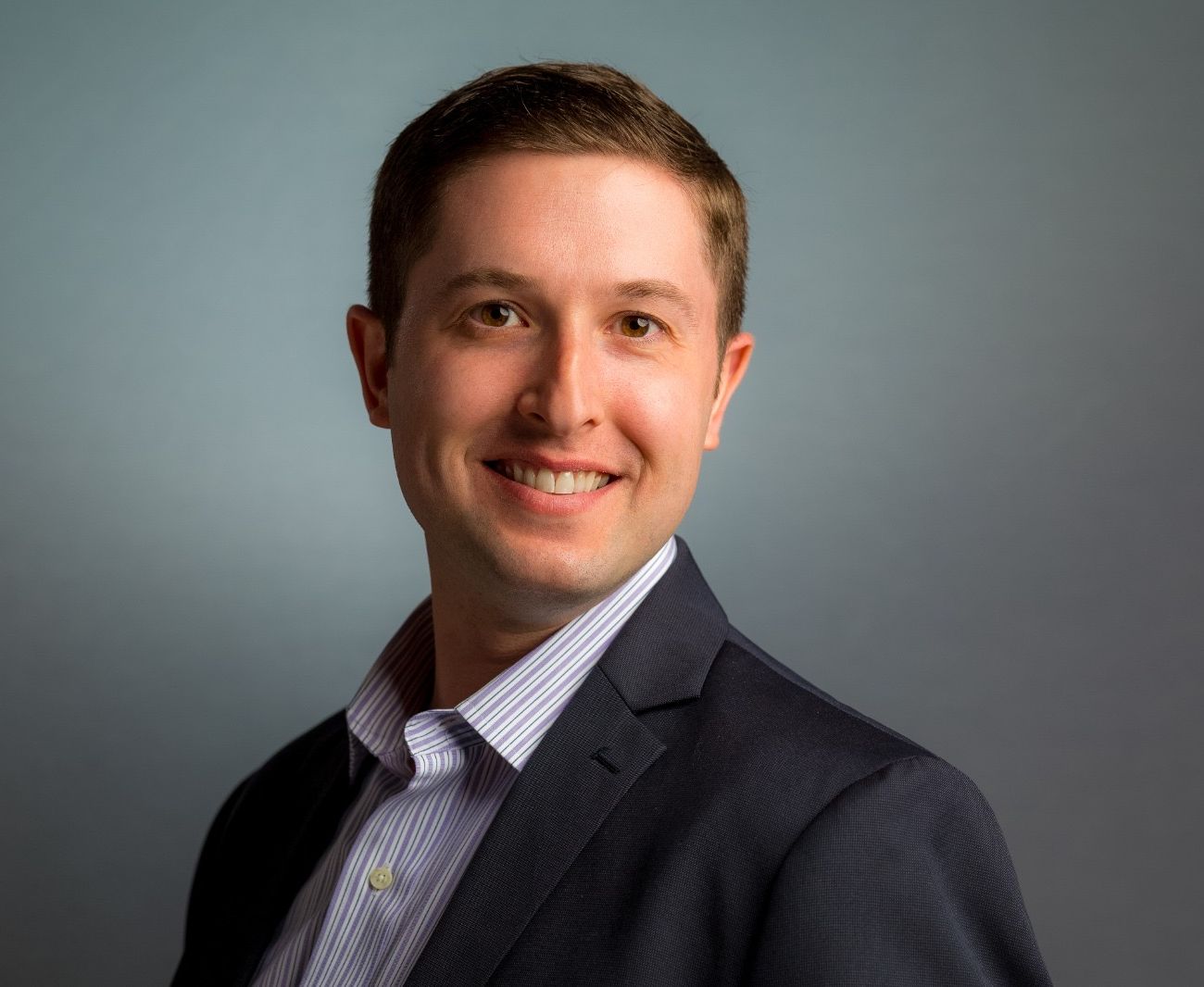
Michael Sonnenshein, CEO, Grayscale Investments
Michael Sonnenshein is the CEO of Grayscale Investments. He regularly appears on CNBC and Bloomberg and was recognized in 2018 as one of Business Insider’s Rising Stars of Wall Street.
Previously, he worked at JPMorgan Securities and Barclays Wealth. He is a graduate of Emory University and received an MBA from New York University.
In this 2,949 word interview, exclusively in the Wall Street Transcript, Michael Sonnenshein of Grayscale Investments details the creation and evolution of his cryptocurrency financial institution.
“Grayscale Investments is the world’s largest digital currency asset manager. Grayscale got its beginning in 2013 when we recognized that digital currencies were going to become a bona fide asset class and that investors wanted access to digital currencies as they thought about their investment portfolio.
One of the interesting things that Grayscale was early to identify was that not only would digital currencies become a bona fide asset class, but also that digital currencies carried — and still today carry — characteristics and attributes that make them difficult for investors to figure out where to buy, how to transfer, how to store and how to safekeep digital assets. And because they are accessible through very different channels than our traditional investments, like stocks, bonds and ETFs, that there was a real opportunity to provide investors with access and exposure to digital assets, but to do so in a wrapper that was familiar to investors, and that didn’t cause them to have to depart from the ways that they typically make investment allocations.
So we launched, in 2013, a long-only passively managed Bitcoin fund that has since become far and away the world’s largest Bitcoin investment vehicle.
And we’ve gone on to more fully flesh out the Grayscale family of products over the last eight years, which now comprises our 15 unique investment vehicles, all holding digital assets or digital currencies. And we now manage about $48 billion spread across those 15 investment vehicles.”
The investment vehicles mentioned by Michael Sonnenshein of Grayscale Investments, such as the Grayscale Bitcoin Trust (GBTC), are all SEC reporting financial instruments:
“…One thing that I think is certainly a differentiator as companies like Grayscale are building the standard for this ecosystem is this designation that we voluntarily were able to obtain on behalf of many of Grayscale’s investment products and that is being an SEC-reporting company.
This is not something that’s typically looked at that often because when companies IPO or new products are launched on national securities exchanges, they’re automatically subject to SEC reporting mandates, meaning that they have to file 10Ks and 10Qs and 8Ks, in order to stay current with the SEC.
Grayscale voluntarily approached the SEC on these exact kinds of issues on behalf of our biggest and longest-running products.
And so far, six of our funds have become SEC-reporting companies. In doing so, we’re really defining the disclosure and reporting frameworks that will now be used by other industry participants, and are really helping to shape the narrative and help keep regulators informed about the ways in which these assets are behaving — and how they need to be treated to give investors the requisite disclosure and reporting to make informed investing decisions.
So, that’s a framework that we’ve been very happy to pursue and something that I think, certainly, our team is very proud of.”
Michael Sonnenshein of Grayscale is positioning his investment firm to become a domain expert for all digital assets, not just Bitcoin:
“Certainly, the second largest digital currency by market cap is Ethereum. That is a protocol that has been developed to be different than Bitcoin. Bitcoin was originally developed to become a digital form of money that was not created or backed by a government.
Ethereum has many similar attributes; it too resides on a blockchain and it too empowers cryptography and other elements that are fundamental to Bitcoin. But its use case is really more rooted in becoming a gas that powers decentralized applications.
And when you think about the continued use cases that are being developed around digital assets, you’re starting to see the formation of subgroups within the digital asset ecosystem and you’re starting to see a real confluence between digital asset protocols and various existing areas that investors have interest in.
So you’re starting to see the emergence of digital assets in gaming, digital assets in privacy, digital assets in file storage, digital assets in video transcription. And the emergence of these subgroups, I think, are important because they’re highlighting that while some of the earliest incarnations of this asset class have been around things like money and applications, you’re now starting to see the emergence of newer protocols that are beginning to really disrupt or displace a lot of the systems that we use that aren’t necessarily monetary and that are really highlighting a bunch of other use cases for investors that they may not have seen when they first began to invest in things like Bitcoin and Ethereum.”
Michael Sonnenshein wants Grayscale to become the first stop for new investors into digital assets like Bitcoin.
“I think for anybody that’s thinking about this for the first time, we always encourage people to start small. They’re able to go into their brokerage account, punch in ticker symbol GBTC and buy a few shares of the Grayscale Bitcoin Trust. It’s a really easy and frictionless way to gain exposure to Bitcoin, right alongside your other investments.
We certainly would also encourage folks to think about leveraging Bitcoin directly, if they feel like they have the technological know-how or comfort to do so and to buy $5, $10 worth of Bitcoin and send it to a family member or a co-worker and have them send it back. And sometimes for folks, we do see that the tangible experience that they may have sending and receiving the asset actually helps to demystify it quite a bit.”

Naeem Aslam, Chief Market Analyst, Avatrade
“…When we look at Bitcoin, from the adoption perspective, how many banks are already getting into it?
I think the overall sentiment is very, very positive, because institutions are buying them at every single possible depth. There is less hesitation, less qualms and concerns among them, when it comes to increasing their allocation with any possible depth that we see in terms of Bitcoin price.
So, our view is that any selloff or any flash sale, in terms of a bitcoin price, is only an opportunity to buy some bargains. Because Bitcoin prices are very much still on track, and will go to $100,000 by the end of this year. We still hold that target.”
This is the recent prediction in the 2,095 word interview with Naeem Aslam, QFA, Chief Market Analyst for AvaTrade.
He also is a columnist for Forbes and CNBC. He has been a guest on CNBC, FOX, Bloomberg, BBC and France 24. He appeared at the ACI Dublin World Congress, alongside Charles L. Evans, the Chicago Federal Reserve Bank President.
Earlier, he worked as a hedge fund trader with Bank of New York Mellon and equity trader with Bank of America. Moreover, he is a guest lecturer at the London School of Economics. He attended the University of Leeds and University College Dublin.
Bitcoin is not the only cryptocurrency followed by Naeem Aslam of AvaTrade:
“After Bitcoin, the next one that we really look at is, of course, Ethereum.
Binance coin, as the BUSD, is another one of interest. But apart from that, you have several other protocols, like Solana, Cardano, Avalanche.
Still, things are too early. Because we’ve been in the game for a very long time — since 2014 — we have seen many projects come and go. And then every time anything comes on the market, it’s always about: “Yes, this is a real challenge for Ethereum. This is going to be a gamechanger. And then it is going to really tear down Ethereum.”
But Ethereum is still there.
And then if you look at it from the adoptions perspective, among the institutions — I believe there was news today that Bank of America actually issued its digital assets using Ethereum.
So I think Ethereum is obviously the second most important asset in the space. And we believe that Ethereum coin can easily touch that $10,000 mark in the coming month or in the coming quarters — whenever that rally will come back.
After Ethereum is something that investors should look at in terms of a risk-to-reward ratio: Cardano.
It is certainly a really good project, which has a huge potential, especially on the tech side, if you look at the contracts.
Also, going back to Bitcoin, the biggest update that we are waiting for, or we’re looking at very closely, is a TapRoot update in terms of a technology upgrade that Bitcoin is going to see in November, which is the biggest network upgrade since the invention of Bitcoin.”
According the AvaTrade analyst Naeem Aslam, the demand for selected cryptocurrencies is already being driving by large institutional financial companies.
“There isn’t a single U.S. firm — whether you are talking about Blackstone (NYSE:BX), or whether you were speaking of Bank of America (NYSE:BAC), or whether it is Bank of New York Mellon (NYSE:BK), or any of these institutions — they are beefing up their teams around digital assets.
Everyone wants to have a piece of a custody. Everyone wants to have a piece of liquidity. And they want to provide access to their clients because their clients are asking for it…
Because, for instance, in the case of MicroStrategy (NASDAQ:MSTR), you are just buying the shares directly and the company owns that.
Or in terms of portfolio, you can have crypto-related, such as PayPal (NASDAQ:PYPL) and several other companies, which are very much on the forefront of providing those services, and they have exposure to that…
In terms of Germany, as I mentioned earlier, you have a regulation, and the regulators have said that, yes, you can invest 10% of your portfolio for institutions or for family offices, you can allocate that.
And this is fully regulated. We have several different products, which are fully regulated over here as well.
And in addition to that, they are opening up several other opportunities for exchanges, for custodians to be fully regulated and operate in this space, whether it’s the U.K. or whether it’s Europe.
Especially in Europe, we have much friendlier regulations in terms of digital currencies, digital assets.”
The Avatrade analyst Naeem Aslam contends that the inflation fears currently making headlines in US and UK financial news are also a tailwind to cryptocurrency prices, and Bitcoin may replace gold as the traditional inflation hedge:
“One bitcoin or one kg of gold, that doesn’t really change.
But the purchasing power in terms of a dollar changes massively. Ten years ago, you could buy quite a lot of things with $100.
But now you can’t with the same $100. Inflation is very much eating at it, especially as we come out of the coronavirus.
And inflation, over in the U.K., some see it as very dire. And of course, inflation numbers in the United States are not that great as well.
And that just shows that, yes, your purchasing power is really going down. The dollar is losing its value.
But in terms of a bitcoin, no, because you only have a limited supply and that’s the maximum supply you’re going to have. And after that there is no more supply left.
So one bitcoin will have the same value of that one bitcoin. So if you price something in Bitcoin in terms of whatever the product or services, that is more likely to stay stable in terms of inflation…
We are talking about a $9 trillion market cap in terms of gold.
Bitcoin just went up to $1 trillion. Gold has been held for hundreds of years.
I think, when it comes to gold, it is still going to be there for a very long time. But a small proportion of those portfolio allocations will continue to increase towards Bitcoin, where we could see a premium allocation towards Bitcoin anywhere between 4% to 7%, or maximum of 10%.”
Get the complete analysis from Naeem Aslam of Avatrade by reading the complete 2,095 word interview exclusively in the Wall Street Transcript.
Ronnie Moas, Founder, Director of Bitcoin Research, Stanpoint Research
“It was, I think, April of 2019 and Bitcoin was trading below $8,000. Today, we are above $42,000. So you got a 5X return on your investment, maybe closer to 6X since we last spoke. I expect that if we speak another three years to five years from now, we will be having the same conversation. I expect Bitcoin to cross $100,000 next year, and $250,000 in the next three to five years.”
Ronnie Moas is the Founder and Director of Research at Standpoint Research.
He started Standpoint Research in 2004. He began his career on Wall Street as an analyst and market strategist at Herzog Heine Geduld.
Earlier, he worked at Shuki Weiss International Concert Productions where a few of his production credits included the Haifa Seaport Blues Festival, Bob Dylan, Radiohead, Buddy Guy and Suede.
Mr. Moas was a sergeant in the Israeli army from 1987 until 1990.
In this 2,862 word interview, exclusively in the Wall Street Transcript, Mr. Moas predicts a tremendous return for current Bitcoin investors, in a follow up to his 3,579 word interview from 2019, also exclusively in the Wall Street Transcript.
In 2019, Mr. Moas pounded the table for Bitcoin and was 1,000+% correct for investors who followed his advice.
“I put out my bitcoin recommendation on July 3, 2017. It was at $2,570.
It has jumped by more than 50% since then. On a fork-adjusted basis, the return was higher.
My target looking out to next year is $28,000. We are at $3,920 right now. I think there is, I would say, a 40% chance that we see $28,000 next year, which is not a bad return for something with a 40% probability — if you think my odds are accurate.
There will be a cut in the supply hitting the market in May of 2020 from 2,000 bitcoin a day to 1,000 bitcoin a day, and that is quite significant.
On top of that, I expect catalysts will kick in, in the next six to 12 months, to cause a spike in demand. So when you combine those two factors — a spike in demand with the supply hitting the market — that will probably create a parabolic move that will knock out the high point that we saw a year ago of $20,000.”
Ronnie Moas advocated a portfolio approach in 2019.
“I think people should learn from the lessons we learned in the Nasdaq 20 years ago when we had the dot-com bubble.
Had you looked at the rankings of all those hundreds of names by market cap, and you bought those top 10 or top 20 names and held on to them for the last 10, 20 years, you did really well. That is the same approach that I think people should be applying when they decide on how to build a cryptocurrency portfolio of 10 or 20 names.
You don’t want to try to be a hero and pick a flower from all of the weeds…
There are hundreds of scams and names that are overvalued or worthless, and there is no regulation. You are playing with fire when you try to be a hero and look for things that nobody has discovered yet.
I think you should play it safe.
I recommend putting 40% to 60% of your crypto money in bitcoin, and then, you spread out the other 40% to 60% across a dozen or two dozen names that are in the top 50.”
The Stanpoint Research analyst Ronnie Moas has a more Bitcoin oriented approach currently:
“I expect that if we speak another three years to five years from now, we will be having the same conversation. I expect Bitcoin to cross $100,000 next year, and $250,000 in the next three to five years.
Everything has been going quite smoothly. Obviously, there will be some bumps in the road along the way.
It has been an extraordinary investment for whoever got in. If you’ve been in Bitcoin five years, you are up 100X right now. Obviously, it didn’t go up in a straight line, but the volatility comes with the price of admission.
Everything has been going well. It looks like we have crossed an inflection point. As you remember, it took 10 to 15 years before paper checks were accepted.
Same thing with credit cards. Bitcoin is in year 13. So we are at the beginning of this game right now.
I really don’t see anything standing in its way. I believe that it will be the best performing investment over the next five to 10 years by far.”
The historical antecedents are not lost on Ronnie Moas. The Standpoint Research guru had this to say about disintermediating the banking system in early 2019:
“It already is causing that, that ripple effect, pun intended, if you know what Ripple — $XRP — is.
It is already creating a ripple effect, and it is changing the world that we live in. It is just a quicker, more efficient and transparent way of going about doing things.
I remember I used to work for John Herzog at Herzog Heine Geduld 20 years ago.
That was the second-largest market maker on the Nasdaq before they were taken over by Merrill Lynch in 2001. Mr. Herzog was the Founder of the Museum of American Finance in New York. If you go there, you can see the chalkboard where people used to manually write down every trade that took place in the stock market 100 years ago.
You remember those pictures of the chalkboards where people would write down what the bid and ask was and how many shares were traded?
We have come a long way in the last 100 years.”
In the current interview, Ronnie Moas does not mince words about his predictions for the future growth of Bitcoin value:
“…In the meantime, I think, buying Bitcoin on Coinbase (NASDAQ:COIN) is probably your best bet. It is a major exchange. It is probably a safe place to put your Bitcoin outside of storing it on your own.
This is a company that has tens of millions of accountholders already. That would be the best way to go.
Alternatively, you can buy something like GBTC (OTCMKTS:GBTC) through your broker. Right now, GBTC may actually be a bit more attractive than Bitcoin because it is trading at a discount to its net asset value.
People who bought GBTC a year ago, when it was trading at a premium to net asset value, got burned. Right now, GBTC is a good way to get exposure.
You can go into Bitcoin via Coinbase, or one of the other highly regarded exchanges. If you want something more volatile, there are publicly traded names like Marathon Digital (NASDAQ:MARA), Riot Blockchain (NASDAQ:RIOT) and MicroStrategy (NASDAQ:MSTR)…
I would also bounce one more ticker symbol off of you — that ticker symbol is FTT. That is FTX exchange. It is a cryptocurrency exchange. The cryptocurrency is currently trading in the top 40 on coinmarketcap.com.
What makes this a little bit different than the altcoins is that the founder is, I believe, 30 years old. He’s a billionaire.
His name is Sam Bankman-Fried.
It is a cryptocurrency exchange and they actually paid $200 million recently to have their name on the Miami Heat NBA basketball arena, walking distance from where I live. It was formerly known as the American Airlines Arena. It is now the FTX Arena.
So that is the FTX exchange and the ticker symbol on the altcoin is FTT. It ran up more than 150% since my recommendation, but it pulled back recently and that might be creating a good entry point for people that want to get in.”
Read both interviews with Ronnie Moas, Founder of Standpoint Research, to get all the information you need to begin investing in Bitcoin and other cryptocurrencies.
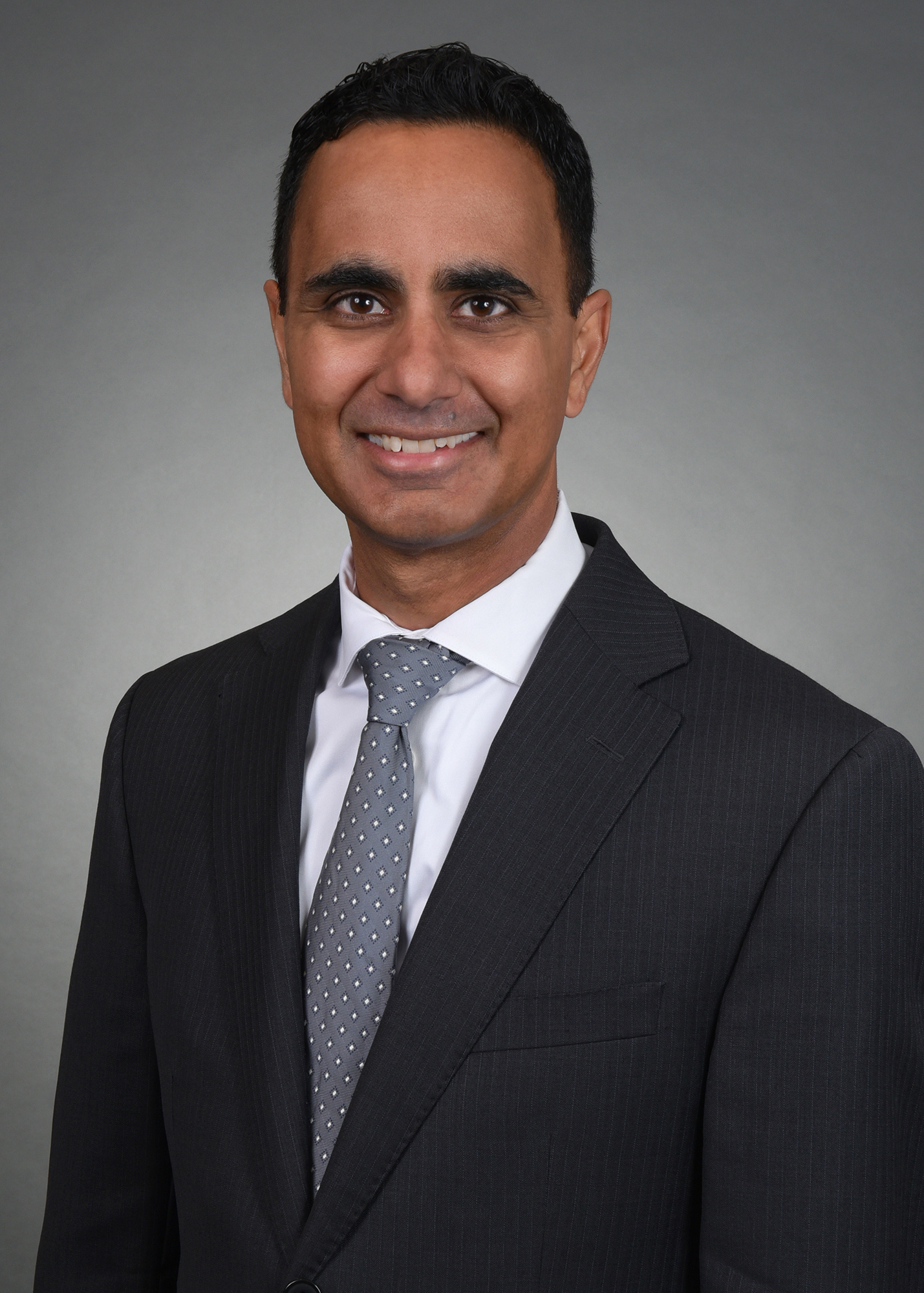
Vamil Divan, M.D., Managing Director and Senior Analyst, Mizuho
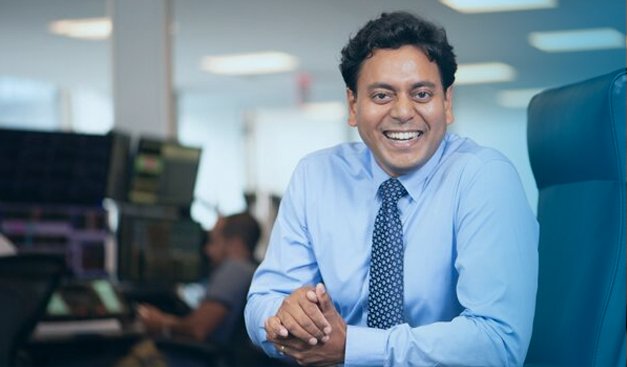
Soumit Roy, Ph.D., Healthcare Analyst, Jones Trading Institutional Services
BioNTech (NASDAQ:BNTX) and Illumina (NASDAQ:ILMN) are two of the biggest investment payoffs over the last ten years. The equity analysts that correctly identified these big two winners for investors deserve a closer look.
Soumit Roy, Ph.D., is a Vice President and Healthcare Analyst of Jones Trading Institutional Services LLC.
Dr. Roy is responsible for research coverage on biotechnology companies within the healthcare sector for Jones Trading.
Prior to joining Jones Trading in 2018, Dr. Roy was a senior research associate at SunTrust Robinson Humphrey, covering small- and mid-cap biotechnology companies with innovative technologies, notably T-cell therapy, targeted medicines, gene editing and next-generation immuno-oncology.
He was a postdoctoral fellow at the Icahn School of Medicine at Mount Sinai, New York, in the Clinical Immunology Department, and his research was focused on understanding and discovering novel agents to improve vaccines.
He earned his Ph.D. from the Albert Einstein College of Medicine, New York, where he helped to develop a novel drug candidate that targets the powerhouse of cancer cells to stop cancerous growth.
He holds two master’s degrees, in developmental biology and biochemistry, and has published in the highest-rated scientific journals. In 2019, Dr. Roy identified a company that was later purchased for stock by BioNTech (NASDAQ:BNTX) and returned big for investors who followed his advice.
Dr. Soumit Roy, in a 2,849 word interview on March 22, 2019 exclusively in the Wall Street Transcript, correctly called out an obscure biotech stock for investors:
“Key names are Neon Therapeutics. They are ahead by at least a year and a half over their peers. They have already presented lung cancer data and melanoma data in IO naive patients, showing 25% to 40% improvement on top of Opdivo, in combination therapy regimen with Opdivo.
So far, Neon is clearly ahead in the race. Right on its heels are Gritstone and Moderna that just IPO-ed.
The reason I’m mentioning these names is to give a sense how far ahead Neon is over the peers.
What I would say is we have turned the corner. It is the middle of the beginning, as we see neoantigen companies are taking their place and bringing forward therapeutic candidates.
For the next two to three years, we believe investors are going to put a lot of focus on these names like Neon Therapeutics, Gritstone (NASD AQ:GRTS), Moderna Therapeutics (NASDAQ:MRNA) and Genocea (NASDAQ:GNCA). We would also keep an eye on the Paris-listed stock OSE Immunotherapeutics (OTCMKTS:ORPOF)…
So what is happening is, these companies like Neon, Gritstone and Moderna are using high-throughput screening followed by artificial intelligence algorithms to figure out what really are the patient-specific mutations on top of the background noise.
What they are learning is that there is a signature mutational profile for each individual patient. We believe companies will be capitalizing on these findings and will be pushing personalized medicines in the coming years…
They may use that information to make T-cell therapy or maybe small molecule inhibitors.”
Following this interview, in January of 2020, BioNTech (NASDAQ:BNTX) and Neon Therapeutics, Inc. (Nasdaq: NTGN) announced a definitive merger agreement under which BioNTech (NASDAQ:BNTX) acquired Neon in an all-stock transaction which closed on May 06, 2020.
Vamil Divan, M.D., is a Vice President and Senior Analyst responsible for coverage of the life science tools and diagnostics sector at Credit Suisse Group and is now a Managing Director at Mizuho.
He joined the equity research department at Credit Suisse in 2007 as a member of the U.S. pharmaceuticals team.
Before joining Credit Suisse, Dr. Divan had worked in the pharmaceutical industry for more than five years at Roche, and then Pfizer Inc. He is a board-certified Internist and was a practicing Physician before he transitioned into the pharmaceutical industry.
Dr. Divan holds a medical degree from the University of Buffalo, an MBA from New York University and a B.S. in health care administration and policy from the University of Pennsylvania
In an August 2012 interview, exclusively in the Wall Street Transcript, Dr. Divan recommended medical diagnostic testing company Illumina (NASDAQ:ILMN) for investors.
“Sticking within the tools space, the one we really like is Illumina (NASDAQ:ILMN). They’re really a pure-play genetic analysis company.
They’re the leader right now in the large machines that are used to do DNA sequencing and genetic analysis. Predominantly, this is done in the research setting right now, but we see a lot of opportunities to move some of the same technology into the clinical arena.
We think that the machines Illumina (NASDAQ:ILMN) has out now and the ones that they will be selling over the next several quarters are poised to be very successful as gene sequencing, and genetic analysis becomes much more of a clinical tool and not just a research tool.”
At the time, Illumina (NASDAQ:ILMN) was $42/share.
Tycho W. Peterson is a Senior Analyst in J.P. Morgan’s health care group in New York, where he focuses on small- to mid-cap medical device, diagnostic and life science tools companies. Prior to joining J.P. Morgan, Mr. Peterson worked in the equity research division of Hambrecht & Quist, where he helped cover a variety of life science tool and genomics companies.
Before that, Mr. Peterson worked at PowderJect Pharmaceuticals in Oxford, England, where he was a Consultant to senior management, and at ICF Consulting in Washington, D.C. Mr. Peterson holds a B.S. in biology from Cornell University, and an MBA and MSc in biology from Oxford University.
In a February 2014 interview, exclusively in the Wall Street Transcript, Tycho Peterson also identified Illumina (NASDAQ:ILMN) as a long term investment.
“Our top pick for this year is Illumina (NASDAQ:ILMN). We have them on the focus list. They are democratizing the sequencing market.
As the costs of sequencing are coming down, and they’re coming down very quickly, new markets are opening up in areas such as oncology, prenatal screening, consumer and ag/bio.
So IIllumina (NASDAQ:ILMN) is a hyper-growth company, and they have really distanced themselves from competitors.
They are in a really good position to capitalize on what is now seen as a $20 billion addressable market, but it is going to be a lot bigger than that when all is said and done.”
Illumina (NASDAQ:ILMN) is now $410 per share.
The Wall Street Transcript has many more top investment recommendations from these and many other industry experts, with industry and individual company reports for decades. To see more investment recommendations like BioNTech (NASDAQ:BNTX) and Illumina (NASDAQ:ILMN) search for them all on the Wall Street Transcript website.

Kevin Kedra, Research Analyst, GAMCO Investors
Kevin Kedra is a Research Analyst with GAMCO Investors.
He joined GAMCO in 2005 as a research analyst covering the health care industry. He now covers animal health, biotech and pharma for GAMCO.
He graduated from the University of Pennsylvania where he received a B.S.E. in bioengineering.
In this 3,118 word interview, exclusively in the Wall Street Transcript, this GAMCO analyst details the reasoning behind his top picks. Kevin Kedra sees multiple opportunities in the current market:
“I think the Biden administration, just like so many before, will find that talking about fixing health care and drug pricing is actually a lot easier than to actually fix it and get something through Congress.
So I see some of this hesitation and nervousness on the side of investors as being an opportunity for those willing to take a longer-term view, which is something that we generally do.
So with a long-term focus, value investors are seeing a chance to buy into a space that has very strong underlying fundamentals and very good prospects for the long term, and where regulation and political movements typically have not shifted the deck too heavily against the industry historically.
On the animal health side, the sentiment has generally been positive. And COVID really created some significant tailwinds for the companion pet market.
We see things like increased pet ownership, higher spending per pet. And I’ve shared the enthusiasm that the market seems to have for this industry.
On the production side, which is the livestock, or the animals that go into the food supply chain, it’s almost a bit of a reopening play.
That industry that has been hurt a little bit by some of the changing eating trends: eating at home, away from restaurants, and school closings.
But now as we’re starting to open back up, you have restaurants coming back, which will help some of the beef, pork and poultry markets. And then schools coming back would be a nice boost to the dairy market. So that’s a bit more of a reopening play and opportunity there.”
Kevin Kedra sees the animal companion market as a high return opportunity for his investors at GAMCO:
“On the animal health side, I actually think I like some of the service and retail providers more, just because the valuations are a bit more reasonable.
You’re looking at valuations in the 10 to 12 times EBITDA multiples, whereas manufacturers like Zoetis (NYSE:ZTS), or diagnostic players like IDEXX (NASDAQ:IDXX), you’re up in the high 20s to as high as 40 times EBITDA — so much richer multiples for those assets.
One of the names that I really like in the animal health space is Covetrus (NASDAQ:CVET).
This is kind of a pure-play animal health company that was spun out of Henry Schein (NASDAQ:HSIC) a couple years ago.
Henry Schein is a very well-regarded distributor. So this company distributes into the veterinary channel across the globe.
They take products from the manufacturers like Zoetis and then bring to them to veterinarians to use and dispense. And that business is going to benefit from a lot of the tailwinds we see within the companion animal market, and there’s a crown jewel that also comes with this company that is what is essentially an e-pharmacy platform for veterinarians to use.
So one of the challenges for veterinarians has been that buying patterns have changed.
They’ve been seeing a lot of the volume of pharmaceutical products that they would normally sell out of their practice, and get some of that markup, have shifted to online channels — and particularly with the pandemic, when everyone was buying everything from home.
This is an opportunity for veterinarians to have a way to compete with a Chewy (NYSE:CHWY) or an Amazon (NASDAQ:AMZN) or another at-home service provider.
They can do it through Covetrus’ platform and maintain some of the economics on those products, and that’s been a fast-growing business for them.
It should be growing in the high-20s to 30% range this year.
So, very good growth opportunity for that business, and I think it’s underappreciated. Not only the growth opportunity in the U.S., but the ability to start taking that platform into international markets.
And then the cash flow generation that you get from the core veterinary distribution business, which is a good business, throws off a good amount of cash.
And it’s really what is allowing the company to pay for the investments in this technology platform.”
Some high risk, high return investments are highlighted by Kevin Kedra of GAMCO Investors.
“I probably don’t invest too heavily in the really high-risk names.
But a few of the names that I like on the high-risk side include Vertex (NASDAQ:VRTX), which is a bit of a bounce back story.
They have a dominant franchise in cystic fibrosis, with patent protection well into the next decade.
And that’s obviously very important, because your drug is only as good as the intellectual property behind it. As long as you can preserve that, you can continue to have a very profitable franchise.
But they’ve been overshadowed by some of their pipeline setbacks, and they do have a very high-risk, high-reward pipeline with early- to mid-stage assets. So if you’re buying the company today, you’re getting the cystic fibrosis assets at fair value, if not at a discount, which essentially gives you kind of a call option on a high-risk, high-reward pipeline where you don’t need everything to hit.
But one or two of those opportunities coming through could create additional blockbuster franchises that aren’t necessarily valued into the company at this time.
A second name that has some level of risk to it that I like is a company called Bausch Health (NYSE:BHC).
And what I like is, they’re expecting to spin off their eye care business. So their Bausch & Lomb eye care business, a very well-known business that has consumer, prescription products, surgical products for things like cataracts, and other eye care surgery.
And you have a bit of a multiple arbitrage opportunity. Bausch trades at about 10 times EBITDA today, whereas pure-play eye care companies trade at twice that multiple, close to 20 times EBITDA.
o I think there’s a lot of value trapped within that eye care business that can unlock when they do that spin-off.
But if they can manage some of the debt load that they have, which is quite sizable at the moment, and find a way to accelerate that spin.
And they have a few activist investors, including Carl Icahn, who have been pushing for this to happen. So although there’s risk there given the leverage, I certainly think that there’s an opportunity in a name like Bausch.”
Kevin Kedra also identifies the political risk to the sector, although he believes the Biden Administration does not have the ability to enact any meaningful reform:
“What I do think is a bigger problem, and particularly on investors’ minds, is the political environment.
We’re starting to see the rhetoric ramp up against drug pricing.
And a very high-profile launch is Biogen’s (NASDAQ:BIIB) Alzheimer’s drug that got approved.
And that’s created some of the FDA flack, where you had a lot of people questioning whether the FDA should have approved that product, but then Biogen priced it at $56,000 a year, which was well ahead of what we were expecting, what a lot of analysts were expecting. And that raised a lot of eyebrows and has kind of brought drug pricing back into focus.
Any goodwill that the industry bought with the COVID vaccines seems to have been mostly used up at this point.
And the Biden administration is now working on a plan to address health care and drug pricing in particular.
But we’ve heard these stories before. Typically, not much happens — maybe things around the margins, but nothing as drastic as allowing Medicare to directly negotiate with drug companies.
But these are the kinds of proposals that are going to be put on the table.
And I think that’s going to be a risk to investor sentiment more so than it is to the actual companies. So that’s probably the biggest risk on the near- to medium-term horizon as what’s going on in D.C. around drug pricing.”
Read the entire 3,118 word interview with Kevin Kedra of GAMCO Investors, exclusively in the Wall Street Transcript.
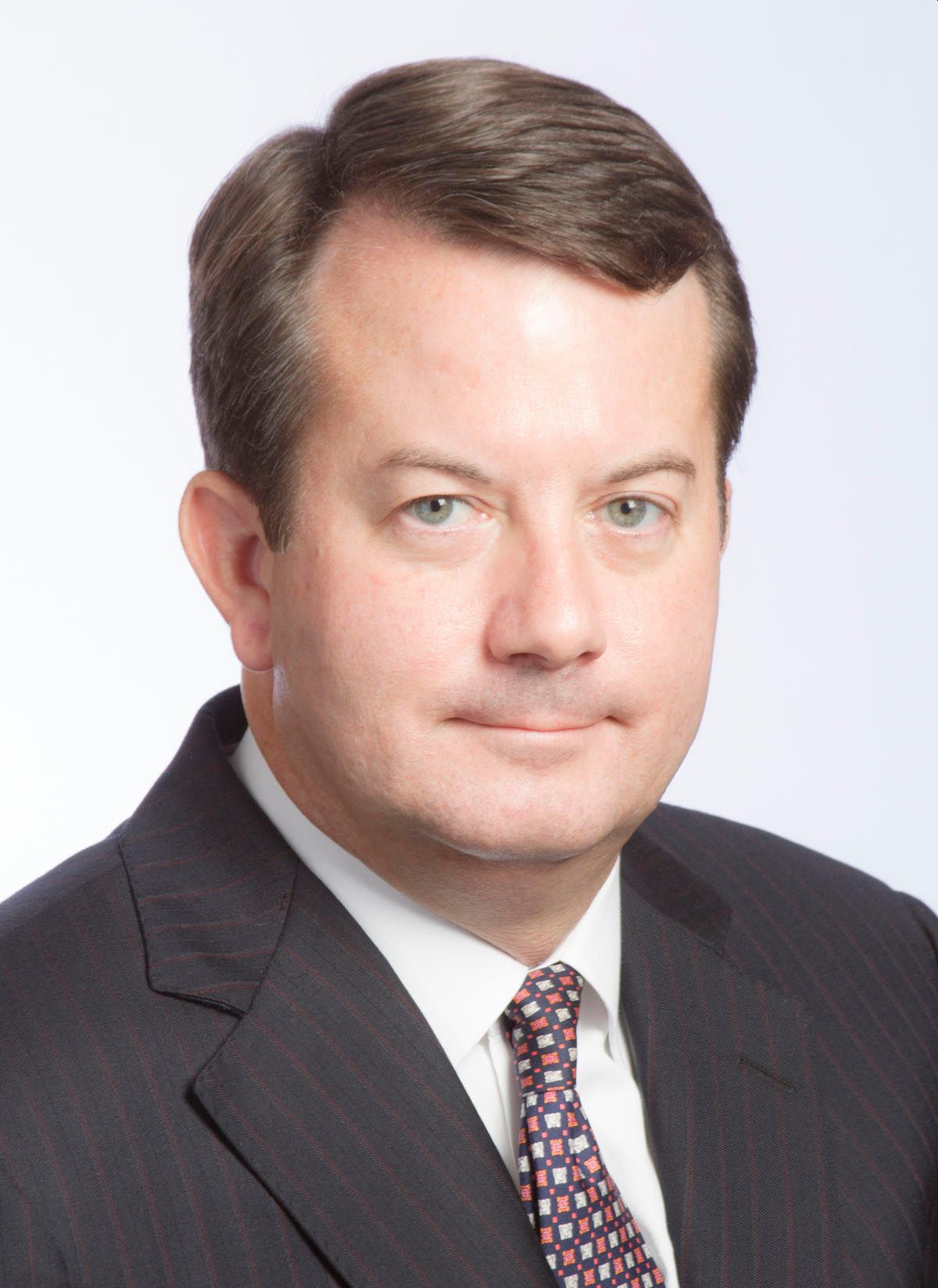
Chirs Cooley, Managing Director, Stephens
Establishment Labs (NASDAQ:ESTA) and Cutera (NASDAQ:CUTR) are two of the top picks for 2021 and 2022 from Chris Cooley of Stephens Inc.
Chris Cooley, CFA, is a managing director leading the medical devices and hospital supply sector. Mr. Cooley joined Stephens Inc. in July 2010 and has over 20 years of equity research experience.
Prior to joining Stephens, Mr. Cooley began his professional career with Dean Witter and also worked for Cargill, Inc., Morgan Keegan, SunTrust Equitable Securities and FTN Equity Capital Markets.
Mr. Cooley received a master’s in business administration, with concentrations in finance and operations management from the University of Tennessee and a bachelor of science degree in economics from the University of Arkansas.
In this 2,172 word interview, exclusively in the Wall Street Transcript, Mr. Cooley picks several small cap and medium cap healthcare winners including Establishment Labs (NASDAQ:ESTA).
“At the outset of the pandemic, last year, we saw a moratorium on all elective procedures and also a material decline in surgical volumes in general. The hospitals were full, people didn’t want to, or couldn’t get into the hospital, and physicians were limited in terms of their patient access as well.
What we’ve really seen since that time is a more efficient process evolve. We’ve also seen vaccination rates increase.
And so now, pretty much across the board, we’re seeing surgical volumes approach pre-COVID-19 norms. In regard to procedure volume trends, I’d also say that we’ve definitely seen the pandemic usher in heightened focus on practice efficiency, as clearly, you can see fewer patients, and there’s a greater burden there to get those patients in and treated.
We’ve seen uptake in terms of the use of PPE and other sterilization technologies. And also, lastly, just a greater acceptance on the part of both patients and physicians alike to use telemedicine when appropriate.”
The Establishment Labs (NASDAQ:ESTA) pick is based on a COVID 19 recovery thesis from Mr. Cooley:
“Coming out of the post-pandemic era, we definitely like the aesthetics space.
If we use the last three financial crises as a predicate, in each of those events, we saw the consumer exhibit a willingness to invest in themselves or splurge, if you will, and do things for themselves.
We’re seeing a very similar phenomenon now coming out of this pandemic crisis. So we’re seeing very strong uptake in terms of aesthetic procedures broadly, both non-surgical — whether it’s a straightening of teeth, microdermabrasion for the face, fat reduction and body contouring — as well as actual implants and surgical, more aggressive surgical procedures.
Households have higher levels of disposable income due to the limitations on travel and activities during the pandemic, and it’s also pretty interesting to note that the sector has really pivoted and it’s now perceived as more mainstream than it has been maybe even three to five years ago with non-surgical procedures as preventative in nature, and really becoming the norm across all age groups and demographic segments.
So we’re definitely bullish on that.”
This leads into the specific investment thesis for Establishment Labs (NASDAQ:ESTA) from Mr. Cooley:
“…Within the aesthetic space, we’d highlight Establishment Labs (NASDAQ:ESTA).
The company’s Motiva family of silicone gel breast implants is pending FDA approval right now. And outside of the United States, their Flora Tissue Expander is the only tissue expander which does not have any metallic elements, so you can still do an MRI without having to remove the expanders.
Establishment Labs (NASDAQ:ESTA) also has a new offering, the Motiva Mia, a minimally invasive procedure, which basically has the potential to transform aesthetic breast augmentation surgery to essentially an outpatient kind of lunchtime type procedure under a local anesthetic. So very, very exciting portfolios there.”
The concerns from Mr. Cooley are mostly macro in general.
“Most of my concerns going into calendar 2022 are macro in nature. First, we’re going to be anniversarying the COVID rebound and we don’t yet know the impact of the variants of COVID-19 that we’re seeing right now, the Delta and Mu variants.
So this is going to be a challenge for investors when we look at the comps and what these companies are going to be able to do in the environment that’s presented.
From a market perspective, we’ve really seen a bifurcation of market performance based on sector and liquidity.
And if we continue to see rising rates of inflation and even greater talk of the potential for stagflation, we could see pressure assigned to elective and premium procedures from just a market perception standpoint.
And then lastly, I’d note that CMS has increasingly demonstrated a willingness to cap or limit reimbursement in the outpatient setting.
And we’re seeing private payers increasingly require pre-authorization, all of which may ultimately lead to pressure on innovation. That, too, may weigh on the sector going forward, so we’ll just have to continue to watch that closely.”
Despite Establishment Labs (NASDAQ:ESTA) being one of Mr. Cooley’s top picks for the rest of 2021 and 2022 he reserves his highest praise for Cutera (NASDAQ:CUTR):
“Within the aesthetic space, right now, we’re very bullish on the Cutera (NASDAQ:CUTR) story.
Cutera offers one of the most comprehensive product platforms in the industry. But the real excitement is the company is in the final stages of developing an energy-based system for use in the treatment of chronic systemic acne with clearance levels that are very similar to the pharmaceutical gold standard of Accutane, but without the risk profile.
That offering should get approval as we exit the calendar year and we estimate the associated domestic capital and consumable opportunity approaches $2 billion. This really isn’t reflected in the valuation right now…
Right now, I definitely think it’s still Cutera for us.
The company is executing well and is valued at a relative discount, not only to its aesthetic peers, but materially so, versus the broader med tech index.
There is a newer management team there that’s doing a great job in terms of execution, both in terms of driving sales growth, but also in terms of expanding both gross and operating margins. And with the potential blockbuster product entry into the acne marketplace, definitely could see a further step up in terms of the growth and as a result valuation.”
Get the complete details on Establishment Labs (NASDAQ:ESTA) and Cutera (NASDAQ:CUTR) and many other picks by reading the entire 2,172 word interview with Chris Cooley, exclusively in the Wall Street Transcript.
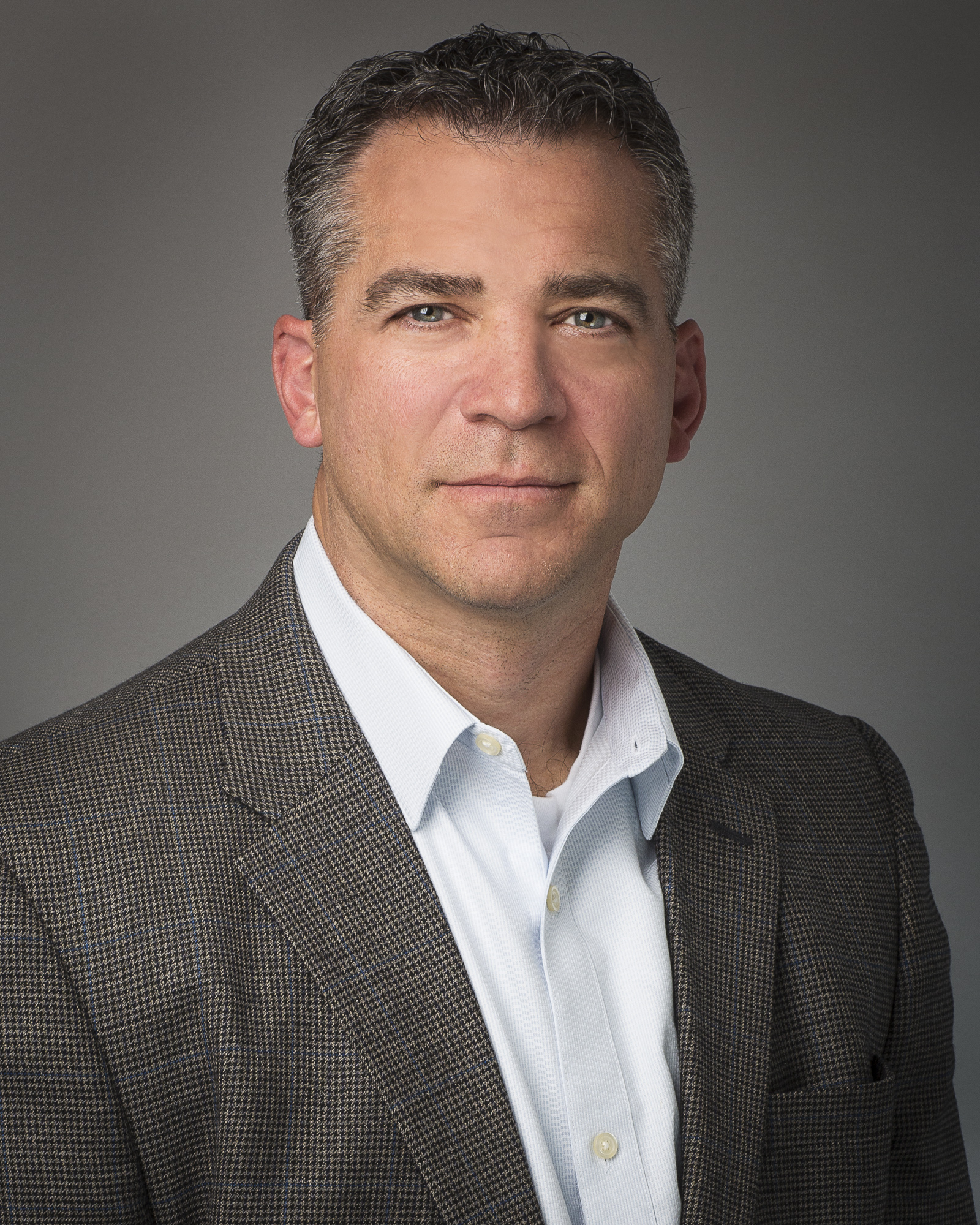
Vincent Angotti, CEO, AcelRx Pharmaceuticals (ACRX)
Vincent Angotti is CEO and a member of the board of directors at AcelRx Pharmaceuticals (ACRX).
Earlier, he was CEO of XenoPort, Inc., a biopharmaceutical company focused on the development of treatments for neuropathic pain and other neurological disorders.
Prior to that, Mr. Angotti was Senior Vice President of Sales and Marketing at Reliant Pharmaceuticals. He is a graduate of Cornell University and received an MBA, with honors, from Columbia University.
I joined as the CEO in 2017 when the company was working through a complete response letter from the FDA in the United States and had only one product approved and out-licensed in Europe.
In this 3,136 word interview, exclusively in the Wall Street Transcript, Mr. Angotti details the near term commercial launch of several of AcelRx Pharmaceuticals (ACRX) products.
“That product, Zalviso, a sublingual sufentanil tablet delivered through a handheld, patient-controlled analgesia device was typically used in hospitals in Europe.
But since 2017, the company has really made significant advancements in its portfolio as DSUVIA, a 30 microgram, sublingual sufentanil tablet in a single-dose applicator, always administered by a health care professional, has been approved by both the U.S. and Europe. And just this year, we announced a European commercial arrangement for DSUVIA, known as DZUVEO in Europe, with Aguettant.
Zalviso remains approved in the EU and we believe it’s NDA ready in the United States pending the FDA decisions on the approval guidelines for future opioids.
In addition, we recently licensed in two pre-filled syringe products, one for ephedrine, the other for phenylephrine, also from Aguettant, that complement our focus on medically supervised settings, and we believe these products will be launched in the next 21 months. ”
AcelRx Pharmaceuticals (ACRX) has an interesting upside revenue opportunity with the U.S. Department of Defense according to CEO Vincent Angotti.
“Dr. Palmer was presenting the sublingual sufentanil profile at a medical conference, there were members of the Department of Defense in the audience who began to explore how it could be developed, packaged safely, etc., for use with battlefield pain management as again, they weren’t completely satisfied with their current offerings, those being intramuscular morphine and the fentanyl lollipop.
As a result, that relationship evolved and over the next 10 years, they invested in DSUVIA’s development.
It eventually was approved in late 2018. But since that time, they’ve continued to evaluate it to be sure it met all their primary objectives.
And even though it was approved in 2018, it took until April of 2020 for them to complete what’s called a Milestone C review, concluding that DSUVIA was approved for all Army sets, kits and outfits for deploying troops moving forward.
In addition, the Joint Deployment Formulary approved its use in September 2020. And just recently, in June of this year, they updated their pain battlefield guidelines on their website to show the inclusion of DSUVIA and how according to them.
They feel it’s a beneficial alternative to what they’ve used historically.”
This is only one of the product lines that AcelRx Pharmaceuticals (ACRX) is deploying under CEO Vincent Angotti.
“When people think about acute pain and opioids, they immediately defer to the issues that are in the media, most often about the addicted patients and the illicit opioids that are taken at home or the over-prescribing of opioids in the office-based setting.
Those are important issues, but we’re a different model. We’re trying to bring that opioid fight up further in the continuum of medical care, meaning closer to the physician and the patient in the acute care setting.
And what’s interesting, I think, for us and for potentially investors is a couple things. Number one is some recent data that was just published on DSUVIA. This data was different than what we had at launch of the product.
It’s real-world data that is published in peer-reviewed journals.
The first was in August of 2020 of last year. It’s a study at UHS in upstate New York comparing the prospective group of patients with preoperative dosing with a single sublingual DSUVIA tablet to a historical control group that were receiving intravenous opioids for same-day surgery procedures.
It was published in the Journal of Clinical Anesthesia and Pain Management and the bottom line is that they found that when administering DSUVIA, there was overall a greater than 50% reduction in opioid equivalents administered, with an 80% reduction in opioids administered post-op in the institution versus the control group.
That led to a 34% reduction in Phase 1 PACU time when using DSUVIA.
A second study was published in November of last year showing very similar results in the Journal of Universal Surgery.
The study focused on 140 patients who were dosed with DSUVIA compared to 158 patients who had been dosed with traditional IV opioids during the same time period, undergoing similar procedures.
The study showed very similar results to the UHS study in that there was an overall significant reduction in the intraoperative use of opioids, a greater than 50% reduction in post-operative morphine milligram equivalents and an overall statistically significant decrease in recovery discharge time.
So it’s a very unique offering in a setting that is controlled by the physician in an institution. And we believe those results will shape the future of acute pain management in these medically supervised settings.
But to expand on your question, we’re not just a DSUVIA story.
We now have DZUVEO in Europe with an expected launch in the first half of next year by Aguettant.
We now have a late-stage pipeline with the pre-filled syringes that we believe we could file for an NDA with the FDA within the next 12 months and have approval for within the next 21 months.
We have a lot of catalysts moving forward, with diversified offerings, including a late-stage portfolio from a development standpoint.”
These new products from AcelRx Pharmaceuticals are supported by several new studies initiated under CEO Vincent Angotti.
“…We’re going to continue to be committed to supporting real-world studies moving forward relative to DSUVIA’s proper use.
We have relationships and studies now ongoing with some of the most prestigious institutions in the country.
As an example, Harvard’s Brigham and Women’s Hospital is studying DSUVIA for spinal surgery in the post-operative period; Cleveland Clinic is studying it for arthroscopic knee surgery; Montefiore Medical Center is evaluating its use for surgery in buprenorphine patients; The CORE Institute is studying it for joint replacement patients; and Tampa General is evaluating it for sickle cell patients.
So importantly for us, additional data continues to matter to not only directly support education in the hospital sector, but also for educating physicians performing painful procedures in the surgical suites and ambulatory surgical centers who can then take their experience to the hospitals.”
Get the complete upside to AcelRx Pharmaceuticals (ACRX) growth in the next 12 to 24 months by reading the entire 3,136 word interview with Vincent Angotti, exclusively in the Wall Street Transcript.
Vincent Angotti, CEO, AcelRx Pharmaceuticals, Inc.
25821 Industrial Blvd, Suite 400, Hayward, CA 94545
www.acelrx.com
email: info@acelrx.com