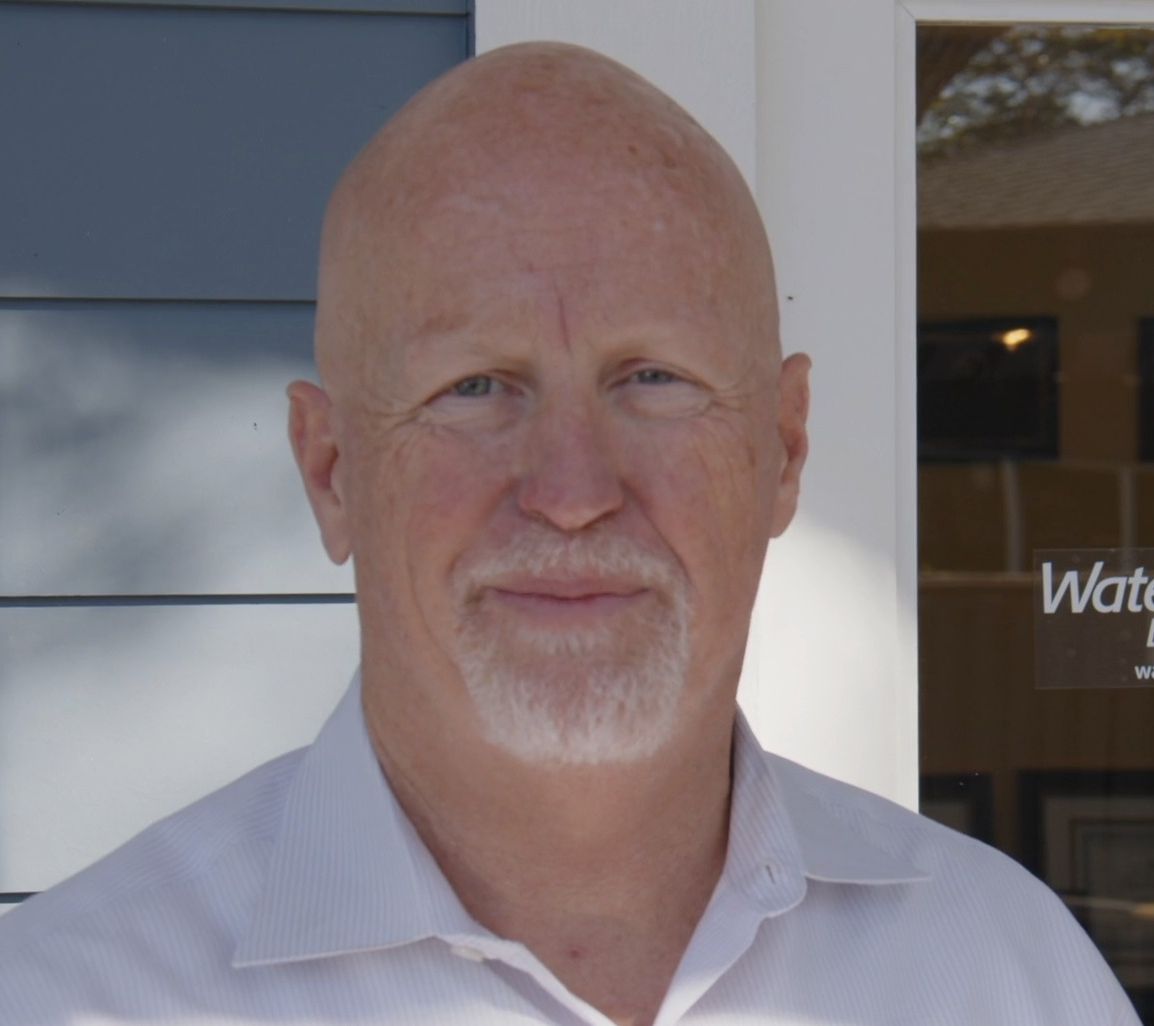
John R. Beaver, President, CEO, and Director of BIOLASE (BIOL) the Laser Dentistry Specialist
Dental Surgery stock Biolase (BIOL) CEO John R. Beaver is the President, Chief Executive Officer and Director. Mr. Beaver brings over 40 years of substantial leadership and technical experience in finance and business management for both public and private companies.
His experience leading debt and equity fundraising efforts to elevate companies from startup to commercial success has positioned BIOLASE for growth.
At BIOLASE, he has a pulse on investor relations, using dentist education to establish lasers as the gold standard of care, and building cross-functional teams internally.
When not charting the path for BIOLASE, you can find Mr. Beaver rooting for the Houston Astros or heading to Texas to visit his grandkids.
“So, of all the specialties, we probably were less, I would say penetrated in endodontics.
It was never really a focus for us.
We knew that our technology would be beneficial in that area. But you have to pick where are you going to succeed and where are you going to put your resources.
We knew that endodontics was a growth opportunity for us.
But at the same time, EdgeEndo came to us — and they are majority owned by Henry Schein — and they say, “We want to get involved or have a product that’s going to do irrigation of the canal via lasers,” because they recognized the importance of that and the improvement of that is, if you use traditional instrumentation, the rotary file system, through a root canal, you get maybe 50% of the bacteria out of that root.
I don’t know about you, but if a surgeon came in after surgery and told me, “Yeah, we’re good, we got about 50% of the bacteria out of that surgical area,” I wouldn’t feel really good about it. Lasers remove 99.5% of the bacteria and the improvement there is significant in terms of success of the root canal and the rate of retreatment.
So they came to us and at first I said, I’m not sure if I want to put somebody else in business competing with us here. But knowing those guys like I do, if we had said no, somebody else would have said yes. And I’d much rather work with them than against them. And so we partnered up.
They came to us because they felt like the 2,780nm erbium chromium YSGG wavelength, which we have a patent on, was the best for this.
And they also believed BIOLASE (BIOL) has a core competency in getting new products through FDA clearance. And so, we started working with them.
We developed what’s called an EdgePRO and it is based upon our 2,780nm wavelength, but it doesn’t ablate or cut.
So it’s simply a microfluidic irrigation device, which is important for endodontists. But if endodontists want to do more, or a GP wants to do more than just irrigate that canal in the most efficient and best manner possible, then they would go to a Waterlase.
And so, we got the approval in December of 2021, which was for us a record in basically a year of start to finish with that product.
We started producing and selling it commercially to EdgeEndo in the first quarter. And so far, so good.
Not only have we sold a number of units to them through our OEM partnership, but we are also raising awareness of endodontics around this wavelength. We’ve actually had ancillary sales of our Waterlase.
I look at it as the best outcome for us is if you have endodontists that may have, let’s say six operatories.
They’ll buy six EdgePROs, one for each operatory. But they might buy one or two Waterlase because they want to do more, but they don’t need it in every operatory.
That’s a home run for us.”
Biolase (BIOL) CEO John Beaver has experience getting FDA approvals for new applications for the company’s equipment:
“We have the best laser on the market. It is proven. And guess what — we talked about the 90% of dentists that don’t have an all-tissue laser. The ones that do have, 60% have ours, but the 90%, you know a lot of them don’t even know what a laser is or haven’t been really talked to about it.
It is such a fertile ground for education and training that when we show our laser even though this particular model has been out a few years, it’s brand new to them.
So we don’t need a new laser as much as we need to invest in additional clinical procedures and getting FDA cleared for those. And consumables — what I mean is a different handpiece or something like that.
I’ll give you an example of one thing that we did a couple of years ago.
We knew that our laser was being used by dentists, even though we did not have FDA clearance and we could not market it around then. But it was being used for crown and veneer removals.
But if you think about, as an example, I was at a dentist’s office I’m visiting with — I do ride-alongs with each of my territory managers, spend the day with them.
It’s been great. I get to go out and see the customer, see future customers and all that good stuff.
But I was with a dentist who was removing 19 veneers from one person at one appointment.
And I asked her, “What were you doing before you had a laser?” And she said, “Oh, it would take two or three different sittings or appointments. I would be using my high-speed handpiece to try to grind those veneers off, pretty tedious.”
And we’re watching, we were able to do all 19 in less than an hour.
Yeah, it just pops off.
But that’s an example of something that we saw our dentists were using.
OK, let’s go out and get the FDA clearance for it, which we did back in 2019-2020.
And now we’re selling.
Does that mean anybody is going to buy lasers because of that? You know, probably not.
But it’s just another thing with the Waterlase — there are over 80 FDA-cleared indications for that laser.
And that’s just one more reason to look at incorporating this technology into your practice.”
The Biolase (BIOL) CEO has a lot more to detail in his entire interview, exclusively in the Wall Street Transcript.
John R. Beaver, President & CEO, BIOLASE (BIOL) Inc.
email: info@biolase.com
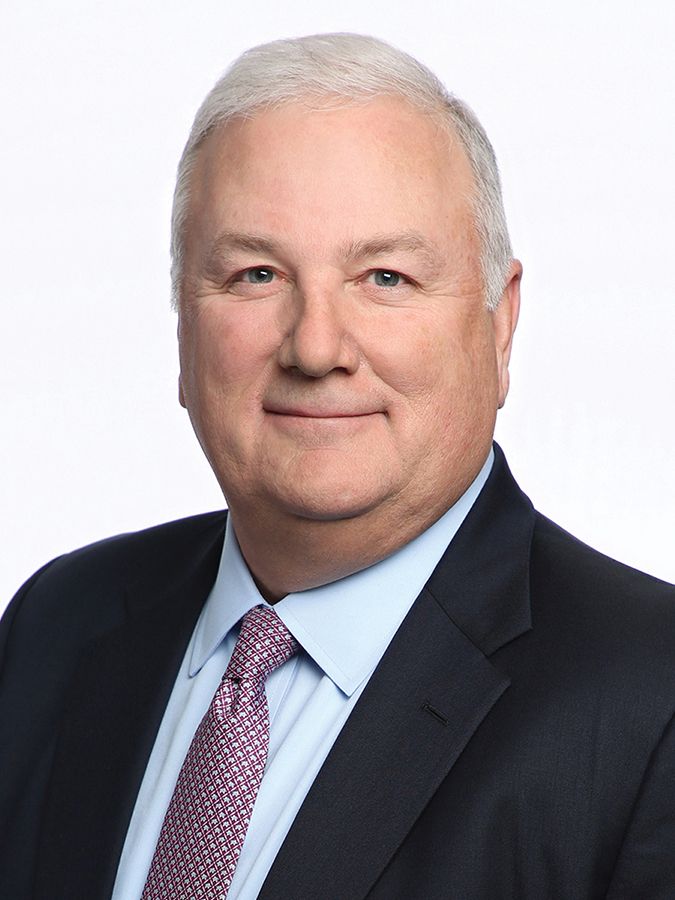
James (Jim) Connor is Chairman and Chief Executive Officer of Duke Realty (DRE) and John G. Ullman is President and Founder of John G. Ullman & Associates whose portfolio includes Dominion Energy (D).
Duke Realty (DRE) is one of the largest owners, developers and managers of industrial properties in the United States and a NYSE-listed company with a total enterprise value nearing $30 billion.
Mr. Connor serves as head of Duke Realty (DRE)’s Executive Committee, overseeing the strategic direction of the company, and its Investment Committee, with responsibility for approving major capital transactions.
He is a member of the Executive Board of Governors and Vice Chair for NAREIT, a member of the Real Estate Roundtable, and a member of the Society of Industrial and Office Realtors (SIOR). Mr. Connor is on the Advisory Board of the Marshall Bennett Institute for Advanced Real Estate Studies and serves on the Board of Trustees of Roosevelt University and EPR Properties.
In this interview, exclusively in the Wall Street Transcript, the Duke Realty (DRE) CEO exposes his strategy for success:
“We brand ourselves as the top U.S. logistics REIT.
We’re not in any of the international businesses, we’re exclusively an industrial logistics REIT, which differs from some of our peers.
Everybody has their own brand and their own mission, but we’re very focused on that. We’re actively developing and acquiring and operating properties in the top 19 markets across the country.
We’ve been in other markets and, for varying reasons, sold out of those markets, but we like the top 19 markets that we’re in.
Today, I would tell you our highest priority is the coastal Tier 1 markets, so that’s going to be Seattle, Northern California,
Southern California, Southern Florida, and then New Jersey. We’re also big players in the other Tier 1 markets, Chicago, Dallas and Atlanta, but really the growth focus is in the coastal markets today.
I will tell you, in terms of our strategy, for us it’s really all about value creation, because we can do any number of things. We’re very prolific developers.
We do greenfield development.
We do brownfield development.
We do acquisitions.
In the world of acquisitions, we will buy existing buildings and retrofit them. We’ll buy brand new buildings that other people have built and lease them up. We do build-to-suit development. We do spec development.
So our teams on the ground in these 19 different markets have virtually every opportunity to go out and create value for shareholders.
It’s not just about we’re only going to do greenfield development or we’re only doing brownfield development or we can only do acquisitions. We can do all of the above.
I like to tell our people, you have unlimited opportunity, you can look at any opportunity in the marketplace and if we can figure out how to make money — either through our expertise, our size and our scale, our balance sheet, our ability to lease and manage properties — then those are opportunities for us.
It’s been quite an exciting time.
This has been a great 13-year run.
Sitting here today, the company has about 165 million square feet, give or take.
Our largest market is Southern California, where we have about $5.5 billion invested. New Jersey is second, with about $3.4 billion. And then South Florida and Chicago would be the other top two, which would be about $2.2 billion or $2.1 billion.
So we’ve got size and scale across the country, and we’ve got great teams on the ground.
A couple of the characteristics of our portfolio which would differentiate us from all of our peers: Our buildings tend to be bigger, our average building size is about 275,000 square feet.
Our peers are probably much closer to 200,000.
Our average tenant size is bigger, our average tenant size is 175,000 feet. And because we’re such prolific developers, the average age of our portfolio is much younger than our peers.
The average age of our portfolio is 12 years, and our peers’ is about 20 years.
Because [Duke Realty (DRE)] is creating brand new product every year and placing it in service, we’re able to keep that average age down because we’re pruning less desirable assets and replacing them with brand new assets.”
Read the rest of the interview and how the Duke Realty (DRE) CEO plans to accommodate any potential recession.
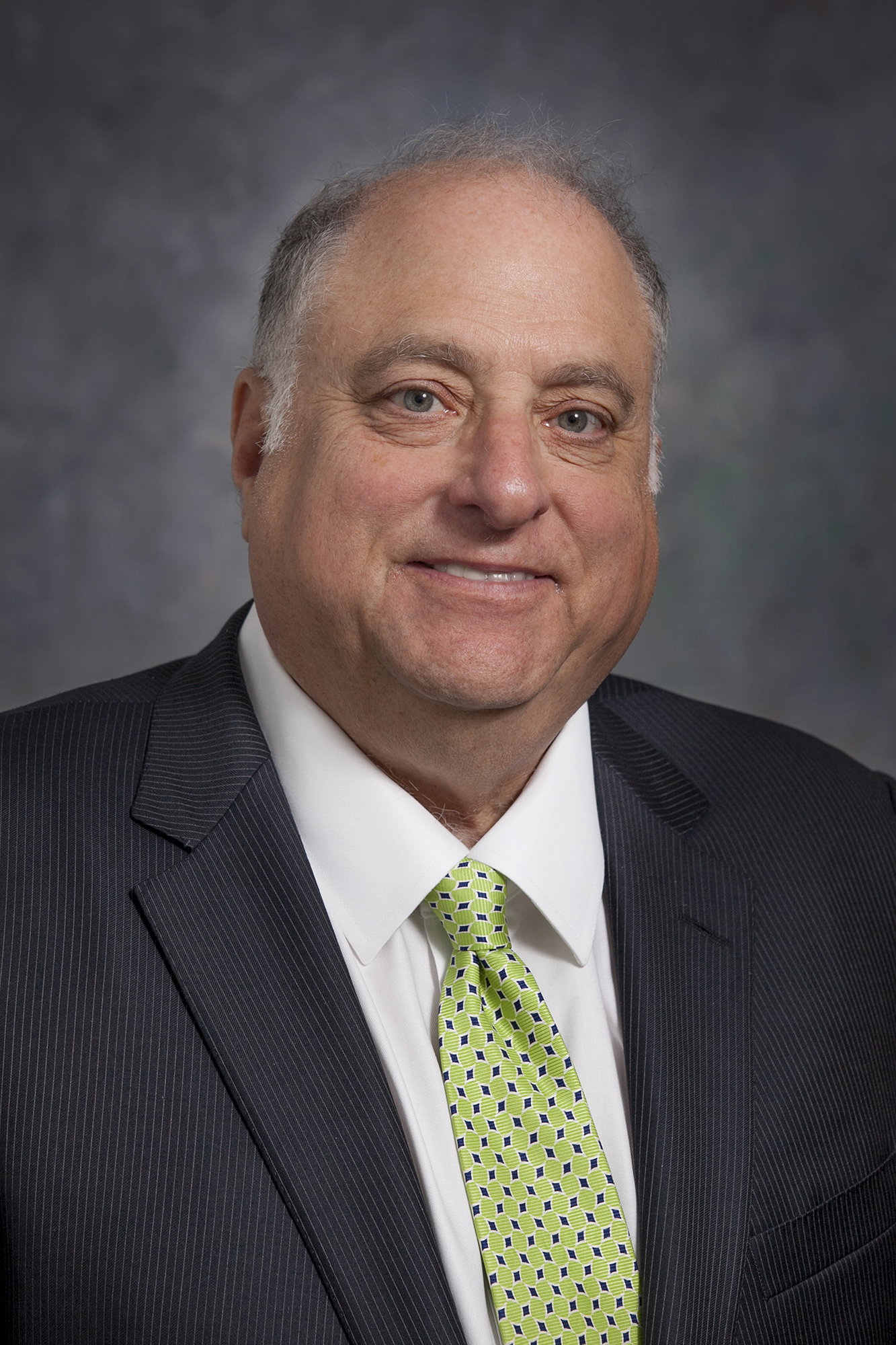
John G. Ullman, President and Founder, John G. Ullman & Associates
John G. Ullman is President and Founder of John G. Ullman & Associates whose portfolio includes Dominion Energy (D).
Earlier, he was President of USGM Securities, Inc., and at Corning Inc., he worked in financial management. He received a bachelor’s degree in economics from Johns Hopkins University.
He received an MBA from the University of Chicago, with a focus in financial management. He was named the Corning Chamber of Commerce Small Business Person of the Year in 1997.
“One specific company within the Utility sector that we like and own shares of is Dominion Energy (D). The utility company sold off its midstream assets in 2020 for $8.7 billion, and it also cut its dividends. It did a little restructuring.
The stock sold off at the time.
Generally, investors do not like it when dividends are cut.
The midstream assets were sold to Warren Buffett. It was seen as if Warren Buffett was getting a good deal in terms of value for the assets, but we liked the long-term strategic thinking of management at the time.
We also liked the valuation of the stock price, it having sold off because of these moves. And with that, we increased our position in Dominion Energy (D).
One of the strategic initiatives that Dominion’s management is taking is investing heavily in the renewable energy sector.
Management plans to spend $37 billion in renewable energy growth capex, so that is capital expenditure in renewable energy projects that will be in offshore wind.
The company plans to spend heavily in the offshore wind sector right off the coast of Virginia, in addition to onshore wind and solar farms.
These initiatives are supported by tax credits, and the company is protected by semi-automatic rate increases.
Therefore, we feel that this utility company is favorable in terms of a risk/reward scenario that would take place. In addition, we think the downside is fairly limited, while the company can grow along with these initiatives.
One other reason why we see the Renewable Energy sector to be favorable is that it is being supported at the state level. States are now mandating certain renewable energy goals to meet their climate change endeavors.
We view climate change as a long-term problem, and some of these solutions are being tackled by the utility companies themselves.
So, many renewable energy stocks are priced very, very high. We stay away from those.
But we found utilities such as Dominion Energy (D) to be a safer way to invest in the renewable energy sector, given the reasonable valuation.
The price of oil and natural gas is high right now; that is another reason to invest in renewable energy, given that it is an alternative source of energy.
But that said, the price of oil and natural gas can come down. It is very volatile, and it is really determined by geopolitical factors, in addition to overall supply/demand.
While climate change is a long-term problem, we see utility companies with their resources being a major player in tackling that problem. So overall, we like their management’s strategic thinking, their plans, their investments, in addition to the valuation of the stock.”
Get more information about Dominion Energy (D) and Duke Realty (DRE) and many more, only in these exclusive interviews in the Wall Street Transcript.
James Connor, Chairman & CEO, Duke Realty Corporation
email: ir@dukerealty.com
John G. Ullman, President & Founder, John G. Ullman & Associates, Inc.
Stephen Biggar, Director of Financial Services Research, Argus Research Group
Stephen Biggar is Director of Financial Services Research at Argus Research Group specializing in banks and asset managers. Mr. Biggar is responsible for coverage of large global banks, regional banks and domestic credit card companies.
“We can look at pre- and post-pandemic, or at least the start of it, clearly all the groups like everything else had a pretty difficult time in early 2020 and most were growing fairly well before that. And the pandemic had a way of checking some winners and losers along the way.
Banks had a difficult time as the Federal Reserve moved rates down to zero.
So that had a pretty poor impact on net interest margins.
But that was kind of quickly superseded by — about a quarter or two later as we started to emerge, it became clear that particularly for the large banks and multinationals that trading was doing extremely well. Companies were very active in investment banking, debt and equity underwriting.
Of course, when rates go to zero, that helps debt underwriting.
People were scrambling to refinance at much lower rates. There’s growth in a lot of technology areas. So the investment banking side for the banks did very well.
And then once the economy got going again and the stimulus impact began to wear off, then you had a resumption of loan growth that started in mid to late 2021. And then you had the prospect of higher interest rates from the Federal Reserve to tame inflation.
So you had a resumption of widening of net interest margin. That lasted until earlier this year.
And now we have again a return to the negative cycle where investors are concerned that there’s going to be a very aggressive Fed rate hike cycle here and that’s going to result in a much slower economy and that is not good for loan growth and that may not be good for credit costs, which had up till now been at historically low levels.
So that’s largely the picture.”
Banks and asset managers benefit in rising interest rate environment from being “asset sensitive”.
“Banks are almost universally what analysts would call asset sensitive, which means their assets reprice faster than their liabilities and that is therefore helpful in a rising interest rate environment.
When the Fed raises the Fed funds rate, they immediately raise the prime rate and that’s beneficial. And then they’re slower to reprice liabilities like deposits.
That’s an enormous tailwind.
Banks can make money a few ways. The short end, which largely controls the prime rate and there’s a lot of lending based off that. And then the long end, residential mortgages are based off the 10-year yield generally.
And so when the long end of the curve moves up — so banks will talk about a parallel shift upward or downward in the yield curve, meaning that for every 25, 50 or 100 basis points increase across the yield curve, that will be beneficial by so many — 100 million or 1 billion — to net interest income.
And that’s basically when you’re not doing anything, right? It’s just an automatic tailwind as rates move up. But to a point.
Obviously, if rates move up too quickly and it slows the economy too quickly as well, then you have an impact on lending growth and if banks aren’t making new loans, then they’re not going to benefit as much from that higher interest margin.
And if it slows the economy to the point that there are layoffs that means that credit costs are probably no longer going to be at historical lows.
There is a very high correlation between unemployment levels and credit costs for banks.
If you have a job or if you lose a job and find it easy to replace one, you tend to stay current on your bills.
But if you lose a job and can’t find another job to replace it then you might go delinquent on your bills and that’s where higher credit costs come in for banks.
Banks are starting to put more money aside in expectation of higher loan losses and starting to guide a bit lower for less loan growth as the Fed is aggressive on rate hikes and cools the economy.”
The current legislative and regulatory environment for banks and asset managers is positive in the United States.
“…Regulation, which is always, I think, on the minds of bank investors, and maybe increasingly asset managers — I’ll get to that in a second — but the regulations for banks in particular. Now, we’ve got a CCAR — Comprehensive Capital Analysis and Review — cycle coming up, with an announcement from the Fed later in June where they once a year green light or red light the capital return plans of banks on buybacks and dividends.
Banks up until now, throughout the cycle, had been pretty flush with capital.
So we expected a pretty good improvement on returns based on that.
Now they submit these plans much earlier in the year and then the Fed takes a few months to take a look at all the ratios and see if it’s proper for banks to have the kind of returns that they’re asking for. So it’s going to be a tricky cycle, given what’s transpired since earlier in the year.
Still we expect decent returns, elevated buybacks. I think banks are particularly interested in buying shares back at these reduced levels and would like to return more in terms of dividends as well.
Of course, two years ago there was a moratorium on dividends for the 2020 cycle because of the pandemic.
So, banks — the CCAR banks anyway, the systemically important ones — didn’t have any increases. And then came the improvement a year later in the 2021 cycle. So not completely made up perhaps from the year of no increases.
Banks do have some flexibility there to improve returns across the board.
And there was an interesting proposal yesterday for the asset managers.
Senator Sullivan, out of Alaska, introduced legislation that would return the voting of shares from the large asset managers, which have up till now had the power over how they vote shares that are in ETFs and mutual funds and so forth.
The three largest companies here, BlackRock (NYSE:BLK), Vanguard and State Street (NYSE:STT) have about $20 trillion in combined assets, and they vote something like 25% of all votes at annual meetings.
If that bill passes, it removes a lot of political power from these large firms and others in the asset management space embracing ESG standards for business and so forth.
And shares aren’t always voted, I guess, in the way that an individual shareholder that owns these funds would want them voted. And so it’ll be an interesting power dynamic change, if that goes through as well.
A lot of firms, companies — and politicians for that matter — will want to put pressure on some of these asset management firms to vote a certain way. And so that’ll be an interesting, again, power dynamic change.”
This leads Stephan Biggar to several specific stock picks from his banks and asset managers sector:
“I think Invesco and BlackRock is the way to go. We didn’t touch on a few others, like, maybe Charles Schwab (NYSE:SCHW), who would normally be a natural benefiter from the higher interest rates, also just had a difficult time with the asset levels, so they’ve pulled back. But nothing too surprising there.
Schwab is another company we like because of the product creation, the efficiencies. They rolled out their own ETFs which got a lot of traction and are much more profitable for them.
They have a strong adviser base that attracts assets over time. So that’s another long-term, I think, strong growth story.”
Get the entire list of current banks and money manager company stock picks from Stephen Biggar, Director of Financial Services Research, only in the Wall Street Transcript.
![Gene Sheridan is CEO and co-founder of Navitas Semiconductor (NVTS) and leader of the Gallium Nitride [GaN] innovation revolution](https://www.twst.com/wp-content/uploads/2022/06/Gene-Sheridan-.jpg)
Gene Sheridan, CEO and co-founder, Navitas Semiconductor (NVTS)
Previously, he was CEO of BridgeCo, a wireless audio company that was sold to Standard Microsystems Corporation (SMSC).
He also worked in management at International Rectifier. He received a BSEE degree from Clarkson University.
“Gallium is actually a soft metal that’s a natural byproduct of aluminum.
It’s been around for over a century, but had limited use until recently, when we discovered that gallium when combined with nitrogen forms gallium nitride or GaN for short.
This material forms a 10 times stronger electric bond, and two times higher electron mobility.
In the world of power electronics, those are really powerful properties that actually enable power systems and electricity, managed by power, to be up to three times faster charging, higher density, smaller, lighter weight, up to 40% more energy efficient, and 20% or more lower costs.
So a lot of great things come from this new exciting material called GaN to replace silicon in all types of power electronics.
Power electronics are needed for virtually all forms of electronics from fast charging your phone to very efficiently powering the world’s data centers and the internet to improving the cost payback and energy savings you get from renewable energy such as solar.”
Navitas Semiconductor (NVTS) is a leader in using this chemistry in innovative products.
“….We’re really pioneering the use of this material in power electronics. When we started the company years ago, the material was not being used in production for any power chips. We’ve now brought it to production and commercialized it. It’s really innovative and compelling.
Chips are now being used to fast charge your phone, tablet and laptop, and very soon will power these other applications I mentioned, like data centers, solar, renewables and also eventually electric vehicles…we’re really pioneering the use of this material in power electronics.
We took that technology first to production just three years ago and focused on mobile charging, because it’s a fast-moving market with a lot of volume and a value proposition that everybody can understand — fast charging your phone, tablet or laptop.
It’s now already in over 200 GaN chargers in production, including the top 10 smartphone and notebook companies that are developing their next-generation chargers using Navitas GaN technology.
We completed an IPO last year, raised the capital and now we’re commercializing the technology over the next one to two years into data center and solar.
Then electric vehicles will be the next major segment. That takes a little bit longer.
We expect that to go into production for GaN-based electric cars in 2025.”
“In fact, earlier this year, we announced the creation of the industry’s first electric vehicle design center focused on deploying GaN for those applications.
The first application would be on-board chargers. Similar to fast charging your phone or laptop, we’ll fast charge electric vehicles up to three times faster with the onboard chargers.
That’s just the start of deploying GaN in many other power systems within the car, including the motor control, which actually moves the car, which will ultimately then translate into longer battery range and lower-cost batteries, bringing them to cost parity compared to gas cars.”
Powering up the transition to renewable energy is the opportunity for Navitas Semiconductor (NVTS) investors.
” Today, less than 20% of our world’s energy sources come from renewable energy which is directly creating electricity.
The vast majority, of course, are fossil fuels, which go through extensive, inefficient and very resource-intensive processing before you eventually turn power plants into electrical energy.
In the case of solar and wind, in particular, you are dramatically improving that efficiency transition to convert wind and sun power, infinite sources of power, into clean electrical energy.
We expect that 20/80 ratio of renewable energy compared to fossil fuel to flip around as the whole planet moves to electricity and renewable energy sources.
Today, the power chip business is about a $20 billion market. And of course, we don’t use any power chips in fossil fuel applications. So, as you convert that to the 80% renewables in coming decades, that will dramatically increase the opportunity.
So we’re super excited about the market impact in opening up an even bigger $30 billion, $40 billion, $50 billion opportunity for these power chips in the future, but also equally excited about accelerating this really important trend to move away from fossil fuels and move to renewable, clean, efficient electrical energy.
And the same thing can be said for how we use energy today.
Less than 20% is clean electrical energy.
The other 80% is combustion, gas combustion, gas cooking, gas heating, gas cars.
All of this will step by step be converted to clean electrical energy, and Gallium Nitride [GaN] can accelerate that transition and make sure we have high-efficiency, low-cost reliable electric energy for decades to come.”
Navitas Semiconductor (NVTS) CEO Gene Sheridan wants investors to know that the environmental benefits are also commercial benefits.
“Gallium Nitride [GaN], while it’s very advanced in material, and very advanced with the design innovations that Navitas [Semiconductor (NVTS)] has brought to that material, GaN actually uses old semiconductor fabs, the silicon fabs that silicon doesn’t want anymore.
Fabs that were built back in the 1980s and 1990s, that are fully depreciated and underutilized, can now be retrofitted for pennies on the dollar.
So it’s very capital efficient to use these older, low-cost underutilized fabs.
It allows us to serve our customers, even when we’re growing very fast. Right now we’re offering six- to 16-week lead times where our silicon counterparts are often at six- to 12-month lead times.
So that’s really kept us ahead of the curve, and it allowed us to grow even faster.”
Get the complete story of Navitas Semiconductor (NVTS) by reading the entire interview with CEO Gene Sheridan, only in the Wall Street Transcript.
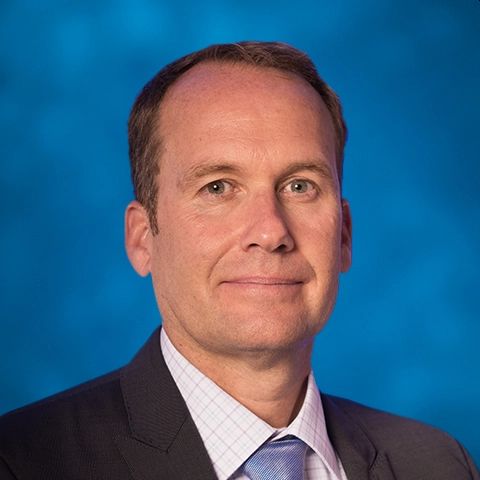
Tore Svanberg, Semiconductor sector analyst, managing director, Stifel Financial
Tore Svanberg is an analyst and managing director at Stifel Financial Corp specializing in the semiconductor sector. He joined the company with the acquisition of Thomas Weisel Partners LLC in 2010.
He is part of the technology group, covering semiconductors with a focus on analog, connectivity and processor semiconductors.
He has been recognized for his work by The Wall Street Journal’s “Best on the Street” Analyst Survey.
Earlier, he was a senior analyst and managing director at Piper Jaffray.
He began his career as an analyst at Robertson Stephens. He received a degree in international relations from Franklin University in Switzerland. He also received an M.A. degree in international policy studies from the Middlebury Institute of International Studies in California.
“I think the good thing about what’s been happening — you could call it a good thing — because demand has outstripped supply for so long, pricing has gone up a lot, probably the most I’ve ever seen. I’ve been covering the industry for 23 years.
And now that prices obviously are this high, that causes demand to trail off. And I think that is something that you’re seeing basically with the global economy anyway.
So with all this inflation, you’re really starting to see demand deteriorate, because prices are so high. And I would say the same thing is happening on the semiconductor side.
We started already seeing things like PCs and smartphones slowing down and those are obviously more tied to consumer spending. With that slowdown, supply is starting to free up somewhat based on the demand level that’s out there…
I think with the pandemic, those markets had a bit of a resurgence, when we had things like work from home. All of a sudden, everybody bought more PCs and more smartphones. But I would say that that was probably a very temporary phenomenon, driven by the pandemic.
If you look at it longer term, I think the markets that are perhaps more interesting for semiconductor companies would be automotive.
There’s obviously a lot of electronic content growth happening in the automotive market. I would say in broadband — and broadband would basically cover various different subsegments all the way from hyperscale infrastructure to 5G to better Wi-Fi. And then, on the industrial side, there’s also a lot of interesting subsectors that are seeing a lot of innovation, including the medical end market, robotics.
And then obviously, there’s this term AI, artificial intelligence, which can also be sort of an umbrella for a lot of different subsegments within those end markets.”
The semiconductor sector manufacturing is mostly in Taiwan, but there is an “in-sourcing” trend to bring manufacturing back to the USA.
“Keep in mind that most design companies, the companies that design these very compelling chips, they are U.S.-based companies. But they don’t manufacture the chips.
The chips are manufactured primarily in Taiwan, and to a certain extent in China, where a lot of the wafer manufacturing happens. And that’s basically a very natural outsourcing that the U.S. has been doing for the last 30 years, not just in semiconductors, but the U.S. has been outsourcing manufacturing everywhere, not just in semiconductors but in other parts of technology and other parts of industrial manufacturing and so on.
Now that semiconductors have become so important, I do believe that the U.S. would like to see some of that manufacturing happen in a growing way in basically what we’d call insourcing.
But keep in mind that that’s going to take a while. Establishing a whole new manufacturing hub for the semiconductor industry is something that can happen over five to 10 years. Maybe this is year one.
But it’s certainly going to take a while before the U.S. is back to being dominant when it comes to semiconductor manufacturing, even though today, they still dominate what we call the design of the chips.”
The large cap stock picks from semiconductor sector specialist Svanberg:
“…in large cap, there are two companies that I really like right now. One is a company called Marvell (NASDAQ:MRVL), and they are a leader in communications or data infrastructure.
Whether it’s things like 5G or hyperscale data centers, they basically have very high exposure there and are leading the way in developing next-generation data infrastructure.
When we go back and think about things like AI, the only way AI is going to happen is if we get this robust data infrastructure that Marvell is applying with their semiconductors. So that’s one company.
The other company is an analog company called Analog Devices (NASDAQ:ADI). And they are a very strong company in a few end markets. But the industrial market is probably their biggest end market.
It’s about half of their revenues. And there, they are benefiting from some of these other end markets that I talked about — robotics, factory automation, medical. So they’re a leader there.
When I recommend stocks to my investors, I am much more focused on things like enterprise and infrastructure as opposed to consumer, because I do believe that consumer was artificially strong during the pandemic because of the things that we just talked about before. And now obviously, that’s behind us.
Not only that, but with all the inflation that’s happening, I do believe that consumer-related semiconductors are going to slow down the most.”
The bottom may be in for semiconductor sector stocks:
“I would say, when it comes to valuation, instead of looking at things like p/es and EV-to-sales ratios, you can look more at balance sheet metrics to try and find sort of a floor.
So things like dividend yields, free cash flow yields, even things like price-to-net cash per share or price-to-tangible book value tend to be important metrics to use to try and identify sort of a bottom.
And I think if you use some of those metrics, we’re not quite there yet for the broader group, although there are a few stocks that are getting close.
So, for instance, I mentioned Silicon Labs earlier. So that stock is now trading at around four times net cash per share, which I would actually classify as sort of a floor in the stock price.”
Get the complete interview with Tore Svanberg on his current view on the semiconductor sector and his top stock picks, only in the Wall Street Transcript.
Tore Svanberg, Semiconductor Sector Analyst & Managing Director
Stifel Financial Corp.
email: tsvanberg@stifel.com
The medical device sector of the health care industry in the United States was denied access to doctors and hospitals for long periods of time as the successive waves of COVID infections swept through the country starting in early 2020. The establishment of new medical device procedures, whether or not approved by the FDA, was severely constrained by the lack of any ability to train medical professionals, let alone access to patients. These three CEOs describe how the kept their medical device companies alive through the global pandemic.
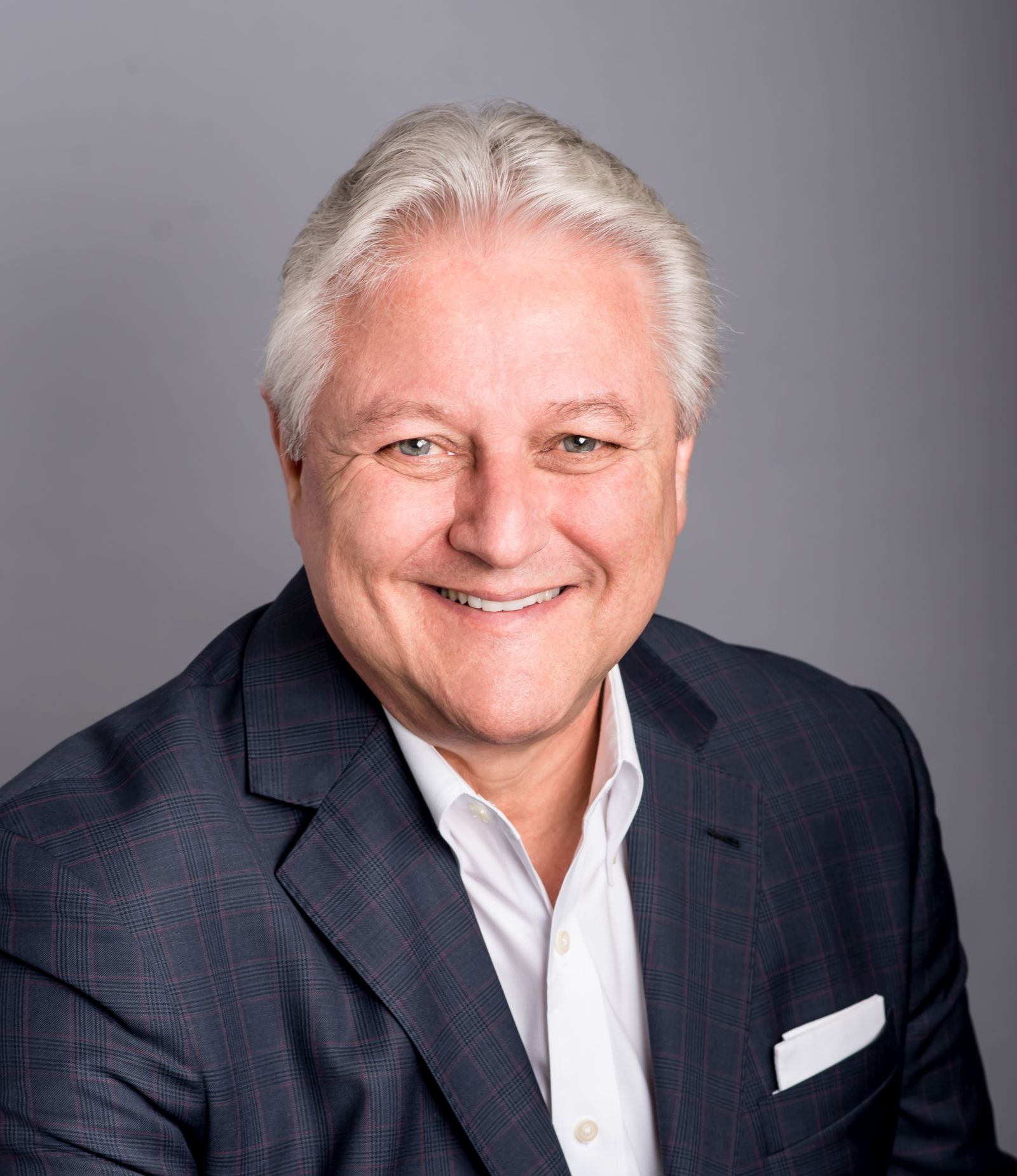
Joseph Sardano, CEO, Sensus Health Care, Inc. (NASDAQ:SRTS)
Joseph Sardano is CEO of Sensus Health Care, Inc. (NASDAQ:SRTS).
A recognized leader in the medical device sector of the health care industry, Mr. Sardano has spent more than 30 years in management and marketing. He has a successful history of introducing and commercializing new technologies and services in many areas, including electronic brachytherapy, PET and PET/CT, SPECT, MRI, lithotripsy and digital radiography. Before joining Sensus Health care, Mr. Sardano held leadership and management roles at CTI Molecular Imaging, GE Medical Systems, Siemens Medical Systems, Elscint Inc. and Toshiba America Medical Systems, among others.
“Over the past year up to date, we have achieved four straight quarters of profitability, which is a big deal for our company. Mostly, this was due to increased reimbursement provided by Centers for Medicare and Medicaid Services, along with a new leasing program called fair market value lease that we’re providing to our customers. It allows our customers to now purchase our more expensive product, which has a breakeven of approximately a little less than two patients a month for treatment of skin cancer…
We’re selling to the dermatology and plastic surgery space. And we do have approximately 50 hospitals, mostly teaching hospitals around the country that have the system as well.
So the product technique or technology, the characteristic of the technology, is that it uses radiation to treat skin cancer, but it’s a very mild radiation, which is the reason why they call it superficial radiation therapy.
And the characteristic of that radiation is that it’s proton therapy.
And so proton therapy is a lot different than electron beam, which is used for all the other cancers.
The proton therapy only penetrates five millimeters below the surface of the skin, which makes it ideal for skin cancer or other skin inflammatory diseases. And then it dissipates — it goes away. It only kills the cancer cells, but allows all the healthy cells to remain and to continue to work in the body.
It’s a product with technology that actually has existed for decades. And metaphorically, we’ve taken it from what the old telephones look like to now the telephones that we have today. So we’ve modernized it quite a bit, and we’ve made it pretty much foolproof to operate.”
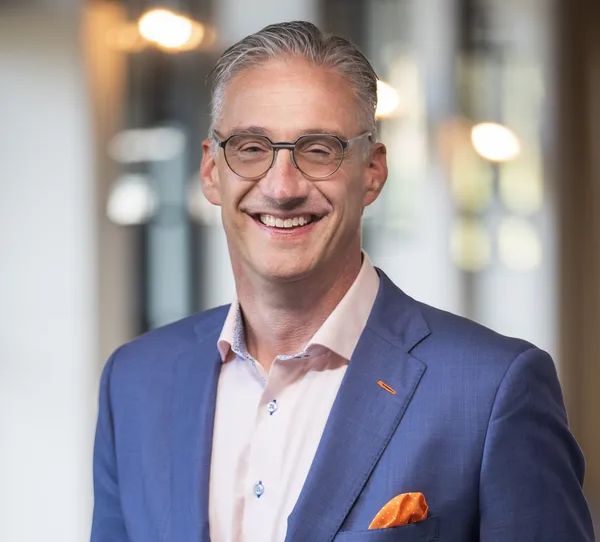
Keith C. Valentine, Chief Executive Officer, SeaSpine Holdings (NASDAQ:SPNE)
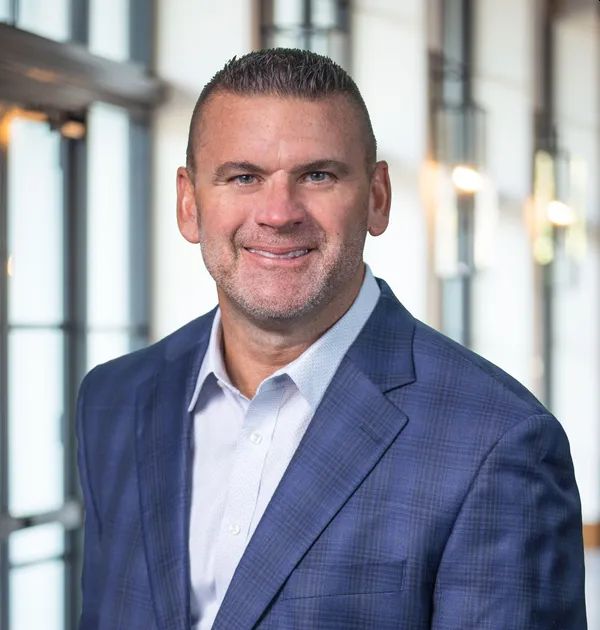
John J. Bostjancic, Chief Operating and Financial Officer, SeaSpine Holdings Corp. (NASDAQ:SPNE)
Keith C. Valentine has served as Chief Executive Officer of SeaSpine Holdings Corp. (NASDAQ:SPNE), a publicly traded medical device company focused on spinal implants and orthobiologics, since May 2015.
John J. Bostjancic has served as Chief Financial Officer of SeaSpine Holdings Corp. since March 2015, and in May 2022 Mr. Bostjancic was appointed to his expanded role of Chief Operating and Financial Officer.
“Spine surgery typically requires two things: one, some sort of implant system that is used to stabilize the disease pathology, and two, an orthobiologic that’s used to permanently fuse that stabilized area.
We develop and market both our spinal implants systems and orthobiologics products but outsource the production of our spinal implant systems to third party machine shops.
On the orthobiologics side, we manufacture those products ourselves in our Irvine, California, facility.
We also recently acquired 7D Surgical, based out of Toronto, which developed our market-leading FLASH Navigation with 7D Technology.
The history of the company is that we were once part of a much larger company called Integra LifeSciences, that decided to spin off its spine business back in 2014. And so, a number of our current management team were brought on board to help with the spinoff and SeaSpine became an independent, publicly traded company in July 2015.
For every three shares an investor owned of Integra LifeSciences, they received one share of SeaSpine.
But generally, investors that owned Integra didn’t necessarily want to be investors in a pure-play spine company, so we hosted an IPO-like process to create broader investment interest in our story as an independent growth-focused company…
Today we’re very proud of the fact that more than 80% of our spinal implant revenue comes from products launched since the spinoff, those products and systems that we have put our fingerprint on from a development perspective.
Throughout the years, we have worked very closely with leading surgeons to design those products to meet their evolving clinical needs. We’re also quite proud of the fact that now we are a completely new company from a development and innovation capabilities perspective.”
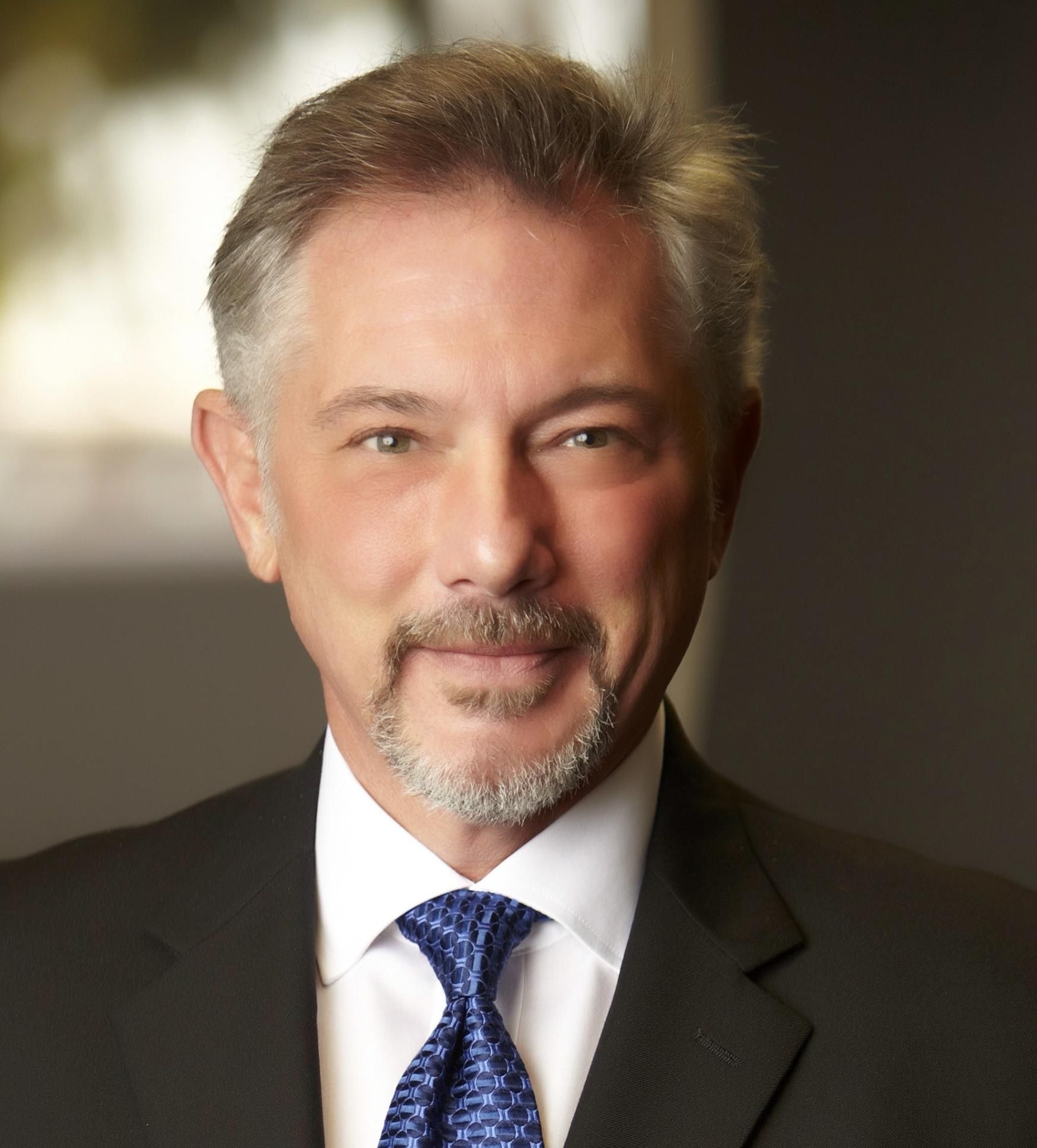
Barton P. Bandy, President and Chief Executive Officer, ReShape (NASDAQ:RSLS) Lifesciences
Barton P. Bandy is President and Chief Executive Officer of ReShape Lifesciences Inc. (NASDAQ:RSLS).
Mr. Bandy brings extensive leadership experience in health care, specifically in the bariatric and minimally invasive surgery segments. Most recently, Mr. Bandy was President and Chief Executive officer of BroadSpot Imaging Corporation, a privately held ophthalmic imaging company, and prior to that he was President of the Wellness Division at Alphaeon Corporation.
He previously spent 10 years as the senior executive leading the Inamed and Allergan Health Divisions through the launch, growth and transition of LAP-BAND®. Mr. Bandy formerly held positions of increased responsibility in sales, marketing and professional education at Ethicon Endo-Surgery and Karl Storz Endoscopy, America.
“It’s an exciting time for ReShape. There’s not a lot of similar competitors out there.
That’s good news as there’s not really anything in the works for laparoscopic or minimally invasive laparoscopic surgery that will be competing against us. And even if something was to get through the FDA process and get an approval in the next year or two, it’s going to take them significant time and cost to gain reimbursement from the insurance carriers. We’re really creating a new market, an expanded market.
We’re not going after the existing market — that’s controlled by stapler companies led by J&J and Medtronic.
Trying to go to war with them and compete for five minutes in the OR with a surgeon to try and change their preferences — that’s just not the model that was going to work for us.
Therefore, focusing on the patient flow and guiding these patients to their practices, in addition to the patients that these practices were seeing for their stapling procedures is additive. It’s helping more people, it’s creating a new market, it’s creating more business for the practices, it’s providing education to patients that maybe didn’t know they had preferable options before.
We did some focus groups and many people in their 30s didn’t even know what the Lap-Band was, because for the last decade or so, it wasn’t really marketed well, and people now in their 30s were in high school or college back then.
Weight loss and bariatric surgery wasn’t really part of their attention span. For some, now it is. And our demographic, primarily, is a female that’s 30 to 50 that has gotten to that point where they want to do something, but they don’t really want to have something that’s major or aggressive surgery.
We have so many benefits with what the Lap-Band offers.
It’s often performed in an outpatient setting. Doctors and patients both like that, especially in the wake of COVID, they don’t have to go to the hospital.
You can go in and get your procedure in the morning, go home that afternoon, and in a few days go back to work.
It’s very confidential and it’s not a big disruption to your life and your responsibilities. That’s something that’s highly desirable to many.
It’s adjustable with a small port connected to the Lap-Band that’s just on top of the abdominal wall underneath your skin. With a simple office procedure, the doctor can either inject or remove saline from the inner balloon of your band, allowing it to be tightened or opened.
What this facilitates, if you think of a sand timer with the Lap-Band around the top of your stomach, you have a much smaller stomach to fill up with that same sensation of being full.
So you become full faster.”
Get the complete picture on these dynamic medical device companies by reading the entire interviews, only in the Wall Street Transcript.
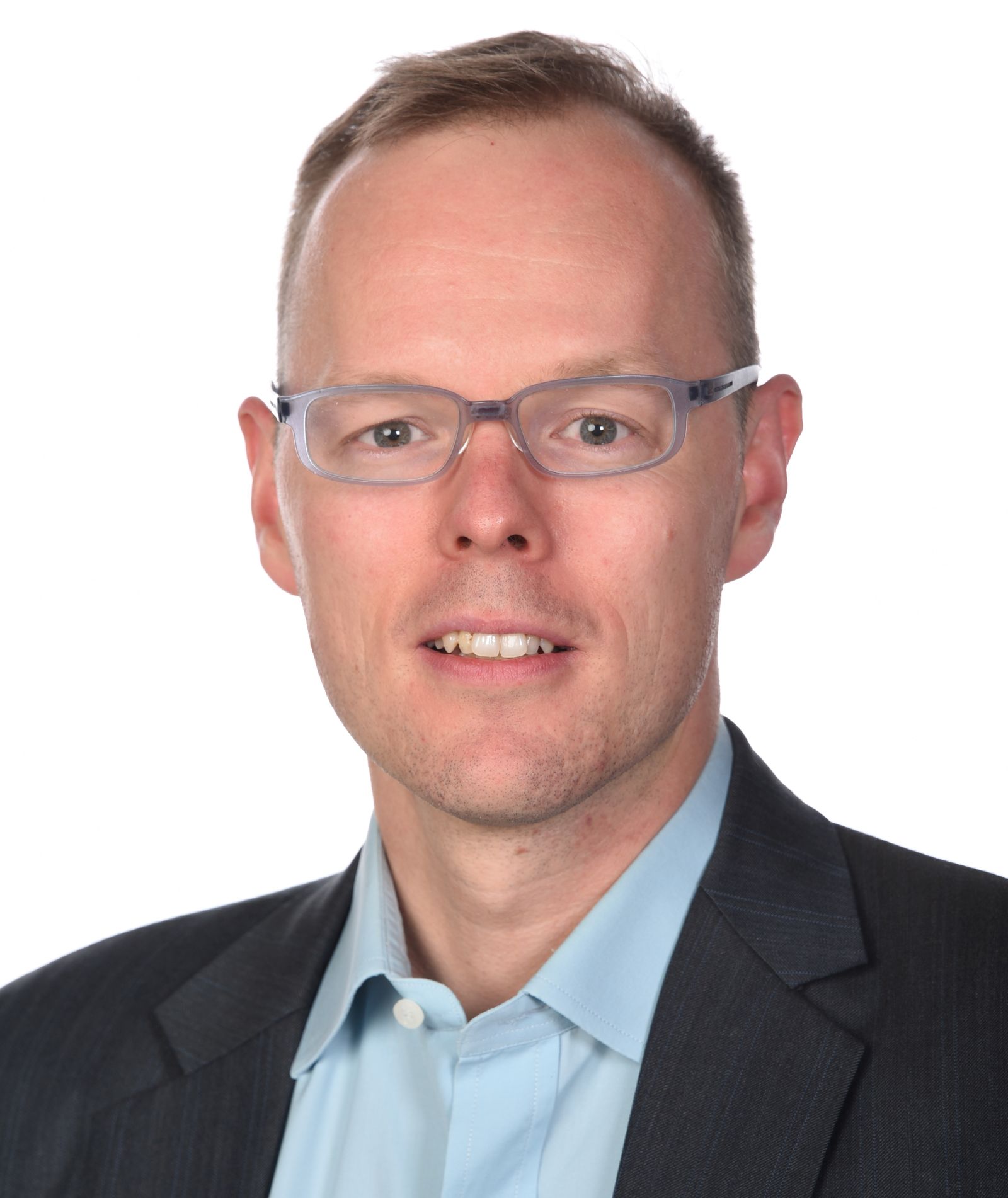
Florian Weidinger, CEO of Santa Lucia Asset Management (SLAM)
Finding value stocks with supporting cash flow can be a planetary wide search for portfolio managers.
Florian Weidinger has been the CEO of Santa Lucia Asset Management (SLAM), a Singapore-based investment firm since 2021 and is a specialist when it comes to discovering value stocks.
Previously, he was the founder of Hansabay in 2011, which merged its business with SLAM in 2021. Before that, Mr. Weidinger was a vice-president at Lehman Brothers where he last worked for the insolvency administration, after several years with the risk arbitrage, principal investing and investment banking divisions.
He has held multiple board directorships across sectors. Mr. Weidinger holds a B.Sc. degree from City University of London, an MBA from the Stanford Graduate School of Business, and an M.S. degree in environment and resources from Stanford University’s School of Earth Sciences.
“We also like a bank in Papua New Guinea listed in Australia, Kina Securities (ASX:KSL), a rather interesting case. So this is Australian listed, but is the second-largest foreign bank in Papua New Guinea.
Papua New Guinea is about a $23 billion economy that is experiencing a significant uptick in foreign direct investment as a result of rising commodity prices. The nice thing about these types of money, foreign direct investment — contrary to hot money from investors behind Bloomberg terminals — foreign direct investment is money that stays because it’s invested into fixed assets.
In fact, Papua New Guinea’s $23 billion economy is getting in excess of $10 billion, maybe $15 billion FDI in the coming years. So we’re having a significant inflow of foreign investment into that country.
That should help improve the overall revenue opportunity of Kina, which is a direct beneficiary of foreigners coming into the country because they are — as the leading foreign bank in the country and number-two overall — they are the first choice for many foreign companies.
There’s also a very interesting dynamic happening here in that Westpac (OTCMKTS:WEBNF) from Australia has announced that they are leaving Papua New Guinea.
They are not just leaving Papua New Guinea, Westpac is leaving the entire Pacific, and this is part of a broader strategy shift of Westpac.
As a result, Kina is having a clear run at picking up a couple of customers who will have to look for a new banking home in Papua New Guinea.
It arguably is a more exotic security, but we think it’s a very attractive and nice name. That company is paying a dividend yield of 12%, listed in Australia trading around one times book, and earnings are on a nice upward trajectory.”
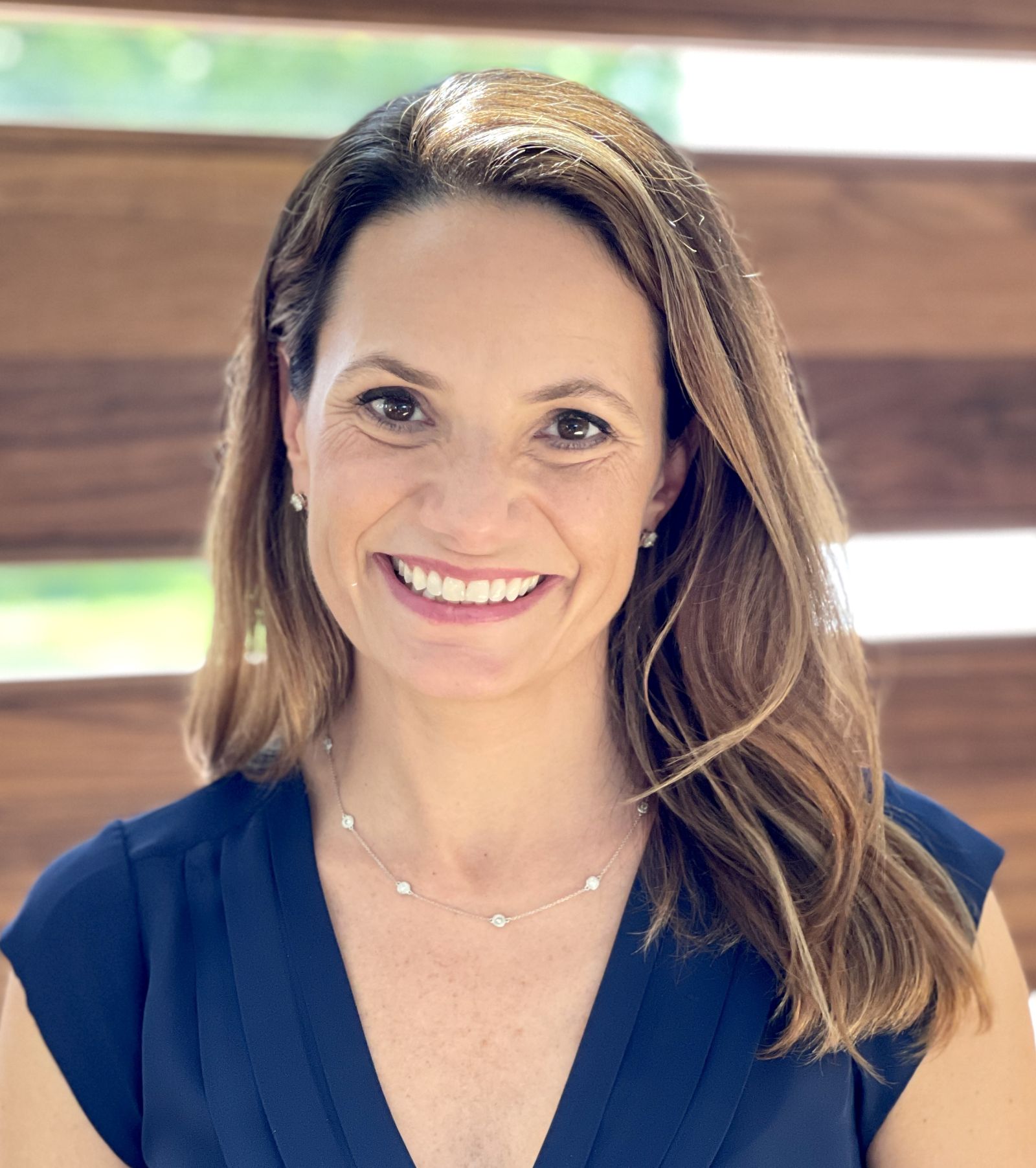
Katie Stockton, Founder and Managing Partner, Fairlead Strategies
Katie Stockton is warning that current US equity values are not supported by cash flow so value stocks are not the support for portfolios that investors wish.
“…We’ve been recommending reduced exposure to the U.S. equity market for now with the intention of revisiting it when we feel a long-term low has been established.
Our indicators are looking their worst since, unfortunately, 2008, and it doesn’t mean that we’ll have that kind of downdraft in terms of magnitude, but it does increase risk to the downside, more so than we’ve seen for many years.
And with that, especially on the brink of retirement, it doesn’t make sense to have aggressive long equity exposure at this time.
That’s why we feel that the TACK ETF is appropriate for folks at that stage of their investing career, and with their time horizon, because it allows for them to leverage upside in that equity market when the equity market is trending higher.
But it has that risk-off piece that helps them avoid the kind of downdrafts that we did see in 2008, and before that in 2000 through 2003. So, to us, a conservative equity strategy with real attention to managing risk, somewhat of a hedged equity exposure, seems appropriate to us.”
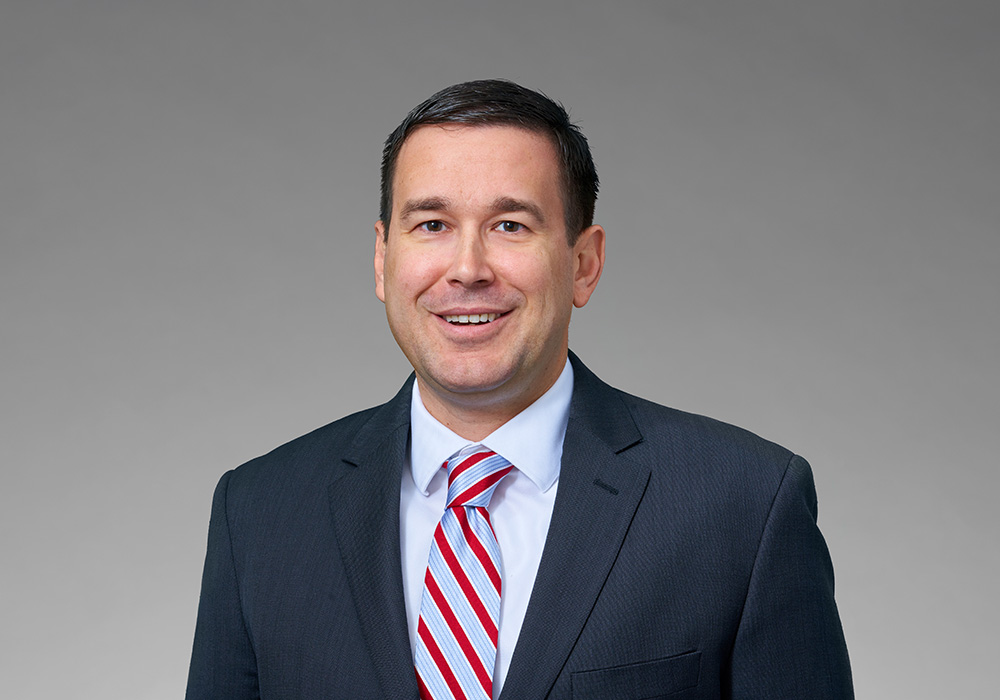
Joe Van Cavage, CFA, Vice President and Portfolio Manager, Intrepid Capital
Saudi Arabia is gushing with cash flow now that they have raised prices for oil to all time highs. Joe Van Cavage has found a value stock company that will benefit.
“Let’s discuss Valvoline (NYSE:VVV). That company is over 150 years old. But it’s another company we really like. Valvoline has two related but distinct businesses inside of it. The first is a nationwide chain of automotive quick-lube stores that provides oil changes and ancillary services to customers.
The second is a manufacturing business that makes engine lubricants under the Valvoline brand and sells them wholesale to other auto maintenance shops, mass market retail and of course, through its own chain of stores.
This company was spun out of Ashland Chemical (NYSE:ASH) in 2016. And management right away went to work fixing the company’s capital allocation, which meant taking the cash flow from a mature manufacturing business and investing to aggressively grow the quick-lube business, which was ignored under Ashland.
This strategy has really paid off because the quick-lube business is a gem.
It has several things going for it. First, they’ve been able to outmanage a very fragmented industry, as customers need less and less oil changes and used cars can extend the period between them. Valvoline has gained share by focusing on an important niche: extreme convenience and quality products.
This means investing heavily in the client experience as well as branding to ensure customers are aware of Valvoline’s quick turnaround times to get them on their way. As a result, the average throughput to Valvoline quick-lube stores is much higher than the industry average and steadily growing each year.
Second, they’ve continually improved their training and upselling capabilities at the point of sale to attach further services to the quick oil change people come for.
Think replacing wiper fluids, engine and cabin filters, etc. Attach rates continue to climb and increase the average ticket at a nice margin.
Finally, newer cars on the road are more often requiring synthetic oil versus conventional.
This costs the consumer about three times more, but doesn’t cost nearly that much more to make. And this has been another ticket and gross margin driver, although less driven by management’s efforts.
So you combine the market share gains with these ticket drivers, and you’ve got a business that has had 15 years in a row of same-store sales increases, including in 2020 when the country was shut down and basically no one was driving. So this is a really nice consumer franchise.
With that said, we believe management was smart to aggressively invest the company’s cash flow into expanding it. The company’s store count has more than doubled since the spin off and will continue to grow double-digits.
Margins in that segment are already high, but we believe are under-earning as the large base of new stores takes time to reach maturity.
There’s just a lot to like about the setup when you consider the existing store base is guiding to comp double-digits this year despite a huge rebound in 2021.
And then, the manufacturing business is a decent business as well, just not quite on the same level with slower growth prospects and weaker pricing power.
It’s been suffering over the last year as its main input, which is petroleum, spikes. And it takes them longer to pass this along to the retail customers like Walmart (NYSE:WMT) than it does for the quick-lube business to raise prices for a consumer who just rolled into the shop.
But it’s something they will get back over a cycle and can probably be seen as a margin catalyst embedded into the idea.
Valvoline is going to separate these two businesses. Now, the separation of these businesses can create a lot of value by allowing more appropriate shareholder bases for a steady cash flow gusher that can pay a large dividend on the manufacturing side versus more of a high-margin retail growth concept that is investing most of the cash flow into new quick-lube stores.
However, it is a trickier-than-normal separation since the manufacturing business sells the quick-lube business its products at cost. So some care needs to be taken to ensure this separation doesn’t destroy value. But management has communicated well that they are aware of this issue while structuring any deal to avoid something like that.”
Meyer Shields, Managing Director, Keefe, Bruyette & Woods
Health insurance stocks are an overlooked investment sector. CEO and equity research analyst interviews reveal some interesting potential investment upside in this segment of the market.
Meyer Shields is Managing Director at Keefe, Bruyette & Woods, Inc., a subsidiary of Stifel Financial Corp. He covers insurance brokers and small- and mid-cap property and casualty insurers. Earlier, he worked at Legg Mason, J.P. Morgan Securities, Inc., and Zurich North America. He ranked fifth among stock pickers in the insurance/nonlife industry in The Wall Street Journal “Best on the Street” analysts survey for 2009.
He has a B.S. degree in actuarial science from the University of Toronto and is a Fellow of the Casualty Actuarial Society. In his interview in the Wall Street Transcript, Mr. Shields states:
“2021 was a fascinating year that started off with really strong earnings because in the first quarter of the year, there was still less driving than normal, and therefore car insurance companies were making an awful lot of money.
And then very quickly, in the aftermath of COVID-related supply chain disruptions, the rate of claim cost inflation, what we call loss trend, for personal auto really accelerated and most companies were actually doing worse or significantly worse than they expected earlier on.
So, over the course of the end of 2021, let’s say the second half of the year, that segment of the insurance industry did fairly poorly because there were consistent indications of rising claim costs, and not much in the way of rate increases.
And the insurance brokers also did pretty well. The economic rebound that we saw last year combined with the tendency of insurance companies to raise rates — and this is predominantly a commercial subsegment-focused industry, that’s what most of the brokers sell — that translated into very solid top-line growth. So that was the 2021 story.
2022 has been sort of tough. I mean, most of the market is down. That seems to be broadly true for insurance companies. There are some exceptions. But the space has been under some pressure and the weak performance that we’ve seen, particularly in growth stocks, has also manifested itself in insurance names that are considered to be growthy.
So it’s been a much tougher start to this year than the end of last year.”
Mario Schlosser, CEO and co-founder, Oscar Health (NYSE:OSCR)
Mario Schlosser is the CEO and co-founder of Oscar Health Inc. a newly public health insurance stock.
Oscar Health develops seamless technology and provides personalized support to help more than 1M members navigate their health care. It has been recognized as one of Fast Company’s most innovative companies in health, one of CNBC’s top 50 disruptors, and one of TIME’s most influential in health care.
Previously, Mr. Schlosser co-founded the largest social gaming company in Latin America, where he led the company’s analytics and game design practices.
Prior to that, he was a Senior Investment Associate at Bridgewater Associates and worked as a consultant for McKinsey & Company in Europe, the U.S. and Brazil. Mr. Schlosser also spent time as a visiting scholar at Stanford University, where he wrote and co-authored 10 computer science publications, including one of the most cited computer science papers published in the past decade, in which he developed the EigenTrust Algorithm to securely compute trust in randomized networks.
In May 2019, Mr. Schlosser and his co-authors, Sepandar D. Kamvar (Mosaic Building Group Inc.) and Héctor Garcia-Molina (Celo), received the prestigious Seoul Test of Time Award from the International World Wide Web Conference Committee (IW3C2) for this work.
Mr. Schlosser holds a degree in computer science with highest distinction from the University of Hannover in Germany and an MBA from Harvard Business School.
Mario Schlosser is currently applying his intellect to the problems of health care insurance coverage in the United States.
“We are the first consumer-driven, tech-driven insurance company startup in the U.S. We started the company in 2012 with an eye towards developing a different kind of insurance company.
From that time period, we now are at 1.1 million members and north of $6 billion in revenues this year. Not only have we developed a health insurer that has among the highest member engagements and member satisfaction anywhere in health insurance, but we’ve also built our technology stack in such a way that we are enabling other risk-bearing entities in the U.S. health care system to build on top of our technology.
So we lease out our technology and our services to others in these two business lines — on the one hand, offering insurance to individuals, and on the other hand, offering technology to other players in U.S. health care.”
This fairly recent IPO stock has a path to profitability:
“We spent a couple of hours at an investor day about two months ago or so taking people through what needs to happen and what we need to do in order for that to be the case.
First, insurance company profitability in 2023 and then, following up in 2025 by overall company profitability. I have really every confidence that with the levers we control there, we are pulling exactly the right sequence and with the right power.
And that the overall market conditions will also be such that everything we need to see around us is falling in place.
So yes, I have confidence.
We’ve now been doing this for 10 years and I think we have also had a somewhat unique history of challenges to navigate. We are one of the few companies in the ACA and the individual markets from the very beginning — and there have been many situations where the ACA almost got defunded, where it changed very, very radically in terms of the market and so on for a new insurance market.
That’s not uncommon at all.
The Medicare Advantage market also went sideways for many, many years in the early 2000s, late 1990s, before it then recovered and became this kind of unstoppable juggernaut for health insurers.
We think we’re very early in a market that will look like that.”
Ann Hynes, Senior Health Care Services Analyst and Managing Director, Mizuho Securities
Ann Hynes is a senior health care services analyst and managing director at Mizuho Securities Co, Ltd. and has alot of advice regarding health insurance stocks.
Previously, she was a senior member of Leerink’s health care research team, and worked at Caris & Company, FTN Equity Capital Markets, and Cowen and Company. She received an MBA from Boston College and a bachelor’s degree from Fairfield University.
Ms. Hynes does not see inflationary pressures impacting health insurance stocks profitability:
“I think of all my subsectors, the health insurance industry is the least impacted.
There are some labor pressures that the companies see. But it is more on the customer service side. They do not employ a lot of physicians, where we are seeing a lot of the pressure point.
From an inflationary perspective, I think what would impact them over the next couple of years would be from providers, like hospitals or outpatient centers or surgery centers, who are really struggling with increased labor costs.
To put it in perspective, historically, for a hospital, labor costs per full-time employee might increase 2% to 2.5%, and currently, it is increasing about 5% to 6% on the base business.
That is a big headwind for hospitals.
They will have to go to commercial insurance companies to try to get paid for that. And typically, that does not happen mid-contract cycle. These contracts are typically anywhere from one to three years and roughly one-third of their book renews each year.
As the contract renews, managed care will need to reimburse health care providers for higher base wage rates. They will have to negotiate and likely have to pay hospitals for the labor increases.
But that will just end up in higher premiums to the consumer.
It is not a net negative from a margin perspective for a managed care company. It is really just going to hit the U.S. consumer.
Because our health care premiums will eventually increase because of the labor market increases on the health care side of the equation.”
Health insurance stock sector CEO and equity research analyst interviews reveal some interesting potential investment upside in this segment of the market. Read the complete interviews to get the complete advice from these highly professional executives, only in the Wall Street Transcript.
Soumit Roy, Ph.D., Vice President, Healthcare Analyst, Jones Trading Institutional Services
As biotech stocks hit multi-year lows, it is helpful to re-visit the pre-COVID 19 predictions of prominent, award winning biotech stock pickers and see if their investment advice has held up.
Soumit Roy, Ph.D., is Vice President, Healthcare Analyst of Jones Trading Institutional Services LLC. Dr. Roy is responsible for research coverage on biotechnology companies within the healthcare sector for Jones Trading.
Prior to joining Jones Trading in 2018, Dr. Roy was a senior research associate at SunTrust Robinson Humphrey, covering small- and mid-cap biotechnology companies with innovative technologies, notably T-cell therapy, targeted medicines, gene editing and next-generation immuno-oncology.
He was a postdoctoral fellow at the Icahn School of Medicine at Mount Sinai, New York, in the Clinical Immunology Department, and his research was focused on understanding and discovering novel agents to improve vaccines.
He earned his Ph.D. from the Albert Einstein College of Medicine, New York, where he helped to develop a novel drug candidate that targets the powerhouse of cancer cells to stop cancerous growth. He holds two master’s degrees, in developmental biology and biochemistry, and has published in the highest-rated scientific journals.
“For the rest of 2019, my coverage is quite catalyst-rich, as we have Phase III and a bunch of mature Phase II data coming out.
ASCO, or American Society of Clinical Oncology, looks like the richest catalyst so far for this year.
Deciphera’s (NASDAQ: DCPH) Phase III top line reads out at ASCO, Mirati’s (NASDAQ: MRTX) competitor Amgen (NASDAQ:AMGN) will likely present clinical data on its KRAS inhibitor at ASCO and Mirati clinical data likely at ESMO, or European Society for Medical Oncology.
Scientists have been trying for the last two to three decades to come up with a targeted KRAS inhibitor, and it finally looks like Mirati and Amgen have cracked the code. Any positive updates from Amgen will likely be read as positive for Mirati.
BerGenBio (OTCMKTS: BRRGF) has second-line lung cancer and second-line AML — acute myeloid leukemia — data at ASCO.
Celyad (NASDAQ: CYAD) is also presenting mature Phase I data in AML and colorectal cancer, Neon [n.b.: acquired by BioNTech] will be presenting 52-week mature data in melanoma and lung cancer at ASCO, and Forty Seven Inc. [n.b.: acquired by Gilead (NASDAQ: GILD)] will provide an update on mature Phase II data with 5F9 in relapse/refractory NHL.
So ASCO looks like a very data-rich event.
Then, there are some data at ESMO and at year-end 2019. It is going to be a busy year.
And as these companies mature, the biggest catalyst in biotech is M&A.
Last year was duller, but this year is starting to pick up on the M&A front.
As large pharma is following a growth-by-acquisition model, we will see how M&A pans out toward the end of the year and into early 2020 as a lot of these companies present mature data.”
David Nierengarten, Ph.D., Managing Director and Head of Healthcare Equity Research, Wedbush Securities
David Nierengarten, Ph.D., is Managing Director and Head of Healthcare Equity Research at Wedbush Securities. He mainly covers development-stage therapeutic companies.
He began his career on the financial side of biotechnology at a venture capital firm that focused on early-stage therapeutic and medical device companies.
Additionally, prior to joining Wedbush, he worked in a clinical-stage, venture-backed biotechnology company, in business development and clinical trial operations.
He received his bachelor’s degree in biochemistry from the University of Wisconsin-Madison and his Ph.D. in molecular and cell biology from the University of California-Berkeley.
“Looking back, rising interest rates haven’t really correlated well to biotech small/mid-cap performance, except in the context of a recession. So if interest rates go up too far and cause a recession, then the biotech market gets hit, just as the entire stock market gets hit.
What has affected our companies a bit more than the broad market is that we saw a real decrease in clinical trial readouts over the past year due to the aftereffects of clinical trial start delays.
We saw a slowdown in recruiting due to COVID, and the FDA slow to sign off on INDs or clinical trials or manufacturing sites. And those delays in data readouts have affected our companies even more than the perceived threat of increased interest rates over the near term.
Will that change? Yes, I think it will change. It will change more towards the latter part of this year, Q3, Q4. Then, we see at least a pickup in our estimates guided to data points for companies under coverage.
And generally speaking, in the small/mid-cap space, we expect to see a bit of a recovery in data readouts. And if they’re positive of course, that overwhelms any negative effect from a couple interest rate hikes, or again a tightening of the financial conditions.”
“The next one or two quarters look a little bit challenging. Mainly because there have been a lot of trial delays. But one company that will have a data readout in the next couple quarters, and that has also weathered this downturn relatively well, is Cogent. They’re developing a kinase inhibitor that could have applications in both a rare disease called mastocytosis, and also GIST.
Their first data readout, probably in the next four to six months, will be an initial readout in a mastocytosis study. So for an aggressive mastocytosis showing hopefully a reduction of a biomarker called tryptase.
And that biomarker is very related to response rate in aggressive mastocytosis. And so if they can reduce that, and show that in their next set of data, I would expect the stock to do well. So COGT is one that should have data in the relatively near term.”
Read the complete interviews from these biotech stocks research analysts and become a better investor today.
David Nierengarten, Ph.D., Managing Director & Head of Healthcare Equity Research
Wedbush Securities, www.wedbush.com
email: david.nierengarten@wedbush.com
Soumit Roy, Ph.D., VP, Healthcare Analyst
Jones Trading Institutional Services LLC
![Paul Pittman is the Chairman and CEO of Farmland Partners [NYSE: FPI]](https://www.twst.com/wp-content/uploads/2015/09/Paul-Pittman-1.jpg)
Paul Pittman, Chairman and CEO, Farmland Partners [NYSE: FPI]
Since 2008, Mr. Pittman also has been the president of American Agriculture Corporation and Pittman Hough Farms LLC. From 2007–2008, Mr. Pittman served as Chief Financial Officer, Chief Administrative Officer and Executive Vice President of Jazz Technologies, Inc., a semiconductor foundry.
From 2004-2006, he was Partner and Head of Mergers & Acquisitions at ThinkEquity Partners LLC. From 2000-2003, he was President, Chief Executive Officer and Chief Operating Officer of HomeSphere, Inc., an enterprise software company, and TheJobsite.com, which merged into HomeSphere.
From 1997-2000, Mr. Pittman was Head of Emerging Markets M&A at Merrill Lynch in London, where he was responsible for origination and execution of all M&A business in Eastern Europe, the Middle East, the former Soviet Union, and Africa.
He graduated from the University of Illinois with a B.S. degree in Agriculture, received a Master’s in Public Policy from Harvard University, and a J.D. with Honors from the University of Chicago Law School.
In this 3,890 word interview, exclusively in the Wall Street Transcript, Paul Pittman explains his American background:
“I’m an unusual combination of a farm guy and a finance guy.
I grew up in Central Illinois. I have an agriculture degree from the University of Illinois way back in 1985.
When I graduated, as you may or may not know, that was the absolute bottom of the U.S. farm economy in probably the last 50 or more years.
The original Farm Aid concert was in 1985, to give you a context and example of how bad things were.
When I came out of school, I couldn’t go back to my kind of extended family’s farming operation. There was just no more room for any additional people.
Luckily, I had very good grades and I had been involved in a lot of student leadership positions at the University of Illinois. I got an opportunity to go to Harvard to the Kennedy School of Government, which I did. And then, I went on to University of Chicago Law School.
I had a relatively varied law and finance career, ultimately doing buyout of a technology company with a couple of well-known tech executives. I was the finance guy. And those executives were Steve Wozniak, who was the co-founder of Apple and another very successful and talented guy named Gil Amelio, who had been the chief executive of Apple briefly, and of National Semiconductor. So I had this sort of 15-year career of high finance.
I took the capital that I made during that era and started buying farms in the mid-1990s. It was in my blood. It was in my history.
Eventually that grew into what was a large personal portfolio of farmland that my wife and I owned.
We took that farmland public in this company in 2014, when we had $70 million in assets.
Today, we have at current market value, probably $1.3 billion or $1.4 billion of assets.”
The unusual asset class has extraordinary returns:
“At Farmland Partners, we start by looking at the asset class itself, meaning farmland. And then being a REIT is just a certain vehicle, a certain structure that we believe is favorable to investors in terms of its tax efficiency and a variety of other things.
But the core of what we do is that we have recognized that farmland ownership — not farming, but farmland ownership — is a very, very secure long-term business.
It is a total-return asset class. What I mean by that is it’s an asset class with relatively low current yields. About one-third of your total return comes from rents and two-thirds from appreciation.
But a lot of people don’t realize how strong and relatively stable the asset class is. In simplest terms, the reason the asset class is so stable over long periods of time is that it’s all about food, right?
Food consumption gradually increases on a worldwide basis, a story that’s frankly been going on for centuries, probably going on for at least that long into the future.
Every day, population gradually grows, and high-quality farmland gets a little scarcer every year.
Think of your own local community and places that used to be farms but now are now shopping malls or housing developments or schools or whatever it is. This asset class is going to always be in a position of modest but continuous appreciation.
To give you a couple of statistics, the 50-year history in farmland is about a 5.5% to 6% compounded annual appreciation. That’s a really, really big number over time. When you take that appreciation plus the approximately 4% or so current yield on the properties, you would find out that farmland often beats the New York Stock Exchange in total return over any kind of medium-term holding period like three or five or seven years.
At the end of the day, it’s all about investing in gradual global food demand increases in the face of continuing land scarcity.
That’s the strategy and it’s been a successful one for me personally over 25 plus years. And it’s been a successful strategy, frankly, for investors in our public company in the last seven or eight years.”
The inflation hedge is uppermost in Paul Pittman’s investment thesis:
“From an inflation protection perspective, I frankly think it’s as good if not better than gold. I think of it as gold with a coupon.
And then, a lot of investors focus on the asset class itself being essentially non-correlated with other financial assets.
Now, since the company is listed publicly, we’re obviously a little bit correlated, because everything on the New York Stock Exchange is correlated with everything else on the exchange. But farmland itself has a tendency to be strongest in times when the rest of the economy may be struggling.”
Get the complete strategy and future investment prospects by reading the entire 3,890 word interview with Paul Pittman, CEO of Farmland, exclusively in the Wall Street Transcript.
Paul Pittman, Executive Chairman & CEO, Farmland Partners Inc.
email: ir@farmlandpartners.com