Dividend stocks are the sole focus of these exclusive interviews with top portfolio managers in the Wall Street Transcript.

Dennis Sabo, CFA, Co-Portfolio Manager of the Blue Current Global Dividend mutual fund and the Portfolio Manager of the firm’s US Dividend Growth Strategy.
Dennis Sabo, CFA, is a Co-Portfolio Manager of the Blue Current Global Dividend mutual fund and separately managed account strategy, and the Portfolio Manager of the firm’s US Dividend Growth Strategy.
He graduated from the University of Miami with a B.S. in electrical engineering and was a member of the electrical and computer engineering honor society Eta Kappa Nu.
Following college, he worked in the telecommunications industry as an engineer and project manager with Harris Corporation in Florida and later at Cisco (formerly Scientific-Atlanta).
In 2002, Mr. Sabo transitioned his career to the investments industry and graduated from the University of Georgia with an MBA.
He then spent several years as a sell-side equity analyst, first with Robinson Humphrey of Suntrust covering software technology, and later with the Credit Suisse Global Media Team where he was responsible for the U.S. media sector.
Mr. Sabo subsequently joined an emerging hedge fund, Jodocus Capital, where he was a sector generalist and focused on high-quality, small-cap companies.
He joined Blue Current in 2010 and has worked on the Global Dividend strategy with Harry Jones since. Mr. Sabo is a CFA charterholder and a member of the Atlanta Society of Finance and Investment Professionals.
“Our oldest strategy, which is our Global Dividend Growth Strategy, dates back to 2009.
It’s the first strategy that we launched, and the investment philosophy that underpins all of the strategies that we offer and all the different flavors that we offer is emphasizing the importance of dividend growth.
We believe dividend growth is one of the best areas of the overall market to invest in over the long term. For us it is not only buying companies that pay dividends, but more importantly companies that are committed to growing that dividend over time.
In our Global Strategy, which is the easy one to speak about given the longevity of the track record, the average annualized dividend growth rate is about 11%.
If you think about the idea of buying a stock, that stock is paying you a dividend each quarter, semi-annually, annually, however often it pays out, but having that income grow annually over a long period of time creates another lever to compounding growth that we think is often overlooked.”

Lawrence J. Pavelec, CFA, Chief Operating Officer, Nicholas Company
Lawrence J. Pavelec, CFA, serves in a leadership position for Nicholas Company, Inc. as the Chief Operating Officer and head of product distribution.
He also serves as an analyst and client portfolio manager for the separately managed account equity portfolios.
Mr. Pavelec joined Nicholas Company in 2003 to serve as the Portfolio Manager for the Nicholas High Income Fund and lead the product distribution effort.
His career as a credit analyst and portfolio manager began in 1984 with M&I Investment Management Corp., where he focused on investment-grade corporate bonds, asset-backed securities and mortgage-backed securities.
Before joining Nicholas, he was with Brandes Investment Partners as the co-manager for Brandes Fixed Income Partners, serving as portfolio manager and head of marketing for the firm.
Mr. Pavelec earned his B.S. in finance from the University of Wisconsin at La Crosse.
He has served on various non-profit boards over the years, including the Mequon-Thiensville Education Foundation, North Shore Country Club, and the Peninsula School of Art.

Michael L. Shelton, CFA, Portfolio Manager of Nicholas Equity Income Fund, co-Portfolio Manager of Nicholas Fund
Michael L. Shelton, CFA, joined Nicholas Company, Inc. in 2006. He serves as lead Portfolio Manager of Nicholas Equity Income Fund, co-Portfolio Manager of Nicholas Fund, and is a senior research analyst.
Mr. Shelton has a depth of knowledge following years of covering the health care, technology and industrial sectors.
Prior to joining Nicholas Company, Mr. Shelton worked for the Department of Defense Financing & Accounting Service as a financial analyst.
He spent three years with Robert W. Baird as a research analyst, and at McDonald Investments for one year focusing on health care companies.
Before starting his investment career, he worked with Ernst & Young as an auditor and tax consultant earning his CPA designation in 1995.
Mr. Shelton graduated magna cum laude from Miami University in Oxford, Ohio, and obtained his MBA from Ohio State University.
“The investment process starts with looking for companies that pay a yield greater than the S&P 500, have grown their dividend periodically, and have a reasonable payout ratio.
Next, we assess whether the company has strong underlying fundamentals and possesses a strategic moat.
One differentiator of the Equity Income Fund is that we can own stocks of any market cap.
A lot of dividend funds fall within the Morningstar category of large value.
We have the freedom to own stocks across the market cap universe, and over time we’ve owned companies as small as $1 billion market cap all the way up to the largest market capitalization stocks, such as Apple (NASDAQ:AAPL).
We think this flexibility gives the fund the opportunity to own some of the faster or more differentiated companies that pay dividends.”

Peter Santoro, CFA, Chief Investment Officer, Invesco U.S. Dividend and Core Equities
Peter Santoro, CFA, is Chief Investment Officer for Invesco U.S. Dividend and Core Equities and a Senior Portfolio Manager for the U.S. Dividend products at Invesco.
He serves as the lead manager for Invesco’s U.S. Dividend strategies.
Mr. Santoro joined Invesco in 2021.
Prior to joining the firm, he was a Senior Portfolio Manager at Columbia Threadneedle Investments on multiple equity strategies. He joined one of the Columbia Threadneedle Investments legacy firms in 2003.
Before that, Mr. Santoro served as an equity analyst for Rockefeller & Company, concentrating on the global consumer sector. Mr. Santoro earned a B.A. degree, cum laude, in history from Amherst College.
“We are flexible, and we go where the opportunity set takes us.
As an example, we started increasing exposure to the energy sector in 2022 even though the sector had been out of favor for many years.
Three of our top 10 holdings are in the energy sector: ConocoPhillips (NYSE:COP), Chevron (NYSE:CVX) and Exxon (XOM).
These companies have found capital discipline, they’ve improved their balance sheets, and they’ve focused on returning capital to shareholders.
That was a big change for energy companies, and that shift made them attractive investment candidates.
From a fundamental perspective, we believe the oil supply/demand relationship can tighten further, with China demand coming back and supply growth still very muted.
We think that it’s fair to say that energy stocks are also discounting a lower oil price than present in the market today.”

Erich M. Patten, President and Chief Investment Officer of Cutler Investment Group.
Erich M. Patten is the President and Chief Investment Officer of Cutler Investment Group. He also serves as a Portfolio Manager of the Cutler Equity Fund (DIVHX), and serves as President of the Cutler Trust, which provides oversight of the Cutler Equity Fund.
Mr. Patten received his Bachelor of Science in Economics from the University of Pennsylvania, and was awarded his Masters in Public Policy from the University of Chicago.
He is a member of the Bellevue Rotary Club and a Cub Scout leader.
“…We’re looking for companies that do have the ability to grow their earnings, and we’ll apply those value metrics relative to their peers and to other stocks that are available within our universe.
But as you can imagine, when we start with a filter that’s comprised of at least 10 years of dividends without a cut, that universe gets winnowed down.
We cut this list even further, using screens such as industry or lawsuit risk. For example we eliminate the tobacco and firearms industries. Our job as portfolio managers is to identify what we view as the best total return opportunities within that very select universe of stocks.
We are benchmarking to the S&P 500, and really looking to construct a portfolio to keep up with the benchmark on the upside and, importantly, suffer less capital loss during times of market decline.
The consistent dividend payout serves to protect investors and reduces the overall risk of the portfolio.”

Donald J. Nesbitt, Chief Investment Officer and Senior Portfolio Manager, ZCM.
Donald J. Nesbitt, CFA, is the Chief Investment Officer and Senior Portfolio Manager for Large Cap Core and Value Equities at ZCM.
He joined the firm in early 2002 after having spent nearly four years at Qwest Communications’ pension plan in Denver, Colorado, where he managed $6 billion of equities using quantitative approaches that exploit behavioral anomalies.
Prior to joining Qwest, Mr. Nesbitt spent nine years at the Illinois Teachers’ Retirement System where, as Chief Investment Officer, he was responsible for the management of $20 billion across various asset classes.
Mr. Nesbitt instructs investment courses at the University of Wisconsin–Milwaukee and has spoken at numerous industry conferences on the topics of enhanced equity management and derivative investment strategies.
He received his M.S. in financial analysis from the University of Wisconsin-Milwaukee, and holds a B.S. in economics from Saint Cloud State University.
He is a CFA charter holder and a member of CFA Institute and CFA Society Wisconsin.
“What we look for in our first screen is an overreaction to the past.
We line up all the stocks in our investable universe, those paying a dividend, and we promote them relative to valuation.
Basically, you get a higher score if you have a lower price-to-cash flow, or flip that around, higher cash flow-to-price.
So we’re looking for basically value-oriented names.
The second variable that we rank on is historical sales growth, and we actually penalize stocks with higher sales growth, which is inverse to what a lot of managers think. In a perfect world, you want cheap stocks that have great growth rates.
The problem is they don’t really exist, because the market focuses on one or the other.
We’re focused on the value proposition.”

Christopher P. O’Keefe, Managing Director of Logan Capital Management, Lead Portfolio Manager, Dividend Performers Strategy
Christopher P. O’Keefe, CFA, is a Managing Director of Logan Capital Management, Inc. and the Lead Portfolio Manager of both the Dividend Performers Strategy and the Dividend Performers Balanced Strategy.
Prior to joining the firm, he managed these strategies at Manulife Asset Management, where he was also the Lead Portfolio Manager.
Earlier, Mr. O’Keefe was an equity Portfolio Manager and Director of Research at Compu-Val Investments, and before that he held analyst positions at CoreStates Investment Advisers and First Pennsylvania Bank.
Mr. O’Keefe earned a B.A. at Villanova University.
“We think last year may have been one of our best years on record, from a relative standpoint.
It’s not too surprising, because the market was down over 18% last year, and dividend growth stocks do tend to be relatively more defensive.
The yield is part of that, for sure, as is their relative quality.
As I mentioned, these companies tend to have very strong business models, well managed, so likely to be able to go through a tough market better than most.
Investors are looking for that kind of durability in a tough market like that. So it was one of our best years, last year in that market.”

Austin R. Kummer, Vice President and Senior Portfolio Manager, Dividend Equity and Multi-Sector Fixed Income, Fort Washington Investment Advisors
Austin R. Kummer, CFA, is Vice President and Senior Portfolio Manager for Dividend Equity and Multi-Sector Fixed Income strategies at Fort Washington Investment Advisors, Inc.
In this role, he is focused on the overall portfolio construction and management of client portfolios.
He also contributes to the firm’s asset allocation and macro positioning.
Mr. Kummer joined Fort Washington in 2013. Prior to becoming a portfolio manager, he was primarily focused on investment-grade credit research and risk management functions.
He received a BBA from Ohio University in finance and business economics, and an MBA in finance from Xavier University.
“Security selection, that’s key to the strategy.
We look for high quality companies with four distinct characteristics.
First, sustainable competitive advantages; second, high returns on capital; third, reliable and growing dividends; and fourth, reasonable valuations.
Briefly, the first, sustainable competitive advantage, is really companies with barriers to entry — structural features that help companies sustain excess profits over a long period of time.
Examples are supply barriers, demand barriers, economies of scale, and government barriers.”
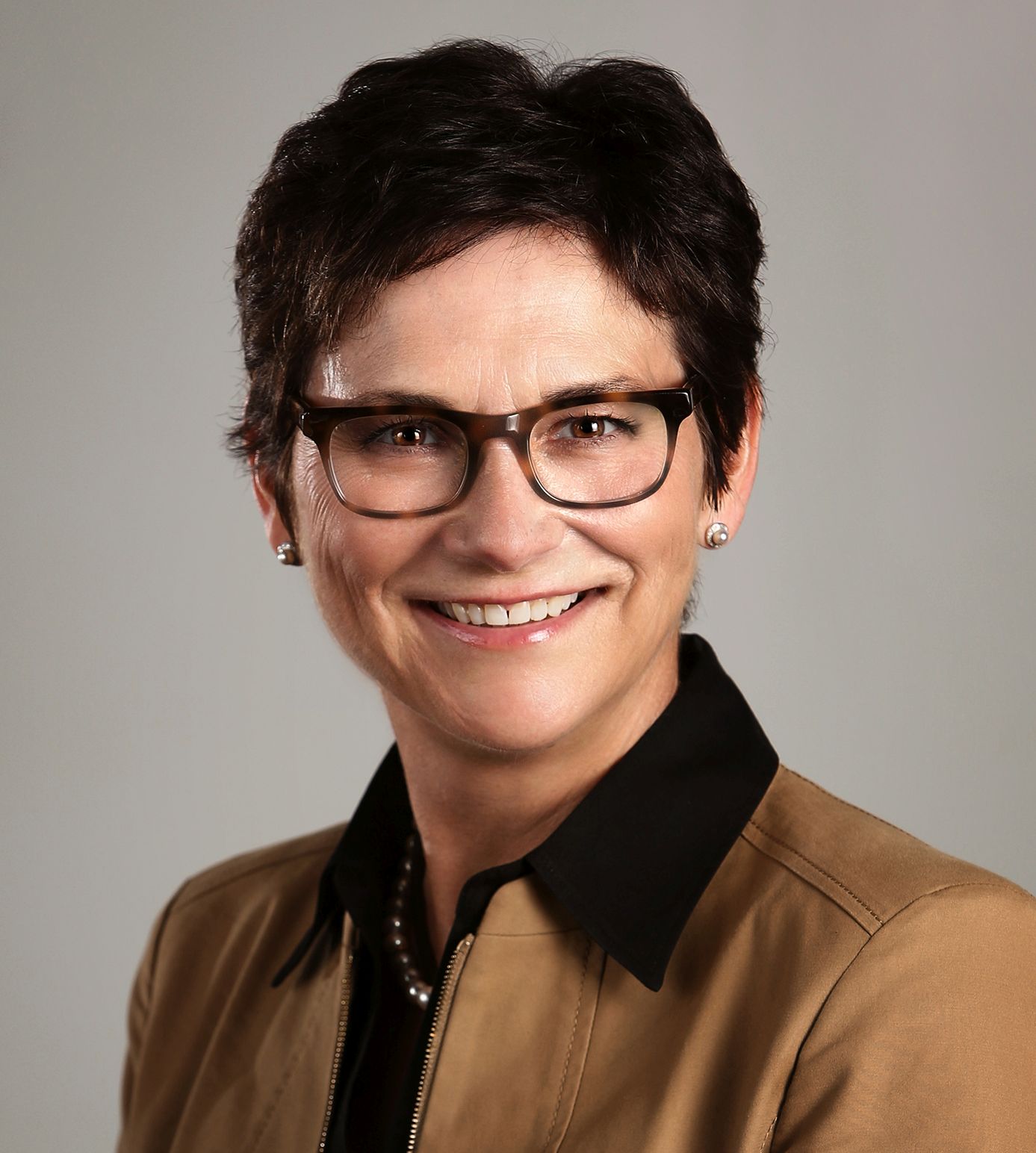
Mary C. Brown, President, Campbell Newman Asset Management
Mary C. Brown is President of Campbell Newman Asset Management, Inc., as well as a Portfolio Manager/Analyst at the firm.
She has over 35 years’ experience in the investment management industry.
During that time, she has gained broad knowledge in securities analysis, portfolio construction, client service, human resource management, regulatory compliance, and strategic planning.
Ms. Brown joined Campbell Newman in November 1986 as an equity analyst; in 1995 she was named Director of Research; and in May 2003, she was elected President.
Ms. Brown graduated from Wheaton College in Norton, Mass., with a B.A. degree, and is a Chartered Financial Analyst charterholder.
She is an active community volunteer, having served on the Board of Directors of Women Investment Professionals and Junior Achievement Women’s Association, as well as Chairman on the Board of Advisors of the Digestive Disease Center at the Medical College of Wisconsin.
“We are truly looking for dividend growth, and what we found in our research is that once a company initiated a dividend, very few companies increased it the first year, the second year, the third year, the fourth year — but once a company got to five years of annualized dividend increases, it tended to become institutionalized.
And you saw perpetuation of those dividend increases; again, that goes back to being an important component of management’s capital allocation policy.
Why do we think that’s important?
Well, the Dividend Growth strategy was designed to participate in up markets and protect in down markets, to outperform over a market cycle, because you know that upside volatility and downside volatility don’t cut equally.
If you can protect on the downside, and participate on the upside, over a market cycle, you should outperform at lower levels of volatility.”
Matthew R. Segura, Director of Institutional Portfolio Management, SKBA Capital Management, LLC.
Matthew R. Segura, CFA, is the Director of Institutional Portfolio Management at SKBA Capital Management, LLC.
He is a member of the Investment Strategy Team and is also a securities analyst. Mr. Segura joined SKBA in 2007 as a member of its research internship program and rejoined SKBA in 2011.
Previously Mr. Segura worked at Charles Schwab & Co. performing several roles: a Cash Management team member in the Treasury, and a Manager in Financial Planning and Analysis for Schwab’s largest retail divisions.
Mr. Segura also served five years active duty in the United States Marine Corps.
Mr. Segura received a B.S. in business administration from Haas School of Business at UC Berkeley.
“We utilize our relative dividend yield discipline to identify opportunities and risks for the portfolio.
The main point of differentiation is our focus on relative, not absolute, yield.
We look at a company’s dividend yield relative to a proprietary universe of other dividend paying stocks and to itself over time.
This could lead us to buy stocks with low absolute yields but high relative to its past, because even with a lower absolute yield the high relative dividend yield compared to its own history may capture pessimism priced in the stock.
Similarly, we might avoid a high absolute yielding stock if its yield is low relative to its past, like a lot of bond substitutes have been over the past five years or so.”
Get the complete detail on these exclusive interviews with the top dividend experts in the United States, exclusively in the Wall Street Transcript.

Jonathan Good, portfolio manager. Baird Asset Management
Insulet (NASDAQ:PODD) and Kinsale (NYSE:KNSL) are two gems that should be on investor’s buy list according to Jonathan Good who joined Baird Asset Management in 2006.
He has 21 years of investment experience.
He is the Portfolio Manager for the Small/Mid Cap Growth strategy and a Senior Research Analyst covering health care for the growth strategies.
Before joining Baird Equity, he worked at Gartmore Global Investments as an equity analyst for their Global Health Sciences Fund.
Earlier, he spent five years at William Blair & Company as an equity research associate covering biotech, life sciences, diagnostics, and orthopedics.
He has a degree in applied and biomedical sciences from the University of Pennsylvania and received an MBA from the Kellogg School of Management at Northwestern University.
His 3,392 word interview, exclusively in the Wall Street Transcript, details his recommendation for several stocks.
The Baird portfolio manager bangs the table for both Insulet (NASDAQ:PODD) and Kinsale (NYSE:KNSL).
“One really interesting company that we’ve held for quite a while and continue to really like is Insulet (NASDAQ:PODD).
It’s often referred to as PODD, which is their core diabetes pump, which is called the Omnipod. I think diabetes is a very closely followed space with a tremendous amount of innovation in recent years.
For the longest time, there has been this belief in medical devices to create the artificial pancreas. This is an idea that probably came about 20, 30, maybe even 40 years ago.
And over the last couple of years, technology has come to the forefront where this has been possible.
So Insulet has a patch-based pump that you can wear on your arm and then it’s tied with a continuous glucose monitor, which monitors your glucose readings throughout the day.
There’s an algorithm in their software that helps both those two devices communicate with each other. You’re able — for a Type 1 diabetic — to have an automated insulin pump.
And so, this has been something that got approved about a year ago and then there’s been a lot of interest and enthusiasm for an automated insulin delivery system in a patch format.
What makes Insulet really interesting, even more so than their technology, has been their business model, which they’ve coined as pay-as-you-go.
And because this has been a disposable patch pump, from an insurance standpoint, you’re able to go to the pharmacy and get a pump for a low monthly payment — as opposed to an insurer who in the past would have spent several thousand dollars on a more permanent pump that you’d wear for four years.
And because diabetes, unfortunately, is a tremendously growing market.
If you have poor exercise or poor diet or are overweight, you’re likely to have a potential increased risk for diabetes.
This big growing market has just been an opportunity for a pump company then to come on the scene.
And so Insulet, again, has just had a big advantage with not only their business model, but also just phenomenal technology and really big growth prospects going forward.
Insulet is not the cheapest stock. This is something that we recognize, that as the stock has done really well, the multiple has expanded.
I would certainly say that as we look at this business in 2023, expectations are high.
But again, I think they just have an advantage, not only with a phenomenal technology, but a really strong business model and there’s just a really long runway for growth even if the stock may look expensive as it sits today.”
Kinsale (NYSE:KNSL) is another top rated stock from the Baird analyst.
“Another business in financials that we’ve liked for a long time is an insurance company called Kinsale (NYSE:KNSL).
What has been interesting to me about this business over time is, I’m certainly not an insurance expert, but here was a company with an entrepreneurial CEO who saw an opportunity in a niche market in insurance.
It’s called excess and surplus.
This might be a nightclub or a restaurant, or some type of business that doesn’t really typically fall into a traditional property and casualty insurance bucket.
What Kinsale has been able to do is to grow quickly by both gaining market share and doing a better job of pricing their business.
They feel that their competitive edge is just a better IT system and a management team that is only focused on this market. And so, they’ve been able to show really strong growth for the last several years.
And again, it’s a CEO that’s done a phenomenal job in managing this business. Even with their recent success, I think their total market share is still 2% or less of the total market.
Some companies have struggled in this market segment where a company will come in, they’ll win a bunch of business in this area, then some event will happen, they’ll do poorly, they’ll lose money and they exit.
And, just like we do a really good job focusing on mid and SMID growth stocks, this is a management team that’s been really focused in this excess and surplus segment of the insurance business. It has just done really well over a long period of time.”
Get the complete detail on Insulet (NASDAQ:PODD) and Kinsale (NYSE:KNSL) and many more from Jonathan Good’s exclusive interview in the Wall Street Transcript.

Richard Beaven, Lead Portfolio Manager and Principal, Signia Capital Management.

Colin Kelly, Director of Research, Portfolio Manager and Principal, Signia Capital Management.
Spokane, Washington is home for these two portfolio managers.
Richard Beaven, CFA, is Lead Portfolio Manager and Principal at Signia Capital Management.
Mr. Beaven has 27 years of experience in the investment management industry.
Prior to co-founding Signia Capital Management in 2002, Mr. Beaven was the Director of Research and a Portfolio Manager for a $2B Pacific Northwest asset management firm.
In 2020, Mr. Beaven and Colin Kelly acquired an equal and majority interest in Signia.
Mr. Beaven also currently sits on the Board of Directors for NYSE listed Idaho Strategic Resources (IDR).
Mr. Beaven holds a B.A. in business administration from the University of Kentucky and an MBA from Gonzaga University.
In addition, he is a CFA charterholder and has served as President of the CFA Society of Spokane, Washington.
Colin Kelly, CFA, is Director of Research, Portfolio Manager and Principal at Signia Capital Management.
Mr. Kelly has 18 years of experience in the investment management industry.
Prior to joining Signia in 2009, Mr. Kelly was Vice President of Equity Research for a Pacific Northwest asset manager.
In 2020, Mr. Kelly and Rich Beaven acquired an equal and majority interest in Signia. Mr. Kelly also serves as an adjunct finance professor at Gonzaga University.
He holds a BBA with emphasis in finance and marketing from Gonzaga University. In addition, he is a CFA charterholder and serves on the Board for the CFA Society of Spokane.
In this 4,143 word interview, exclusively in the Wall Street Transcript, these two Spokane, Washington based money managers explain the methods that brought them successful portfolio returns.
Mr. Kelly: It was pretty broad-based for the most part, from a sector standpoint. But certainly energy and durables lead for us.
We had a decent energy weight early in the year — actually coming out of the pandemic, we were pretty significant energy weighted.
And there was underinvestment for the past decade within that space.
And with U.S. reopening and increasing oil and gas demand, a lot of these names were still beaten down.
A name that we owned back in early 2020 was Patterson-UTI (NASDAQ:PTEN). And at that point, that was really a mid-cap fallen angel that had traded into the micro-cap space. And they’re one of the largest U.S. land drillers here in the U.S.
And after talking to the company, we were buying Patterson in the $5, $6 range, so we were paying $0.25 on the dollar for replacement cost of their rigs.
So, as you fast forward today, Patterson has tripled in value.
We exited that position, and we’ve been able to rotate into some other energy names with more focus on offshore, which may be a subsector within energy that has typically been later cycle than the onshore names, such as Patterson.
Mr. Beaven: In the early part of 2020 through the pandemic, we actually saw oil go negative.
And so many of these companies that we’ve watched for years and years were trading significantly below their book or replacement value.
So as contrarians, we tend to gravitate to where the real value is.
And at that point there were so many opportunities, because ultimately, we were convinced that the U.S. and the world needs energy. And that ultimately demand is going to come back post pandemic. So we needed to find the best of breed and the best companies out there to fortify the portfolio.
So back in 2020, we were more focused on U.S. onshore.
And that’s more of the short-cycle companies that immediately were able to put capital to work and grow earnings in a more short-cycle environment.
And as we enter in the middle of the latter parts of the energy cycle, a lot of the names that hadn’t participated in the early stages of the energy recovery were those names that focus on offshore.
And there’s just been very little activity offshore, offshore drilling.
And so at that point, in mid last year and into late last year, we found the opportunity to buy names like Diamond Offshore (NYSE:DO), which is one of the dominant providers of deepwater drilling rigs in the Gulf of Mexico and around the world.
And Helix (NYSE:HLX), which is a provider of plugging and abandonment services and other offshore services.
And also Dril-Quip (NYSE:DRQ).
So our energy focus is still there, but it’s transitioned from more U.S. onshore to offshore, and deepwater, where that part of the cycle is really just, from our perspective, beginning and getting traction.”
The future investing strategy for these Spokane portfolio managers is also contrarian based.
“…As we progress over the next number of years, we’ll see a slow transition away from hydrocarbons ultimately to nuclear, wind, solar, and other less carbon emitting forms of electrical generation.
And then also a transition to electric vehicles.
So the implications surrounding those create some interesting investment opportunities.
And one of the ways that we’ve found is to leverage that is the copper market. So broadly, it looks as though copper demand over the next number of years should continue to pick up as the load factor of copper for EVs goes from an internal combustion engine of 50 pounds to an EV of 150 pounds.
So a pretty big step up per vehicle and as it relates to copper demand.
One of the names in our portfolio that will benefit from increased copper demand and ultimately, hopefully, a rising copper price would be Taseko Mines (NYSEAMERICAN:TGB) mines.
Taseko is a producer of copper in Southern British Columbia.
They produce about 130 million pounds there. And they have a new project in Arizona that over the next couple of years should add an additional 70 million pounds of production that’s produced via in-situ mining.
So it’s a very environmentally friendly way of producing copper via injecting a liquid into the ground. And that is very much less energy intensive, very low cost, and with less impact to the environment.
So they are able to produce refined copper at a very, very low price.
Taseko is one of the names that will benefit as we enter an environment of increased copper demand, and possibly a very, very tight copper supply/demand dynamic.
Not only are they currently producing copper, but over the next couple of years they will almost double copper production via a very environmentally friendly method in Arizona.”
Read the entire 4,143 word interview from this Spokane, Washington duo, exclusively in the Wall Street Transcript.

Nicholas O’Grady has served as Chief Executive Officer of Northern Oil and Gas Inc. (NYSE:NOG) since January 2020.

Neal Dingmann, Managing Director, Truist Securities
Northern Oil & Gas (NYSE:NOG), based in Minneapolis, Minnesota, finds a fierce advocate in Neal Dingmann.
Neal Dingmann is a Managing Director at Truist Securities covering companies in the E&P and oilfield services sectors.
Mr. Dingmann was recognized by The Wall Street Journal as “Best on the Street” and has been recognized as a “Home Run Hitter” by Institutional Investor magazine.
He has over 20 years of equity research experience.
In his 2,239 word interview, exclusively in the Wall Street Transcript, Neal Dingmann bangs the table for Northern Oil & Gas (NYSE:NOG), with a current divident yield of over 4%.
“One of my favorite small-cap E&Ps is Northern Oil & Gas (NYSE:NOG), which is based in Minneapolis, Minn.
The company is unique because they do not operate any of their own wells, rather it has what is called a “non-operated model.”
They find quality operators with attractive assets that can buy partial interests.
If they buy a 10% position of a well or play, they will pay 10% of all operating costs and participate in whatever cash flow the wells generate.
By having a non-operated model, Northern is able to have a more diverse asset base than other companies their size.
Currently, most of their assets are in the Williston basin in North Dakota with the second most assets in the Permian Basin and a small position in the Appalachian Basin.
What we like about Northern is the stock currently trades at a low multiple like most small-cap E&Ps, yet the company participates with many large operators who are able to keep costs lower.
Investors are able to get a little bit of the best of both the small-cap and large-cap worlds.
We forecast Northern will generate an approximate 32% FCF yield this year, which is the highest in my entire coverage group.
And because of the large operators they partner with, I would suggest that they have limited operating risk.”
Nicholas O’Grady has served as Chief Executive Officer of Northern Oil and Gas Inc. (NYSE:NOG) since January 2020.
Mr. O’Grady joined NOG in June 2018, previously serving as the company’s Chief Financial Officer.
He also held the title of President from September 2019 until his promotion to CEO.
Mr. O’Grady leads the NOG team in all aspects of the business, including acquisitions, investments, financial management and business strategy.
Over his tenure, the NOG team has executed on acquisitions and related financings worth billions of dollars.
Prior to NOG, Mr. O’Grady had nearly two decades in energy-related finance experience, both as an investment banker and as a principal investor.
Mr. O’Grady began his career in the Natural Resources investment banking group at Bank of America.
Later moving to the asset management business, he worked at firms such as Highbridge Capital Management.
Immediately prior to NOG, Mr. O’Grady worked at Hudson Bay Capital Management, where he focused on energy-related equities, public credit, and private and direct investments.
Mr. O’Grady holds a bachelor of arts in both history and economics from Bowdoin College in Brunswick, Maine.
In this 4,020 word interview, exclusively in the Wall Street Transcript, Mr. O’Grady explains the benefits of investing in his company.
“Northern Oil and Gas dates back to about 2006.
It was founded by a Montana land man and it was the first of its kind, a pioneer, in terms of buying non-operated interests in the Williston.
The company fell into some financial disarray in the late teens.
Over the last five or so years, my team and I have re-capitalized the balance sheet and diversified our non-operated interests across additional basins.
We own minority interests in approximately 8,300 wells across the Williston, the Permian and Marcellus basins.”
The CEO of Northern Oil and Gas details the company’s operating strategy.
“The typical block of land developed in oil and gas is about a two mile by two mile, or 1,280 acre, section of land that might encompass 100 different farms or ranches or even individual small plots of acres.
It’s effectively a grid drawn around these properties.
Most modern-style drilling is done horizontally.
Within that block of land, if a drilling rig is parked on it and drills those wells, it would be very difficult to know whose oil comes up because you’re not just drilling down into the earth on someone’s farm, you’re drilling across multiple farms.
To solve for the ownership issue, states have created a structure that is called forced pooling, where the mineral rights to those lands are either purchased or, mostly, leased by operating companies.
Rarely do those operators get 100% of the lands in any one given section.
In that 1,280-acre block, chances are the operator owns more than half the mineral rights, but it’s unlikely that they own them all.
The other participants are known as non-operators.
Let’s use an example where the operator owns 50%. When they go to drill the well, they bill out for half the cost to those other parties, the non-operators, and also provide half the revenues as well.
Those non-operator parties participate on a passive basis.
Northern Oil is dedicated to that non-operator strategy.
We buy a minority interest in those properties.
We don’t drill wells ourselves.
We have over 100 operators that we work with, but we generally buy small stakes in lots of different fields.
So, net to us, we have about 280,000 acres of land, but that’s over 1 million gross acres when you factor in that we’re a small participant in lots of operator properties.”
The Northern Oil and Gas Inc. (NYSE:NOG) CEO gets into the details of the process.
“…That structure is mandated by the states in which we operate through oil and gas laws dating back a century to protect those people who own the mineral rights.
Just because you own the land on the surface doesn’t mean you own what’s underneath it, but if you’re a farmer and you don’t want to sell your mineral rights to the person that’s going to be drilling over your leasehold, you should at least have the right to then participate pro rata.
Think of it as the difference between investing in an index fund for, say, the Russell 2000 and the Dow 30.
In the case of the Dow 30, you own a lot of a little as opposed to a little of a lot with the Russell 2000.
That strategy — a little of a lot — is a bit more diversified.
Obviously, having the right infrastructure to allow us to pursue this strategy is extremely important, otherwise it can be akin to organized chaos to some degree.
Importantly, we have an entire team of engineers that analyze each proposal we get to develop on our lands.
Each well is individually engineered to determine its economic viability.
When we enter into a transaction we have a consent right when a drill proposal or AFE is sent out for an individual well to say yes or no. We don’t have to participate in it. We can choose to participate or not.
The industry is extremely fragmented, however we are very active in managing our leaseholds.
For example, if we own 5% in an interest as a real property and title holder, we know who all of the owners in that given unit are.
They may be other operators that wound up with a sliver of land and didn’t get to the operable block, and they may not want to participate in someone else’s well — which creates an opportunity for us to potentially expand our ownership.
For instance, there might be land where both Chevron and Exxon have an interest with Chevron owning a minority non-operating interest. In this case Chevron might not be interested in giving Exxon money to drill wells.
They want to drill their own wells and so those interests generally are put to the market for sale.
If we already have the engineering and all that work done for that field, we can usually figure out very quickly what we would pay to acquire the additional interest.
You might think the operators would be the logical buyer of those non-operated interests, but remember because of that consent process, if we were to non-consent our well, the operator effectively gets that interest for free.
So they’re not necessarily that motivated to then go and pay up and buy the rest of their leasehold out.”
Get the complete picture of Northern Oil & Gas (NYSE:NOG), from reading the entire exclusive interviews with the Northern Oil & Gas CEO and the equity analyst specializing in the stock, only in the Wall Street Transcript.
Oil and gas stocks have been on the ups since the pandemic crash led to negative prices for some of their products.
These expert analysts look into the future and predict whether investors will continue to benefit from holding these carbon based energy purveyors.
James West is the Senior Managing Director at Evercore ISI responsible for research coverage of the sustainable technologies and clean energy, and oil service, equipment and drilling industries.

James West, Senior Managing Director, Evercore ISI
His 2,733 word interview on the oil and gas industry is an eye opener.
“…We’re starting to see the emergence of a shallow water drilling cycle, particularly in Saudi Arabia, in Abu Dhabi, and then in other areas like the North Sea.
And we are in the early stages of what should be a very significant deepwater cycle. And we’ve seen deepwater rig rates spike. They’ve gone from $150,000 a day at the bottom to probably $450,000 a day on the leading edge today.
And spread costs have gone up as well, as we’re going back into a large drilling cycle for deepwater as the majors, the national companies, and then some of the independents that have deepwater acreage are looking to create base load productive capacity that’s not shale related, that’s not short cycle but longer duration production capacity — as the world comes back into understanding that oil and gas are going to be around for a long period of time and the energy transition that was the big topic du jour of 2020 and particularly 2021 is what’s happening.
And it’s going to take much longer than many expected. So we’re going to need those hydrocarbons…
On the international side, it’s much more activity-driven growth in spending.
And on the deepwater side especially, we’re in the early stages of a deepwater expansion.
And so we’re much more focused on the big, diversified oilfield service companies as investment opportunities, so SLB — Schlumberger, Halliburton, Baker Hughes.
We also like a lot of the deepwater-levered names such as the offshore drillers Transocean (NYSE:RIG), Noble (NYSE:NE), Valaris (NYSE:VAL), and the subsea equipment manufacturers like TechnipFMC (NYSE:FTI), Oceaneering (NYSE:OII), and Dril-Quip (NYSE:DRQ).
And lastly, there are some production-oriented names that we think are very attractive, given their profile of steady and growing cash flows, and ChampionX (NASDAQ:CHX) stands out as a prime candidate there.”
Macro economic factors develop interesting nuance in the oil and gas stock analysis in the 3,178 word interview from the Janus Henderson expert.

Noah Barrett, CFA,Research Analyst, Janus Henderson Investors
Noah Barrett, CFA, is a Research Analyst at Janus Henderson Investors and lead on the firm’s Energy & Utilities Sector Research Team.
“One of the headwinds that we saw in 2022 was the resilience of Russian oil supply.
Market forces worked to ensure that Russian supply could still find a home.
Initially, when the conflict in Ukraine escalated and there was talk of product embargoes, crude embargoes, and self-sanctioning, many thought that a significant amount of Russian oil supply was going to come out of the market.
That ended up not being the case.
Another headwind that we saw in 2022 was crude oil supply coming in from Strategic Petroleum Reserve — SPR — releases, primarily in the U.S. Over the course of the year, the U.S. averaged about 600,000 barrels a day of releases from our SPRs.
That was a lot of oil coming into the market that we didn’t necessarily forecast at the beginning of the year.
A third headwind was weaker than expected Chinese demand, which was actually down year over year in 2022 versus 2021.
At the beginning of the year, there was an expectation around a reopening of China, but a lot of their zero COVID policies stayed in place longer than expected.
Initially we were thinking Chinese demand would grow year over year, but it actually shrank year over year.
As we move into 2023, I think those three headwinds that I just mentioned — Russian supply, SPR releases, and Chinese demand — will be moving from being headwinds to tailwinds for the sector…”
Oil and gas stock expert Mr. Barrett makes some specific recommendations:
“EOG Resources has two new plays that they announced in 2022.
One was the combo play in the Utica and the other was the Dorado gas play in South Texas.
While we do have a good understanding of where hydrocarbons are — not just in the U.S., but globally — there will still be potential discoveries and exploration and capital allocated to developing these new resources.
Globally, I think it’s going to be a little tougher outside of Guyana and, to a lesser extent, Suriname.
Exxon has a big development program in Guyana. Total (NYSE:TTE) and Apache (NASDAQ:APA) are doing some work in Suriname.”
Another oil and gas stock expert has his microcap picks that may provide multiple returns for investors.

Stephane Foucaud, founding partner, Auctus Advisors
Stephane Foucaud is a founding partner at Auctus Advisors where he runs institutional equity research.
He co-founded the U.K. business of FirstEnergy Capital (now part of Stifel Nicolaus Europe) in 2009.
Mr. Foucaud was a managing director for Equity Capital Markets responsible for European institutional research.
His 3,228 word interview has a number of lesser known oil and gas stock picks.
“Diving into an interesting example of the event-driven category, there is a company called Hartshead Resources.
They are listed in Australia.
They operate in the U.K. where they bought gas offshore U.K. licenses that used to be held by ConocoPhillips (NYSE:COP). Those licenses were bought in 2020.
You can imagine that in 2020, a year of COVID and of negative oil prices, there were not many buyers, but they had the courage to acquire these licenses.
With hardly any competition, they bought them for a very low price.
Now fast forward three years, gas prices have gone through the roof. We are close to $20/mcf today for U.K. gas prices, a level unheard of pre-2021.
And those licenses that Hartshead bought for a song now look absolutely great.
Hartshead will do some seismic work and so forth, and is looking for a farm-out partner that will price their asset, fund their development, or even perhaps buy them out.
The real driver of value creation in this case is not so much technology or innovation, it’s a combination of previous knowledge of those assets and their history by the management, and the timing of when they were acquired.
The volatility of the gas prices did the rest.”

Sajjad Alam, CFA, Vice President, Senior Credit Officer, Moody’s Investors Service.
Sajjad Alam, CFA, is a Vice President, Senior Credit Officer in the Corporate Finance Group at Moody’s Investors Service.
As a member of the Oil & Gas Team, he currently covers a portfolio of investment-grade and high-yield E&P, midstream, drilling and oilfield services companies.
His 2,254 word interview advocates a prudent approach to picking the correct oil and gas stocks.
“The industry captures a lot of data and oilfield services companies are very much involved in this, with upstream engineers, and they try to use this data in figuring out how best to select a location to drill.
How to keep the drill bit within a range of where the hydrocarbon sits underneath the surface.
So, more precision drilling, more targeted drilling, helps.
And then, during the fracking process, how best depends on the rock formation and the type of rocks, and the appropriate spacing for fracking.
They use a lot of data in doing their work and drilling the next well and fracking the next well.
If you go back and look at drilling rigs now versus 10 or 20 years ago, clearly today’s rigs are much more automated.
They drill much faster.
There are lots of sensors and monitoring devices that give more control to the drilling engineer. And they can do way more precise work in terms of the well placement.
Some 10 years ago, or even before the last downturn, the industry really focused on becoming efficient in using technology more aggressively.
After the downturn happened in 2015, 2016, there has been a lot of emphasis on automating things.
And those things are happening.
It’s on the margin though and the fundamental techniques are still the same.
You have to find a location, drill a very long well, safely and accurately.”
The best reputation for picking oil and gas stocks for investors is a responsibility for this Truist Securities managing director.
Neal Dingman, Managing Director at Truist Securities, E&P and oilfield services sectors
Neal Dingmann is a Managing Director at Truist Securities covering companies in the E&P and oilfield services sectors.
Mr. Dingmann was recognized by The Wall Street Journal as “Best on the Street” and has been recognized as a “Home Run Hitter” by Institutional Investor magazine.
This oil and gas stock “best” expert explains his current portfolio direction in this 2,239 word interview.
“E&Ps now pay quarterly dividends, variable dividends and buyback shares.
All that provides capital returns in addition to any stock price appreciation.
As a result of the capital returns strategy, free cash flow has become one of the primary metrics analysts like myself analyze in order to decide what companies could reward investors the most going forward.
Today, we estimate FCF — free cash flow — yields between 10% and 30% for my group, which allows a healthy capital return payout for many operators…
One of my favorite small-cap E&Ps is Northern Oil & Gas (NYSE:NOG), which is based in Minneapolis, Minnesota.
The company is unique because they do not operate any of their own wells, rather it has what is called a “non-operated model.”
They find quality operators with attractive assets that can buy partial interests.
If they buy a 10% position of a well or play, they will pay 10% of all operating costs and participate in whatever cash flow the wells generate.
By having a non-operated model, Northern is able to have a more diverse asset base than other companies their size.
Currently, most of their assets are in the Williston basin in North Dakota with the second most assets in the Permian Basin and a small position in the Appalachian Basin.
What we like about Northern is the stock currently trades at a low multiple like most small-cap E&Ps, yet the company participates with many large operators who are able to keep costs lower.”
Get all these oil and gas stock picks and many more, exclusively in the Wall Street Transcript.

Thomas Meth, President, Chief Executive Officer, and co-founder, Enviva Inc. (NYSE:EVA)
The international trade in wood pellets are the fastest growing alternative energy export from the USA to the European Union.
According to the US International Trade Commission, “the growth in wood pellet consumption has been heavily influenced by the EU’s Renewable Energy Directive (RED) requirements1 and the EU’s decision to designate biomass as a low-carbon renewable energy.”
The immediate question is — how can investors make money from wood pellets, this little understood alternative energy source?
Thomas Meth, the President, Chief Executive Officer, and a co-founder of Enviva Inc. (NYSE:EVA) has the answer to this provocative question. He is the wood pellet CEO.
“Enviva is the largest wood pellet manufacturer in the world.
We have a capacity of 6.2 million tons.
We take a very heterogeneous, fragmented, renewable natural resource in the form of woody biomass and turn it into a commodity, a biomass fuel that can replace fossil fuels, such as gas, coal and oil across the world.”
In his recent 2,409 word interview, exclusively with the Wall Street Transcript, wood pellet maestro Meth pulls no punches.
“We make this product transportable and cost effective.
For example, currently, it is competitive, or even at a lower cost, than any fossil fuel alternative taking carbon pricing into account.
We started this business in 2004 and have been a pure play as a wood pellet company since 2010.
We also consider ourselves an infrastructure business, meaning we sign long-term off-take agreements with credit worthy counterparties across the world.
We have a contracted revenue backlog of over $20 billion, and with that backlog, we are building infrastructure to take that fragmented resource — wood fiber — and turn it into the product that replaces fossil fuels — wood pellets.
In addition to manufacturing facilities, we are also building the logistical infrastructure — port terminals — needed to create storage that will eventually load, transport, and deliver our product in a reliable and timely fashion to our customers.”
A $20 billion backlog represents alot of wood pellets. This order cushion provides investors with some upside from the current $3 billion market cap, especially considering a current dividend yield of over 8%.
The CEO of Enviva (NYSE:EVA) explains further:
“We have an incredibly supportive market dynamic for our business.
At the beginning of the pandemic, Europe decided to really lean in on green energy and announced the Green Deal, which fundamentally changed the value of carbon in Europe, and has led to more long-term certainty.
From historically EUR20 per ton, to now EUR75, EUR80, going onto EUR100 a ton. That was a massive change in step and a tailwind for our business.
There is a large subset of our business that is the power industry.
The power industry pipeline was developed on the basis of different policy instruments in Europe, such as the coal tax or various incentives for biomass to compete against coal, for example, particularly when carbon pricing was that low.
Fast forward, it’s an incredible vote of confidence from our existing customers that they’re actually willing to lock in incremental contracts, believing that these tailwinds will run for the foreseeable future.
Not to mention, there is a structural biomass shortage and a structural renewable power shortage.
Both of those together allow that particular customer to say, “You know what, we want to make sure we have the biomass available as part of our strategy and we don’t want this to be sold somewhere else.”
So our customer is taking a very long-term strategic view for delivery starting in 2027.”
The wood pellet company is a new opportunity for investors.
“It’s important to note that 2022 was our first year as a publicly traded corporation.
And now we have 10 plants operating, and we’re constructing and delivering a plan to continue to maximize uptime of those facilities, drive down costs, hire the right people, and to retain those people in a job market that has been difficult.
I think we’ve done a lot of good work in 2022 and we’ll continue that way in 2023.
Last thing I will say is, in addition to growing and developing our infrastructure, we’re paying a healthy dividend.
We can do both and we’ll certainly continue to do that.”
Enviva gets support from top tier Wall Street analysts as well as its CEO.

Raymond James Financial (NYSE:RJF) expert analyst Pavel Molchanov, recommends wood pellet manufacturer Enviva (NYSE:EVA)
In his recent, and exclusive, 2,300 word interview with the Wall Street Transcript, Pavel Molchanov, the long term award winning alternative energy expert analyst of Raymond James, touts the wood pellet future and the attraction of it’s investment thesis.
“While the Inflation Reduction Act has gotten a lot of headlines, I think the European energy crisis is even more of a big deal as a catalyst for energy transition.
There are some companies that have a very direct footprint in the European market for supporting energy diversification and security.
First one that I will mention is Enviva (NYSE:EVA).
Enviva is the world’s largest provider of utility-grade wood pellets.
One of the things we’ve seen in Europe, because Russia has basically cut off natural gas supply, is some utilities are needing to burn more coal.
This is not only a big problem environmentally, but it’s also quite expensive.
The price of coal has doubled since the start of the year.
Wood pellets of the kind that Enviva makes are substitutes for coal.
They are renewable because they’re made from wood, and they are also cleaner burning, without the various toxins that coal contains.
Because coal is so expensive, wood pellets for the first time ever are actually cheaper than coal.
It is absolutely a no-brainer for power plants in Europe that are burning coal.
Switching to wood pellets makes perfect sense.
Enviva is a U.S. company and it produces the wood pellets along the eastern seaboard, where there has always been a lot of forestry.
But they are all shipped abroad: 80% to Europe, 20% to Japan.
That makes Enviva a one-of-a-kind story on improving Europe’s energy security as well as promoting greater sustainability by displacing coal.”
The 2022 development of the wood pellet investment opportunity of Enviva is just one unexpected consequence of government focus on the de-carbonization of our energy supply coupled with the Russian invasion of Ukraine.
The CEO of Enviva insists his wood pellet company will be around for the long term.
“One of the most important things in our business is sustainability, and it is at the core and at the heart of what we do.
Let me explain how we ensure that we’re taking the right kind of wood.
For starters, it’s a commercial reality that, one, the straight stem of a tree that can go to a sawmill is five to 10 times more expensive than the type of wood we buy.
So, purely from a commercial perspective, there is no incentive for someone to sell wood to us that should, and would otherwise, go to a sawmill.
It is really important to understand that our industry is symbiotic to the sawmill industry.
Approximately 50% of trees that are harvested typically go to a sawmill and will be turned into long-term carbon storage in the form of furniture or building materials for housing.
The other 50% historically have gone to the paper industry.
As the paper industry has quite substantially declined over the last 20 years in the United States, we are filling that gap in areas where there is no, or very little, demand from the paper industry.
The bioenergy industry can fill that void in concert with the sawmills.
On top of that, we have an industry leading, proprietary Track & Trace system that requires GPS coordinates of where the wood is being harvested so that we can check that the wood does not come from High Conservation Value — HCV — areas. If HCV areas are identified, we will not accept wood from those tracts/areas.
In our processes, it is also really important to know the landowner’s intention to keep the land as forests — this is crucial, and is part of our wood procurement contractual obligations.
Then, we make sure that we understand the quality of the stands coming to us to verify we’re paying the lowest amount of money per ton, which we verify.
We also take the time to better understand where other products from a particular tract are going to further verify we’re taking the right kind of wood out of a traditional timber harvest.
In addition to traditional harvests, we also take sawmill residues from the local processing facilities.
The current yield and the current growth for the wood pellet company Enviva creates an upside to the current stock market doldrums.
Get both the detailed equity analyst interview and the CEO interview, exclusively in the Wall Street Transcript.

Pavel Molchanov, Managing Director, Renewable Energy and Clean Technology for Raymond James.
Bloom Energy (NYSE:BE) and Enviva (NYSE:EVA) are just two of the many stocks detailed by top equity analyst Pavel Molchanov, Managing Director, Renewable Energy and Clean Technology for Raymond James & Associates.
Pavel Molchanov joined Raymond James in 2003 and has been part of the energy research team ever since.
He became an analyst in 2006, the year he initiated coverage on the renewable energy/clean technology sector.
In this role, he covers all aspects of sustainability-themed technologies, including solar, wind, biomaterials, electric vehicles, hydrogen, power storage, grid modernization, water technology, and more.
Within the energy research team, he also writes about the broader topics of geopolitical and regulatory issues, climate change, and ESG investing.
This Raymond James analyst has been recognized in the StarMine Top Analyst survey, the Forbes Blue Chip Analyst survey, and the Wall Street Journal Best on the Street survey.
He graduated cum laude from Duke University in 2003 with a Bachelor of Science degree in economics, with high distinction.
In the broader community, he is a member of the Board of Visitors at the University of North Carolina; a member of the Advisory Board at Cool Effect, an environmental project funding charity; and the founder of the Molchanov Sustainability Internship Program at the Royal Institute of International Affairs in London.
“Another company which will have good opportunities in Europe is Bloom Energy (NYSE:BE).
Currently, Bloom is the largest provider of stationary fuel cells in the world.
A fuel cell is a mini power plant.
They are used at data centers, hospitals, and office buildings to provide an extremely reliable supply of electricity.
One thing we know from climate science is that not only are temperatures going up, but weather is less predictable.
This helps explain why the grid has so many disruptions, with lots of outages all over the world.
Fuel cells are a solution to improving the reliability and the resilience of electricity supply for mission-critical businesses such as data centers.
In addition to that, Bloom is starting to produce a second product called an electrolyzer, which is essentially a fuel cell in reverse.
A fuel cell takes natural gas to generate electricity, whereas an electrolyzer takes electricity, passes it through water, and produces hydrogen.
So it’s a way of making hydrogen without a fossil fuel.”
The Raymond James analyst explains the origin of “green hydrogen”.
“This is the definition of green hydrogen.
Green hydrogen is defined as electrolysis of water using renewable power.
The electricity that an electrolyzer passes through water can come from different sources. If the source is renewable — wind, solar, hydro — then the output from the electrolyzer is going to be green hydrogen…
Plug Power (NASDAQ:PLUG) and Bloom Energy are both companies that originally were focused on fuel cells and are now diversifying into electrolyzers.
In that sense there is quite a bit in common.
The technology platform is somewhat different, though.
More importantly, Plug Power is getting into the business of producing hydrogen as a commodity — in other words, selling hydrogen fuel to end users, whereas Bloom Energy is 100% an equipment vendor.
Supply chain complications have presented themselves for both of these companies, and plenty of others in cleantech, because they rely on electrical components.
For both Plug and Bloom Energy, the opportunity in Europe with record high natural gas prices arises from the fact that electrolysis enables production of hydrogen without using natural gas.
By the way, gas is five times more expensive in Europe than it is in the U.S.
In the U.S., we have relatively cheap gas even with the escalation over the past year, but the Inflation Reduction Act created a first-of-its-kind subsidy for low-carbon hydrogen production that will benefit these companies and others…
Recession doesn’t really matter for these companies. This goes back to the point I made earlier — demand has never been better.
The demand for these products is ultimately tied to the cost of fossil fuels.
When fossil fuels are expensive, that inherently bolsters demand for substitutes.
As natural gas in Europe has tripled as a result of the war, that means for the first time ever, green hydrogen is actually cheaper than making hydrogen from natural gas, just like wood pellets are cheaper than burning coal.”
Another lesser known name in the alternative energy sector that the Raymond James experts picks as a top stock is “Enviva (NYSE:EVA).
Enviva is the world’s largest provider of utility-grade wood pellets.
One of the things we’ve seen in Europe, because Russia has basically cut off natural gas supply, is some utilities are needing to burn more coal.
This is not only a big problem environmentally, but it’s also quite expensive.
The price of coal has doubled since the start of the year.
Wood pellets of the kind that Enviva makes are substitutes for coal. They are renewable because they’re made from wood, and they are also cleaner burning, without the various toxins that coal contains.
Because coal is so expensive, wood pellets for the first time ever are actually cheaper than coal.
It is absolutely a no-brainer for power plants in Europe that are burning coal. Switching to wood pellets makes perfect sense.
Enviva is a U.S. company and it produces the wood pellets along the eastern seaboard, where there has always been a lot of forestry.
But they are all shipped abroad: 80% to Europe, 20% to Japan.
That makes Enviva a one-of-a-kind story on improving Europe’s energy security as well as promoting greater sustainability by displacing coal…The demand for these products is ultimately tied to the cost of fossil fuels.
When fossil fuels are expensive, that inherently bolsters demand for substitutes.
As natural gas in Europe has tripled as a result of the war, that means for the first time ever, green hydrogen is actually cheaper than making hydrogen from natural gas, just like wood pellets are cheaper than burning coal.”
Get more on Raymond James top alternative energy analyst Pavel Molchanav’s current top stock picks Bloom Energy (NYSE:BE) and Enviva (NYSE:EVA), as well as many others, by reading his entire 2,300 word interview, exclusively in the Wall Street Transcript.

Travis Miller, Energy and Utilities Strategist, Morningstar Research Services
NextEra (NYSE:NEE), Southern Company (NYSE:SO), and Entergy (NYSE:ETR) are the three top utility stocks recommended by professional equity analyst Travis Miller, an Energy and Utilities Strategist for Morningstar Research Services.
NextEra (NYSE:NEE) is currently yielding over 2.25%, the Southern Company (NYSE:SO) is yielding 4% and Entergy (NYSE:ETR) has a dividend that yields 3.9% at the current stock price.
Mr. Miller holds a bachelor’s degree in journalism from Northwestern University’s Medill School of Journalism and a master’s degree in business administration from the University of Chicago Booth School of Business, with concentrations in accounting and finance.
In this exclusive 2,071 word interview in the Wall Street Transcript, Travis Miller, Mr. Miller details how growth and income can both be found in the utilities sector.
“The Southeast right now appears to be one of the most constructive areas for utilities.
Within that, NextEra (NYSE:NEE) appears very well positioned to grow, given almost 80% of their earnings come from Florida.
We also like Southern Company (NYSE:SO) and Entergy (NYSE:ETR), both located in the Southeast where you have higher-than-average population growth.
We also see generally lower energy costs in the Southeast. There’s a lot of growth opportunity in that region to expand the clean energy mix…
We think the Northeast is going to be exceptionally challenging, both this winter and going forward for the next few years.
From New York up through New England, there’s a scarcity of natural gas. So we expect much higher energy prices this winter and next summer.
Those states also have very aggressive clean energy goals.
When you put together the high and rising energy costs along with the infrastructure investment that’s needed to meet the clean energy goals, we see some rapid escalation in customer bills that utilities are going to have to manage.”
Nuclear power generation may also be riding the clean energy wave despite the closing of the Yucca Mountain waste disposal site by the adminstration of President Obama.
“Most utilities have some type of nuclear exposure, either owning facilities or distributing power from nearby facilities.
Nuclear is a hotly debated topic in the clean energy industry because arguably it offers the most reliable carbon-free power generation available.
That said, there’s been a lot of concern over the years about safety and about nuclear fuel waste handling.
I think we’ve seen, just in the last year, a big mentality shift as people start to run the numbers in terms of getting to 50%, 60%, even 100% carbon-free power generation mix.
You just can’t do it in a reasonable amount of time without nuclear.
Nuclear is still 20% of the U.S. generation mix and it’s the most reliable source of generation in many areas.
The best example is what’s happened in California over the last few months as the Governor’s office and other energy policy makers reversed PG&E’s (NYSE:PCG) decision to retire the Diablo Canyon nuclear plant.
As policy makers in California ran the numbers about how to get to net zero emissions by 2045, Diablo Canyon became a key part of that equation.”
Two more top picks from Travis Miller beyond NextEra (NYSE:NEE), Southern Company (NYSE:SO), and Entergy (NYSE:ETR) are Edison International (NYSE:EIX) and WEC Energy Group (NYSE:WEC).
“One of our top picks is Edison International (NYSE:EIX), which operates the electric grid in most of Southern California.
The big growth story for Edison is that California is aiming to electrify all of its transportation fleet and all of its buildings within the next 20 years to eliminate carbon emissions across the economy.
California’s net zero emissions goals are much more ambitious than any other state.
There’s general consensus among stakeholders in California that utilities like Edison will be essential to support that clean energy transition in terms of providing the electricity for vehicles and for buildings and also ensuring that the grid is reliable and resilient as more demand for electricity comes onto the system.
For Edison that means a lot of electricity demand growth and a lot of infrastructure growth.
Edison International also has one of the lowest valuation multiples and one of the highest dividend yields in the sector right now.
So we think Edison offers an attractive income source as well.
The market’s biggest concern with Edison is an unresolved liability related to past natural disasters that continue to impact both accounting earnings and cash flow. We don’t expect that to be resolved anytime soon. But their core business continues to perform very well…
we think that WEC Energy Group (NYSE:WEC) is a very attractive company for traditional utility investors looking for income, growth and stability.
WEC operates in Wisconsin primarily, which we consider a highly constructive state. It’s also moving very quickly to diversify its energy mix, in particular, adding renewable energy.
State regulators have been very supportive of WEC’s growth plans in areas like solar and wind.
So we see a lot of growth there and support from regulators to ensure that growth turns into earnings and dividends for investors.
WEC has always had very, very consistent earnings.
Their management team is one of the few that offers a very tight window on earnings guidance for the upcoming year and they regularly meet or exceed that guidance.”
The Morningstar analyst sees some challenges to utility stocks such as NextEra (NYSE:NEE), Southern Company (NYSE:SO), and Entergy (NYSE:ETR).
“I think beyond the clean energy transition, which continues to get support at state and at the federal level, the growth of electric vehicles is really going to be a key trend for utilities over the next five years.
Electric vehicle charging in the homes and businesses is going to shift some of the way energy infrastructure historically has been used for the last century.
That’s going to require some more modernization investments and it’s going to require more infrastructure investments.
It could significantly change the way utilities build and operate the electric grid over the coming decade.
At the federal level, we think most of the policymaking has been done through both the infrastructure bill that was signed last year and the Inflation Reduction Act.
So we don’t see a whole lot of federal policy making changes in the next few years.”
Get the full detail on Morningstar analyst Travis Miller top picks NextEra (NYSE:NEE), Southern Company (NYSE:SO), and Entergy (NYSE:ETR) by reading the entire 2,071 word interview, exclusively in the Wall Street Transcript.
Equity analyst professionals have the attention of investors after the worst year for equity returns in the US since 2008. It pays to pay attention to these analysts that can find pockets of significant return in a chaotic bear market.

Mike Kozak, Equity Research Analyst, Cantor Fitzgerald
Mike Kozak is an Equity Research Analyst and has been covering the Metals & Mining sector since 2007. He joined Cantor Fitzgerald in 2016.
Mr. Kozak holds a BASc degree in Mining & Mineral Process Engineering from the University of British Columbia, and prior to joining the financial services sector, worked in various technical roles for Fording Canadian Coal, Teck Resources, and Barrick Gold.
In December of 2021, Mr. Kozak recommended BHP, the large cap Australian mining company: “BHP (NYSE:BHP) is the world’s largest diversified miner. It has a 12% dividend and is trading around 30% below its highs on the year.”
The stock spun out its oil and gas drilling subsidiary into Woodside Energy giving investors shares in that company as well, a “twofer” in 2022 that has returned large double digit gains on the investment to date.

Phil Skolnick, Managing Director, Eight Capital
Phil Skolnick is Managing Director, Equity Research, and Senior Oil & Gas Analyst at Canada’s Eight Capital. He formerly was Managing Director and head of global energy research at Canaccord Genuity.
He singled out InPlay, with a current dividend yield of over 6%, and PetroTal as two small independent oil and gas exploration and production companies as ones investors should buy in early February 2022.

Benjamin Nolan, CFA, Managing Director in the Transportation sector, Stifel Financial
In his February 2022 interview, Ben Nolan noted that natural gas, and specifically liquefied natural gas, would be the key energy input far beyond the short term. Mr. Nolan is a Managing Director in the Transportation sector, covering Shipping and Energy Infrastructure at Stifel Financial Corp.
“…You do have a lot of developing economies, various places around the world — India, Pakistan, Bangladesh, even China — where their power consumption is going up a lot.
They’ve got to figure out how they’re going to meet those demands and the cleanest and, generally, one of the cheapest methods of being able to do that is with natural gas.
Now, it’s not carbon free. So perhaps you could argue that it’s just a bridge fuel, but if it is a bridge fuel, it’s a multi-decade bridge fuel.”

Dr. Kumaraguru Raja, Senior Biotech Analyst, Brookline Capital Markets.
Switching from natural resources to natural sciences, Dr. Kumaraguru Raja is a Senior Biotech Analyst at Brookline Capital Markets.
Previously, he was Vice President, Biotechnology Research at Noble Life Science Partners. He started his equity research career in 2010 as a Senior Associate Analyst on the Citi Research biotechnology team.
Dr. Raja noted in his March 2022 interview that many biotechs had raised enough capital: “…These companies are actually sitting on a lot of cash, which will provide them with a runway for at least one to two years.
And they don’t have to worry about the high cost of capital, at least for the next one or two years.”
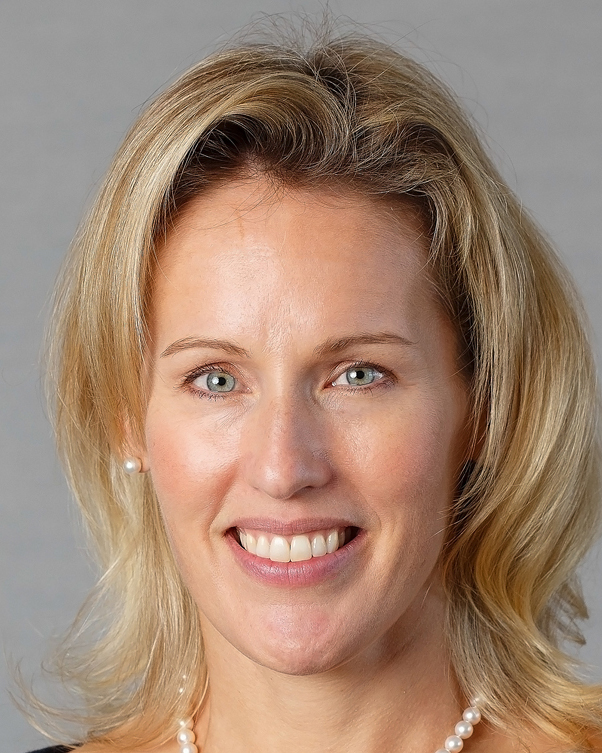
Lisa Ellis, Senior Analyst, Sanford C. Bernstein & Co., U.S. computer services and IT consulting.
Lisa Ellis is a partner and Senior Managing Director at MoffettNathanson LLC. She leads the Payments, Processors, and IT Services business.
In her April 2022 interview, Ms. Ellis touted that most hated of categories, cryptocurrency technology. Her recommendations may be just what the devoted contrarian investor requires.

Haendel Emmanuel St. Juste, Managing Director and Senior REITs Analyst, Mizuho Securities USA LLC.
Haendel Emmanuel St. Juste is Managing Director and Senior REITs Analyst at Mizuho Securities USA LLC.
He joined Mizuho in early 2016, having spent the previous 15 years on Wall Street, with platforms including Morgan Stanley, UBS and Green Street, focused exclusively on the REIT sector.
His May 2022 interview specifies a certain type of real estate investment as the best for our current position in the economic cycle.
“We’re still constructive on REITs, we’re just of the view that you need to be increasingly selective.
There’s more value out there.
We like names and sectors where there is pricing power and ability to offset some of the rising costs, where you are still seeing good demand, and I think we touched on a lot of that with residential and with shopping centers.”

Vijay Kumar, Senior Managing Director, Evercore ISI
Vijay Kumar is a Senior Managing Director on Evercore ISI’s Healthcare Services & Technology Research Team, primarily focusing on the medical supplies and devices and life science tools subsector.
“Medtronic has had some recent setbacks on the new product pipeline side. And most of it is either about unfortunate timing, or a communication sort of issue.
Yet the underlying fundamentals remain very strong.”
Business development companies or BDCs are a small but high yielding stock sector.

Casey Alexander, Senior Vice President – Research Analyst, Compass Point Research & Trading, LLC
Casey Alexander is a Senior Vice President – Research Analyst with Compass Point Research & Trading, LLC covering business development companies, which he has been following since 2009.
“Barings BDC…is managed by almost a unique team. They operate more in the traditional middle market.
But it’s managed by Barings Asset Management, which has over $300 billion in assets under management.
They manage the general account for their parent company MassMutual.
They have a far more bespoke method of investing and therefore the loans that they invest in, they have less competition for, are able to create better terms, better yields and, in general, a better total return.”

Tore Svanberg, Analyst and Managing Director, Stifel Financial Corp.
Tore Svanberg is an analyst and managing director at Stifel Financial Corp.
He joined the company with the acquisition of Thomas Weisel Partners LLC in 2010.
He is part of the technology group, covering semiconductors with a focus on analog, connectivity and processor semiconductors.
He has been recognized for his work by The Wall Street Journal’s “Best on the Street” Analyst Survey.
“I think the markets that are perhaps more interesting for semiconductor companies would be automotive. There’s obviously a lot of electronic content growth happening in the automotive market.”

Michael E. Hoffman, Managing Director and Group Head of Diversified Industrials Research, Stifel Financial Corp.
Michael E. Hoffman joined Stifel Financial Corp. in 2014.
Based out of the Baltimore office, Mr. Hoffman is a Managing Director and Group Head of Diversified Industrials Research, covering solid/industrial/medical waste, pest control and specialty distribution.
Hartaj Singh, Managing Director and Senior Analyst, Biotechnology at Oppenheimer & Co.
Hartaj Singh is Managing Director and Senior Analyst, Biotechnology at Oppenheimer & Co. His top biotech stock recommendation has returned over 30% since his August interview:
“…We have a “buy” on Gilead.
And we have one of the highest price targets on it.
And it’s just human psychology that if things are not looking good in the outside world, you will generally tend to go to areas or stocks that are safer. So you’ll avoid higher-risk stocks. And in that kind of an environment, the larger caps look very good.”

Richard Safran is Managing Director and an Analyst at Seaport Research Partners
Richard Safran is Managing Director and an Analyst at Seaport Research Partners.
He is an aerospace and defense equity research analyst and former aerospace engineer and program manager.
He started his professional career working at Northrop Grumman on the B-2 program.
“Russia was a major supplier of titanium to the U.S. aerospace industry and that’s not going to be any more, and aerospace OEMs are now going to have to domestically source titanium and titanium parts.
Well, that goes squarely to ATI.
People are looking for small/mid-cap stocks that are a derivative call on Russia’s invasion of Ukraine and the U.S. industry de-risking from Russia, well then, ATI fits that bill.”

Nikhil Devnani, CFA, Analyst, Bernstein
Nikhil Devnani, CFA, is an Analyst at Bernstein covering U.S. Emerging Internet, a variety of marketplaces across e-commerce, food delivery, ridesharing and housing.
Mr. Devnani joined Bernstein in 2016 as Research Associate on U.S. Large-Cap Banks and contributed to the team’s No. 1 ranking by Institutional Investor in 2017 and 2018.
His September 2022 interview has some eye opening recommendations.
“My top stock recommendation is actually outside the world of e-commerce right now. So, it’s Uber.
And why Uber? A couple of things.
One is, I think there’s not a lot of very clean stories in internet and probably in a lot of sectors right now.
But when I think about the relative trends, Uber is benefiting from this tailwind of people moving around again, which continues to take place.”

Mike Polark, CFA, Director and Senior Analyst, Wolfe Research
Mike Polark, CFA, is a Director and Senior Analyst at Wolfe Research, LLC covering the medical device industry.
Mr. Polark joined Wolfe Research after nearly 10 years with Baird.
“In large-cap land, I like Boston Scientific.
I cover a series of these medical device bellwethers, I call them — you know, multi category companies that do a lot of stuff. Boston, for me, has been the Goldilocks option — not too hot, not too cold, just right.
And they’re a leader in minimally invasive medicine, so they have a huge portfolio of minimally invasive solutions for specialties like cardiovascular, urology, oncology, electrophysiology.”

Ralph M. Profiti, CFA, Principal, Metals & Mining equity research at Eight Capital
Ralph M. Profiti, CFA, is a Principal focused on Metals & Mining equity research at Eight Capital, covering Senior North American Industrial Metals and Precious Metals companies and commodities.
His November 2022 interview is timely for investors looking to put money to work in 2023.
“In copper, my favorite stock is Freeport (NYSE:FCX). I like Freeport because of its strategic position in the copper peer group as it pertains to, again, having strong balance sheet liquidity. It can have positive free cash flow even at lower copper prices than where we are now.”

David C. Hartzell Jr., President and CEO of Cornell Capital Management.
Microsoft (NASDAQ:MSFT) and Google (NASDAQ:GOOG) are the top stock picks from David C. Hartzell Jr., President and CEO of Cornell Capital Management.
He currently serves on The Business Week Alliance/Market Advisory Board and the Barron’s “BIG MONEY” panel of experts.
He is an ex-officio member of the board of directors of the FBI Citizens Academy Foundation; the board of directors of the Chantal Avin Rosin Foundation; the board of directors of the Western New York Innovation and Entrepreneurial Group; The Charles Schwab Technology Advisory Board; The New York Society of Security Analysts; the CFA Institute; Chairman of the board of Clarence Industrial Development Agency, or CIDA; President of the Clarence Chamber of Commerce; and the Chairman of the Erie County Industrial Development Agency, or ECIDA, Leadership council; and is the former Supervisor — Mayor — of Clarence, New York.
“I tend to avoid the newest technology stocks. I learned my lesson back in 2000. Now I buy technology stocks that are a little older like Microsoft (NASDAQ:MSFT), Google (NASDAQ:GOOG) or Apple (NASDAQ:AAPL) that have been around a while and have proven themselves, rather than trying to find the latest, greatest 10 baggers, as Peter Lynch would call them.
I tend to be a little more conservative. My clients tend to be a little older and skew a little more conservative. So I’m a little more conservative as well and I buy stocks after they have proven themselves…
Valuations are always high with a Microsoft or a Google or an Apple. But we really sit down and take a look at this. I call them second-generation techs.
First generation would be the stuff that’s on the cutting edge.
Second generation like a Microsoft or Google — something that’s been around for a while and proven itself.
The valuation usually is going to be higher than an old-line industrial and such. But I think the question with every money manager is: Do you want to pay that extra valuation? If the equities in question and their criteria don’t fit our system, we won’t pay for that extra valuation. But, with some stocks we will.
For example, we won’t buy Facebook (NASDAQ:META) even though a lot of managers do. We thought the valuation was just too high. So we definitely reject stocks that other people are buying based on our own internal research…
If you go back to 2000 when we were trying to evaluate tech companies and there were just so many, one of the things I learned is, it’s just so difficult to separate the winners from the losers because every company looks so good on paper.
Their pitch is great, their MBA-toting, Stanford-educated CEO is young, enthusiastic and has a rich, full head of hair.
Their product is the next best thing since sliced bread.
Everybody looks good on paper, but can they cut it in this cut-throat tech world we live in? A lot of times, picking out the winners from losers is almost an impossible task in the technology sector.
It is very, very difficult.”
Facebook (NASDAQ:META) is not the only stock that Mr. Hartzell recommends avoiding. Two stocks that Mr. Hartzell bangs the table for are Google (NASDAQ:GOOG) and Microsoft (NASDAQ:MSFT).
“Let’s use Google, for example.
You get Google and it’s almost like Kleenex.
If you want to find out about something, you go to Google, as does everyone else in the free world.
Google — the search engine — is such a cash machine that allows the rest of Google to experiment in a lot of other tech niches and nooks.
They have a whole slew of products that the public doesn’t even know about that they’ll break out over the next 10 years, kind of like Apple does.
Google is a company we absolutely love for their focus on their core business and their commitment to innovation that will drive profits in the future.
We love Apple for their innovative, consumer friendly, high-quality products.
Everything Apple does, they just do really, really well.
On the other hand, you can buy 100 small tech companies, or 1,000 small tech companies, and you never know which one is going to be productive, or even if the company is going to survive to the next generation.
So, why do I like tech?
I think that with tech you can make a moat that people can try to breach but it can be very, very difficult.
If you look at Google search, Microsoft tried for years to get Bing off the ground and failed miserably. Nobody uses Bing, and everyone’s tried to crack Google’s moat.
But no one’s been able to. Google equals search, period.
So, with tech, your chances of success increase as long as you are the first in, you’re an innovator, you can keep your product fresh and your company is constantly and unremittingly consumer friendly.
You can really dominate your space, unlike a consumer products company that sells napkins and always faces relentless price competition.
Of course, you have to be great, and things change.
So, as a money manager, you have to be willing to move to the new frontier whatever that happens to be.
You need to know who’s dominating their space.
But as long as you stay on top of things, it’s an exciting place to be, much more exciting than value stocks, which is what we originally staked our claim to when we started our company back in 1989.”
The message from Mr. Hartzell is to stay away from Bitcoin but believe in the United States of America.
“First of all, I would say, don’t buy Bitcoin.
I think Bitcoin is air.
If Bitcoin went to zero tomorrow, it really wouldn’t surprise me.
I don’t know why people get involved in that.
I think it’s the whole Robin Hood mentality: get something for nothing — which of course in the stock market never happens. So I would say first of all avoid Bitcoin.
Two, I would say: Don’t be afraid of 2023.
Because if you look at the economy right now, even though you read a lot of gloom and doom and fear, if you’ve talked to anyone who owns a business, the big problem is finding people.
Unemployment is so low.
Most businesses now that have come out of COVID are humming along and are making money and just recently the Federal Reserve said that they haven’t peaked with the raising interest rates, but they’re starting to back off, so the whole hand of the Fed that was on the market is starting to ease and rate increases won’t be as big as they were in 2023.
We traveled recently to Greece and some of the people there said, “Oh you’re Americans.”
They said, “We love to go to America.
We love America.
We have friends there.
We have friends and relatives in Chicago, and we go there to visit.”
It seems that everyone in Greece has an uncle in Chicago.
“We love going to the United States. We love the United States,” they say.
How nice is that? Sometimes, you don’t hear that in the United States — how good a country we have.
People tend to focus on the negative.
But this is still an amazing economy.
It’s an honest government, honest legal system.
If you get pulled over in your car, you don’t have to worry about the police officer shaking you down, like they do in other countries around the world.
Also, you can mail me $10 right now in the U.S., and you know it’s going to get to me.
Other countries, that doesn’t happen.
I know, because my daughter has traveled all over the world, and we have sent her cash.
Sometimes it gets there, sometimes it disappears into the system.
So this is still just a great country and I think people need to realize that and focus on the future.
The future is bright for America. It really is.”
Get the complete interview with David C. Hartzell Jr., President and CEO of Cornell Capital Management, and learn more about his recommendations Microsoft (NASDAQ:MSFT) and Google (NASDAQ:GOOG), exclusively in the Wall Street Transcript.