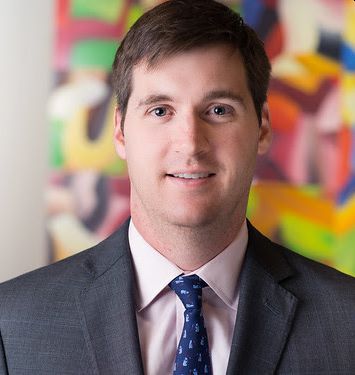
Paul Lambert, Portfolio Manager, Tocqueville Asset Management
Paul Lambert, CFA, is a Portfolio Manager at Tocqueville Asset Management L.P. Mr. Lambert is the Portfolio Manager of the Tocqueville Opportunity Fund and for several private wealth clients of the firm. He also provides research support for the U.S. Multi Cap Equity Strategy at Tocqueville Asset Management.
Prior to joining Tocqueville in 2010, Mr. Lambert served as a securities analyst at Key Bank where he worked within their Asset Recovery Group helping middle-market companies to restructure their debt. Mr. Lambert received his A.A. from Dean College in 2005 and a B.S. from Babson College in 2007.
In the extensive and wide ranging 2,144 word interview, exclusively in the Wall Street Transcript, Paul Lambert of the Tocqueville Opportunity Fund details his current and future stock buying plans.
“The Tocqueville Opportunity Fund (MUTF:TOPPX) focuses on small- and medium-sized U.S. companies that exhibit clearly defined sustainable competitive advantages tied to secular growth opportunities.
These companies typically offer a disruptive technology that makes their customers more productive and efficient or have a product or service that is extremely difficult to replicate. Our sector ratings are, as of today, 60% in technology, 17% in health care, 12% in industrials and 5% in consumer discretionary.
I have been working on the fund for about 10 years now and took over as lead Portfolio Manager within the last three years.”
The Tocqueville Opportunity Fund portfolio is maintaining it’s large tech stock positions:
“The revenue model of the companies that assist in digital transformation are recurring-revenue, subscription-based businesses. They are getting very predictable revenues with low churn rates and high gross margins — typically 80%-plus — which allows for rapid reinvestment of capital for new product development and cross-sell of existing products.
We are very bullish on technology as we sit here today and believe we are in the early innings of the digital transformation theme.”
This leads to the Tocqueville Opportunity Fund (MUTF:TOPPX) top picks:
“Our biggest position remains Shopify (NYSE:SHOP), which was our biggest position pre-pandemic. And it is our biggest position post-pandemic.
We could not be more bullish about the company’s prospects. Early on, when all the lockdown restrictions went into place as a result of the pandemic, brick-and-mortar retailers that were without online capabilities were basically out of business.
As a result, they were turning to companies like Shopify to, at the very least, get an online store and take payments. Shopify saw its merchant count double in 2020 from about a million merchants to roughly 2 million.
Part of the allure and genius of Shopify is its open architecture platform, which enables a robust developer network and more choices for merchants. On the sales side, Shopify has partnered with some of the biggest retailers and social media companies including Facebook/Instagram (NASDAQ:FB), Pinterest (NYSE:PINS), Walmart (NYSE:WMT) and Google (NASDAQ:GOOG).
This makes it easier for Shopify merchants to reach more end consumers through an integrated offering that enables online consumers to transact on a Shopify store seamlessly. We believe this is a very important development and only deepens Shopify’s moat versus other competitors.
Despite these positive developments, Shopify has been very aggressive reinvesting capital in areas like logistics, Shopify Capital to help their merchants grow faster, and they are investing in marketing.
They are doing all these things to help their end merchant transact more through the platform. And the more commerce that goes through the Shopify platform, the more Shopify and its shareholders benefit because they get a requisite take rate.
The secular growth theme of ecommerce is accelerating. Today, approximately 20% of worldwide retail sales happens online and we expect that to increase considerably as consumers have gotten more comfortable transacting online.”
The recurring revenue model is found in another top holding of the Tocqueville Opportunity Fund (MUTF:TOPPX):
“ServiceNow (NYSE:NOW) is our second-largest position. It is one of the preeminent enterprise software providers as it functions as a platform of platforms that sits on top of an enterprise tech stack.
It enables digital workflows to be done faster and quicker through its low code products. NOW’s software offering can sit on top of all the legacy software applications and can integrate with them. As businesses embark on their digital transformation, enterprises are using the NOW platform to facilitate digital workflows and expedite time-intensive tasks.
The company has shown impressive growth, compounding revenues at 35% for the last five years.
They are projected to do about $5.5 billion in revenues in 2021 with a 30% free cash flow margin, which is one of the best combinations of growth and profitability in software. We continue to be very bullish on the company as its opportunity set continues to grow.
Management estimates its total addressable market at roughly 160 billion. This includes its products in areas such as IT service management, IT operations management, customer service management, and human resources.
Eighty-five percent of the Fortune 500 are already customers and NOW has a retention rate of over 95%, so clearly large enterprises are seeing the positive impacts of the NOW platform. We believe the company is in the very early innings of upselling and cross-selling its enterprise install base, which could expand FCF margins even further as cross-selling is the most capital efficient way to grow revenues.”
Even in other sectors the Tocqueville Opportunity Fund (MUTF:TOPPX) likes to keep focus on the recurring revenue model:
“Within industrials we have been selective. One of the sectors we continue to be bullish on is housing. We think the steady migration out of urban areas will continue and that has put upward pressure on housing prices.
Homeowners have more home equity and are reinvesting back into their homes as work from home is likely a trend that will persist for some time. The way we have approached the sector is somewhat like the technology sector insofar as targeting companies with recurring or maintenance revenues.
Pool Corp (NASDAQ:POOL) and SiteOne Landscape (NYSE:SITE) are examples.
Both have large maintenance components to their revenue base, north of 50%. Pool Corp is a name we have owned for a long time. They are a wholesale distributor of swimming pool supplies, equipment and related leisure products.
Sixty percent of their revenue base is maintenance; pools require constant attention — from chlorine to keep the right pH levels to pumps to keep the water fresh and circulating.
These types of expenditures cannot be delayed or ignored, which has manifested in very sustainable revenue growth and high ROIC. We remain positive on the company as homeowners have been electing to construct pools, which requires these maintenance purchases.
SiteOne Landscape Supply is one the largest distributors of commercial and residential landscape supplies…”
Get the complete detail on the 2021 top picks from the Tocqueville Opportunity Fund (MUTF:TOPPX) by reading the entire
Paul Lambert, CFA, Portfolio Manager
Tocqueville Asset Management L.P.

Richard X. Bove, Chief Financial Strategist, Odeon Capital
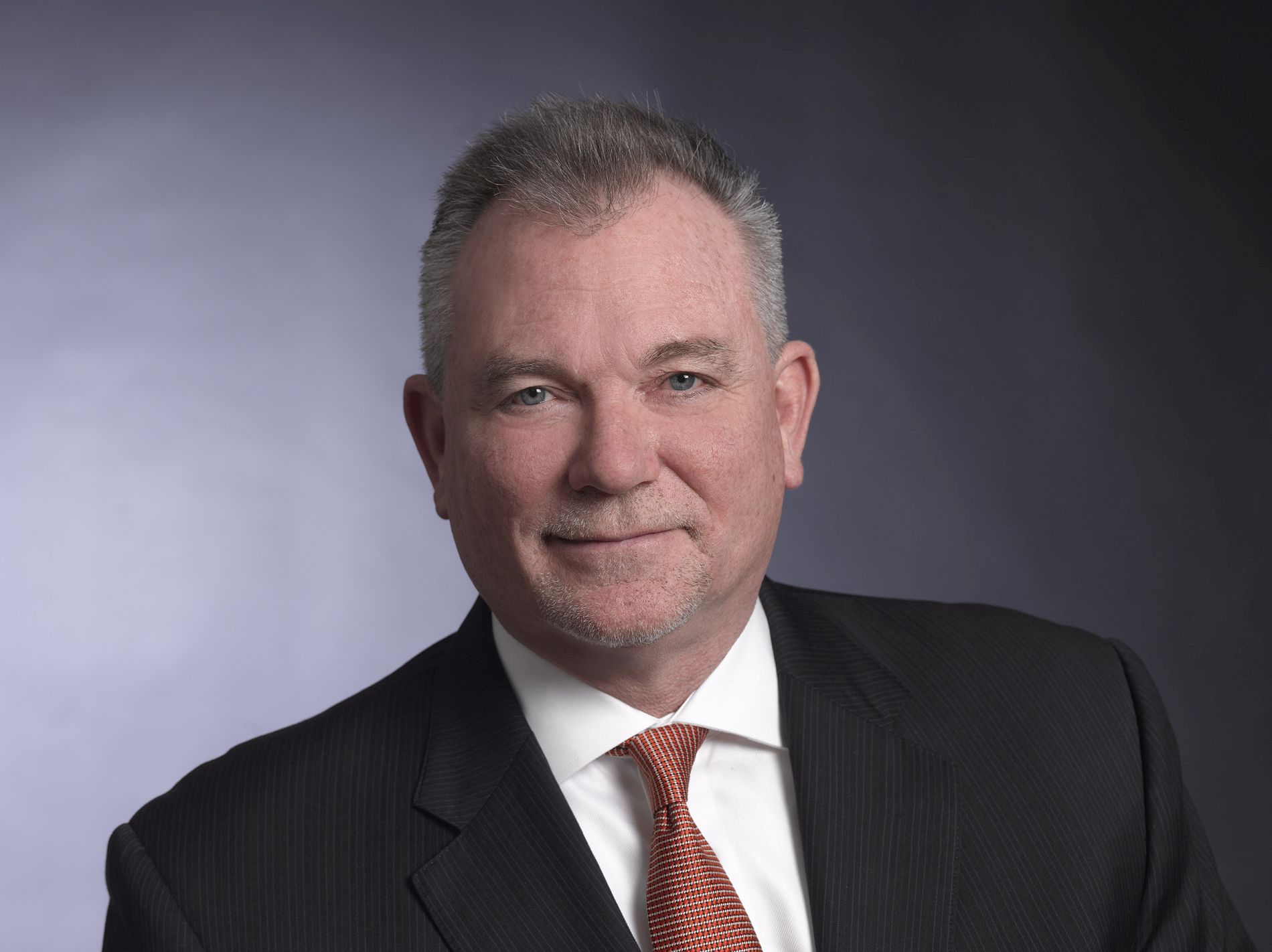
Kevin O’Connor, CEO, Dime Community Bank (NASDAQ:DCOM)
Richard Xavier Bove is Chief Financial Strategist for Odeon Capital Group LLC. Mr. Bove began his career on Wall Street as a retail salesperson at legacy Eastman Dillon Union Securities in late 1965.
He joined Wertheim & Co. in 1971 as an analyst covering the building and banking industries. Later, Mr. Bove became the Director of Research at C.J. Lawrence and Raymond James. In the mid-1980s, he returned to the analytical profession as a banking and financial analyst serving at Raymond James, Dean Witter Reynolds, Lehman Brothers and Ladenburg Thalmann, among other firms in his 56 years in the industry.
In 2013, Mr. Bove joined Rafferty Capital Markets. In 2018, he was selected to be the firm’s Chief Financial Strategist, after which time he was named to the role for Odeon.
Mr. Bove has been interviewed on television over 1,600 times and his print interviews now number over 10,000. His views have been reported on in Europe, Asia and Latin America. He holds a bachelor’s degree from Columbia College where he graduated in 1962. He has been married 55 years and has seven children and 19 grandchildren.
In his 6,505 word interview, exclusively in the Wall Street Transcript, Richard Bove details his current take on the US banking sector.
Kevin O’Connor has been the Chief Executive Officer of New York’s Dime Community Bank since 2020.
Earlier, he was CEO of BNB Bank, and had senior roles at North Fork Bank. Mr. O’Connor has been on the boards of Pursuit, the New York State Bankers Association, the Hauppauge Industrial Association, the Long Island Association, as well as the Brooklyn Chamber of Commerce.
He is also a member of the Board of Trustees of Suffolk County Community College. He received accounting degrees from Suffolk Community College and Adelphi University.
In his 3,111 word interview, exclusively in the Wall Street Transcript, Mr. O’Connor details his vision for increasing shareholder wealth for investors in his company, Dime Community Bank.
Kevin O’Connor has managed to put together a community bank merger in the midst of the COVID 19 global pandemic:
“Dime Community Bank is the result of a recent merger that we announced a year ago and closed on February 1, 2021, between the former BNB Bank and Dime Community Bank. It was a merger of equals.
I had been the CEO and President of BNB Bank and we had been operating over 100 years. Dime was about 150 years old.
We created the headquarters in Hauppauge for the new Dime, strategically positioned with about $13 billion of assets today and $1 billion in capital. And I’ll just say legacy BNB had a deep history in C&I — commercial and industrial — commercial real estate, and small business lending, while legacy Dime had been a leading player in New York multifamily lending.
We had a strong market share and brand awareness on Long Island. Dime’s footprint was primarily in the boroughs, Brooklyn, Queens, with some presence in Manhattan.
We have now created a strong community bank, operating truly from Montauk to Manhattan with specialty in business banking, commercial real estate and multifamily lending.
We have a unique footprint in our marketplace.
If you take the geographical footprint of Long Island, we would be the 14th largest state in the country including Nassau, Suffolk, Brooklyn and Queens.”
Kevin O’Connor takes his role as Dime Community Bank leader quite seriously:
“I think, for our employees, when it was very dark and health care workers and frontline workers were saving lives, it gave us a chance to actually make a difference.
In fact, one of the accounting firms that had clients with many of the larger banks got frustrated they were not getting answers, and came to us. And we probably got loans for 35 of their customers. And one of their customers made trophies, and they actually made a gift for us that we have displayed in our lobby here to thank us for helping all of these customers get these PPP loans when other banks failed.
I was at an event the other day where there was a not-for-profit that had been struggling to get their PPP loan done with larger banks — they were just overwhelmed. And we were able to get that done, and we were recognized for this.
I think the community banks and our bank, in particular, really stepped up. Our employees live in the communities where they work, in many cases, and they knew the customers that were struggling. And we’re there to help reach out and help them navigate what was going on.
Now, we still sit here today. People’s financial statements are still somewhat affected by what happened. And we’re making sure that as we look at their loans and renew their loans, we’re understanding the impacts of the pandemic and how they may have affected your financials.
If the fundamentals of your business are still strong, we’re going to be lending to you going forward.”
This focus on servicing the community has Dime Community Bank at a disadvantage, according to Richard Bove, a long term veteran of the US banking sector:
“Let me dispute the Jeffersonian argument which suggests that small banks and personal service creates the ideal banking system. My view is that there is no place for small banks in the United States because they cannot provide the consumer with the best financial deal.
In other words, the business model simply is no good.
When I started following banks, there were 14,500 of them. Today, there are about 4,900 of them. You have to ask yourself: Did someone with a machine gun come from Bank of America (NYSE:BAC) and enter into Joe Jones’ bank and say, “Close down or we’re going to blow this place up?” No. Joe Jones’s bank went out of business because it had a business model that was no good.
It was taking in money at variable cost and putting it out at a fixed cost. Next, small banks have limited product offerings. Third, small banks are relatively high cost in nature. They lack technology, scale, and are too labor intensive. Fourth, they do not have the money to buy the technology that would allow them to reduce their costs. Moreover, if they bought the technology, they don’t have enough business validate making the expenditure.
JPMorgan Chase (NYSE:JPM) is America’s largest bank. It is in this position because it can offer its customers — among which I am one — more products with greater utility faster and at lower price.
They offer the consumer a better deal and for that reason they are growing their market share. Bank of America is the nation’s second-largest bank, they have attracted tens of thousands of clients who do all of their banking on mechanical devices. Small banks cannot match that.
So the small banks continue to fold up and go away. An estimated 10,000 of them have gone in my career. You cannot get rid of 10,000 more, because there’s only 4,900 left. Unfortunately, they are done.”
Get the full picture on the US banking sector from the new Wall Street Transcript Banks Report, exclusively at TWST.com.
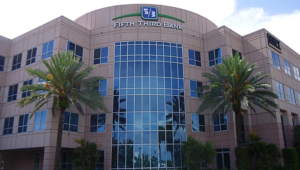
Fifth Third Bancorp (NASDAQ:FITB) is First with Two Banking Analysts
Fifth Third Bancorp (NASDAQ:FITB), based in Cincinnati, Ohio has $205 billion in assets and operates 1,096 full-service Banking Centers, and 2,369 Fifth Third branded ATMs in Ohio, Kentucky, Indiana, Michigan, Illinois, Florida, Tennessee, West Virginia, Georgia, North Carolina and South Carolina.
Fifth Third operates four main businesses: Commercial Banking, Branch Banking, Consumer Lending, and Wealth & Asset Management. Fifth Third is among the largest money managers in the Midwest with $483 billion in assets under management.
In this issue of the Wall Street Transcript, two top banking analysts picked FITB as one of their banking winners for 2021 and 2022 stock appreciation.
Peter Winter is a Managing Director at Wedbush Securities. He covers regional and Texas banks. He has 19 years of sell-side experience with CIBC World Markets, BMO Capital Markets and most recently, Sterne Agee CRT.
He was ranked first in earning estimate accuracy in 2019, 2018 and 2017 and third in 2016 and 2015 by Starmine. He is a graduate of Syracuse University.
In his 2,007 word interview, exclusively in this week’s issue of the Wall Street Transcript, Peter Winter bangs the table for FITB investors:
“Fifth Third Bancorp (NASDAQ:FITB) is a well-run company. It’s another Ohio-based bank. They’ve got an expense initiative in place. They’ve done an incredible job to hedge the interest rate environment for a long period of time with rates being low. That’s helped support the net interest margin.
They’ve been very disciplined on waiting for higher rates to invest all its excess liquidity into either loan growth or security. So there’s a lot of dry powder sitting on the balance sheet — $30 billion in excess liquidity, earning 15 basis points. That would be a real earnings leverage when they put that money to work.
They’ve got capital ratios that are above their targeted levels, so they’ll be aggressive with buying back stock. They’re going to increase the dividend in the third quarter. It’s a great story with the way that they’ve positioned the balance sheet, capital, and they’ve got dry powder for earnings growth along with an expense initiative.”
Peter Winter has been a long term advocate of the stock, suggesting investors put their money to work there in this 2019 2,406 word interview, where he stated that:
“They have some earnings levers that other banks don’t have to generate above average EPS growth. There will be costs savings from the integration of its pending acquisition of MB Financial (NASDAQ:MBFI), expected to close in the first quarter. …they de-risked the loan portfolio and exited $5 billion in loans, setting the stage for stronger loan growth in 2019.
They provided 2019 average loan guidance of 3.5% versus 1.2% in 2018. They have levers on the expense side, excluding the acquisition, where they are projecting 1% or less expense growth in 2019.”
Christopher Marinac is Director of Research at Janney Montgomery Scott. Mr. Marinac oversees the firm’s Equity Research team, which covers more than 225 companies within the financials, health care, infrastructure, and real estate sectors. Mr. Marinac has more than 27 years of financial services and research analysis experience.
Prior to joining Janney in 2019, he was Co-Founder and Director of Research at FIG Partners LLC, a premier investment banking and research firm specializing in community banks. At FIG, he established and managed an award-winning Equity Research team that covered more than 150 banks, thrifts, and REITs.
Earlier in his career, he spent six years as Managing Director at SunTrust Robinson Humphrey and five years as a Research Analyst at Wachovia Corporation (formerly Interstate/Johnson Lane Inc.).
He has served as a financial expert and resource to global and national media outlets including American Banker, Bloomberg, CNBC, Financial Times, FOX Business, and The Wall Street Journal. Mr. Marinac graduated from Kent State University with a Bachelor of Science in Accounting and Finance.
He is actively involved with Atlanta Ronald McDonald House Charities, where he is serving his fourth three-year term as a board member.
In his 4,851 word interview in this issue of the Wall Street Transcript, Chris Marinac sees tons of investor upside in FITB:
“From the large-cap perspective, a company that I think is not fully appreciated is Fifth Third (NASDAQ:FITB). We have a “buy” rating and feel that Fifth Third has a lot of untapped earnings, primarily because they can put their excess cash to work in higher loans and higher-earning assets. The company is going to be very thoughtful about being a bigger lender in both the consumer and commercial channels. They will most likely do more consumers sooner.
There’s an opportunity for Fifth Third stock to continue to trade higher.
They are going to be pretty active in share buybacks. They told us that, but I think that’ll play out for them as well. So the stock has certainly done well in the big picture. There is more upside and a bigger valuation still ahead for the company. Also, just like I mentioned in that whole group, there is an opportunity for the Fifth Third to have a higher earnings estimate, which therefore helps the stock price to go higher from here.
TWST: When you mentioned untapped earnings, what do you mean exactly there?
Mr. Marinac: That there is excess cash. Cash and securities are a large part of the balance sheet right now. We think that can be higher or can be utilized in the higher earnings. That is the main point. The other point that rings true is that, in the case of Fifth Third, the share count was going to come down, so that the share repurchases are going to cause a lower share count, which therefore means higher EPS numbers.”
These strong affirmations of Fifth Third Bancorp (NASDAQ:FITB) are available exclusively in the Banks Report from the Wall Street Transcript.
Previous reports advocating Fifth Third Bancorp (NASDAQ:FITB) investments are available including this 3,768 word interview from Portfolio Manager Barry James: “Fifth Third…is a national bank, but its focus is more in the Midwest, to be honest. That seems to be one of the areas that is coming back in pretty good order.
It is strong financially and has the ability to take advantage of the rising interest rates to boost the bottom line. We don’t like to see too much heavy overhead in the business so that they can take pretty swift advantage of the improving economy that we see.”
Matthew Lilling, Portfolio Manager & Managing Director, ClearBridge Investments
Matthew Lilling, CFA, is a Portfolio Manager and Managing Director at ClearBridge Investments.
He co-manages the Mid Cap, Mid Cap Growth, and SMID Cap Growth portfolios.
He began at ClearBridge in 2010 and has 15 years of investment industry experience. Earlier, he was a Private Equity and M&A Advisory Associate at MTS Health Partners and an Investment Banking Analyst at Lehman Brothers.
He received an MBA from Columbia Business School and holds a B.A. degree in economics from Emory University.
In this 2,734 word interview, exclusively at the Wall Street Transcript, Mr. Lilling details some of his top picks and his underlying research for investors.
“One company we hold is Chewy (NYSE:CHWY).
Chewy is a company we’ve been invested in since the IPO. It sells pet foods, products and prescription drugs online to pet owners. It can deliver them in one to two days. It is a digitally advantaged company that has a business model that benefited from the pandemic, as customers shifted purchases online.
It has also benefited from the increasing number of pet owners. This caused revenue to accelerate significantly in the summer of 2020 and we saw Chewy’s stock price quadruple from pre-pandemic levels. Chewy gave back some of those gains in early 2021 as growth stocks moved out of favor.
But when looking closely at the fundamentals, there’s still a lot to like. First, the majority of their products are consumables, so the customers they gained during the pandemic will keep coming back. And secondly, the new customers typically utilize more of the products that they sell.
So Chewy has this large recurring customer base and they can grow it by offering new services, like prescription drugs and higher-margin private-label products.
It looks like Chewy is now returning to pre-pandemic growth levels, but just off of a higher base, along with better customer economics and profits, and that all makes a strong argument for a sustained higher multiple.
Do we know if those types of companies are going to be in favor over the next six months? No. But we do think that Chewy can be a much bigger and better and more valuable company over the next three to five years.
Matthew Lilling has another top pick for investors in 2021:
“I’ll mention a company that has benefited more in the last six months.
Regal Beloit (NYSE:RBC) is a company that has benefited from the cyclical recovery of the economy, but one that we still feel has a lot of opportunities, mainly from internal optimization efforts under a new management team.
Regal sells electric motors into commercial and residential HVAC companies as well as those that make pool heaters and industrial power transmission equipment. And under the mismanagement of the prior CEO, this was a decade-long value trap.
It had low multiples, but there was never any reason for that to change.
When we started researching it last summer, we saw a company with pretty high market share, rational competition, and the ability to pass along price increases to cover commodity inflation. Those are pretty sound fundamentals.
But it also had returns on invested capital from only 4% to 8% over the last decade. When new management arrived in 2019, they laid out long-term targets to improve margins, organic growth and returns using a plan called the 80/20 plan.
They wanted to do simple things like decentralize profit and loss, or P&L, through regional and plant managers, rationalize its manufacturing footprint, get rid of unprofitable products, ask unprofitable customers for better pricing, and improve cash collections.
The prior management team was focused on projects that didn’t have payback to them. And the new management team is doing things like having the research and development team talk with the sales team to make sure that capital is being allocated correctly.
These aren’t complicated things to fix. And there’s a company-specific opportunity to improve margins, returns and growth. And so, even though this is a company that’s done really well over the last six months, there’s still a lot of room to move returns higher as the company executes on its internal strategy.
…especially in Regal’s electric motor product sets, where improvements in energy efficiency can have large impacts on improving environmental outcomes.
So as Regal invests in new products, the impact of residential and commercial HVAC systems on the environment is reduced.
I would also add that it’s important to understand what their customers are looking for, and what they need, and what their goals are for their products that they’re releasing to the end markets in order to adequately match the R&D spending and allocation to what the customer actually needs.
And that way, they’re being more efficient with their spend.”
A used car company is also at the top of Matthew Lilling’s stock pick list:
“Going back to another digitally advantaged company, Carvana (NYSE:CVNA) is an example of a company that benefited massively from the pandemic.
The stock, similar to Chewy, worked well throughout the summer of 2020, and has been range-bound since. When looking forward here, though, they still have a huge market to disrupt.
Carvana sells used cars online. This is another company that we’ve been invested in since the IPO, and is a good example of a company with a huge addressable market.
It has less than 1% market share, even after they’ve grown greater than 100% for three of the last four years. Customers were getting more comfortable buying big ticket items online, like used cars, prior to the pandemic and the pandemic accelerated that even further.
To be clear, this isn’t a pull forward in demand that’s going to create tough comparisons. It’s more of an acceleration in penetration into a massive growth market.
People are not going to go back to doing things the old ways, once they’ve seen how much of a better process this is.
In addition to continuing to penetrate the used car market online, Carvana has adjacent opportunities that they’re not currently taking advantage of. There may be opportunities to sell maintenance contracts or insurance to car buyers in the checkout process, as well as a call option on how new cars are eventually distributed in the future.
Carvana also has sustainable competitive advantages from building out reconditioning centers and infrastructure to distribute these vehicles. These are actions that are not easily duplicated by others.
My co-portfolio manager, Brian Angerame, has been an investor in the used car space for over 15 years, and provided a lot of the analytical power behind this one.”
Get all the top picks from Matthew Lilling by reading the complete 2,734 word interview, exclusively at the Wall Street Transcript.
Matthew Lilling, CFA, Portfolio Manager & Managing Director
ClearBridge Investments
email: info@clearbridge.com
Raymond Saleeby, President, Saleeby & Associates
Raymond Saleeby is President of Saleeby & Associates, Inc. He has over 38 years of investment experience. He formed Saleeby & Associates in April 2001.
In this 3,228 word interview, exclusively in the Wall Street Transcript, Raymond Saleeby details his investing philosophy and has many top picks to recommend to investors:
“There is always a good time to be contrarian. It’s a question of how many stocks are available to you. But it’s obvious with stocks hitting new highs, it’s harder to find contrarian stocks. But like anything else, there’s many opportunities, not just in this market but overseas as well…
I’ve followed many, many over a period of 38 years that I’ve been managing money. And I used to be, in the 1980s and 1990s, heavily involved in the water business. I thought that was the best business in the world for 30 years.
And I still think it’s a very good business, anything tied to it, whether it be water utilities or water service companies that service different pumps and the like. It’s just a great business. And I made a lot of money, but it was discovered in the last 10 years with the price/earnings ratios and the multiples increasing dramatically. So I’ve shied away from it.
I think the next best business that I found in the last five years — it’s a phenomenal business — is the flavor and fragrance business. It’s termed different names in different areas. But it’s a great business.
The same companies have been around, for the most part, the last 100 years, and the barriers to entry are enormous. It’s a sticky relationship. And it’s a nice business which you want to buy today in an environment where we’re going to have higher inflation.
And as you see higher inflation, your profit margins start to squeeze somewhat with higher material costs, higher labor costs. But you want to buy businesses where you can increase your prices where the customer is not going to jump ship just because you increase your prices to go to another competitor. And that’s why I say it’s a very good business — being the sticky business…
…it absolutely also includes beverages, drinks, foods, better ways to take sugar out of things — it’s basically healthy. It’s a good business during bad times and good times and it’s a business that’s not necessarily mostly American.
For the most part, it’s more European. It’s a business that offers phenomenal future opportunities with developments of new foods.
They’re healthier for you and more natural. Natural ingredients is a buzzword today in any business.”
Raymond Saleeby has some specific names in this sector:
“A business that has done very well that is heavily involved with millennials is the spice business. And you’re absolutely right.
They love spices.
McCormick (NYSE:MKC) has done very well over the years. It’s a company I bought many years ago.
And I’m not recommending it necessarily today, but they have red hot sauces, and those things are booming right now.
The millennials like that. And you’re absolutely right. Many people are looking for different things for food to add flavor that are not necessarily the traditional ones of salt, fat and sugar.”
Another sector that is catching Raymond Saleeby’s interest is real estate:
“Housing — I wrote a special report about it in the last newsletter and did an in-depth analysis. Basically, there’s a shortage of housing right now, and you have several factors affecting that.
One is older people who typically supply a lot of homes to the market for the younger people and next generation — they are staying in their homes longer, remodeling them.
They were afraid of COVID, because it felt like it was a death sentence to go to a nursing home last year. So that’s changing the supply dynamics.
Secondly, you’re finding that costs of lumber are increasing with other raw materials, dramatically in the last year, up 300% to 400% off the lows.
And you can’t find enough labor because a lot of people quit the profession since 2008 when you had the last housing bubble.
But right now, you have more housing affordability from an interest rate perspective than you’ve ever had before. And you also have other institutions like private equity out there and publicly traded corporations that are competing against you to buy a $300,000 or $400,000 house, which makes sense to do that because you can get the rental income to offset it and some growth behind the value of the house itself.
It makes a nice return. So they’re competing.
It’s very difficult for the average person to buy a house today in a hot market, especially because these are cash buyers. You’re seeing many, many overbids right now.
Thirdly, what’s changed housing more than anything else in the last 10 years, I think, is people buying it without seeing the house. And you’ve got such great graphics with Zillow (NASDAQ:ZG) and Redfin (NASDAQ:RDFN) and the like, that people can see what a house looks like.
You can see it in 3D as well. You can find so much more information that before was only for the real estate broker. It’s the same thing happening in our business, the financial business.
The consumer and the client are beginning to be so much more informed than ever been before. It’s mind-boggling how much information they can receive today. And they can receive it accurately and fast.”
Raymond Saleeby has a specific recommendation for investors:
“I think people need to take the Warren Buffett approach. If I were to tell people one thing it is go back and read everything you can about Warren Buffett. He may be the greatest investor of all time.
He shares some of his secrets.
And I followed him for my whole career and I’ve learned an incredible amount from him. His investment advice has been spot on, and he’s a genius. And we’re very fortunate to have him in our lives right now.”
To get all of Raymond Saleeby’s top picks, read the entire 3,228 word interview, exclusively in the Wall Street Transcript.
Raymond Saleeby, President, Saleeby & Associates, Inc.
(314) 997-7486
email: rsaleeby@cutterco.com
Eric J. Marshall, President and Co-Chief Investment Officer, Hodges Capital
Eric J. Marshall, CFA, currently serves as President, Co-Chief Investment Officer, and Director of Research for Hodges Capital Management.
He joined the firm in 1997 and also serves on the board of directors of the firm’s parent company, Hodges Capital Holdings. Mr. Marshall holds a B.A. in Finance from West Texas A&M University.
In this 2,738 word interview, exclusively in the Wall Street Transcript, Eric Marshall explains the investing philosophy of Hodges Capital for investors.
“…We’re very much bottom up; we focus entirely on what’s going on with the fundamental earnings picture of the companies that we follow. And we do pay attention to macro factors, such as what’s going on with interest rates in the Fed because they affect how risk is priced out in the market.
But we don’t spend a lot of time trying to forecast the macro environment.
What we’re really trying to forecast is what does the fundamental backdrop look like for each of the individual companies in our portfolio over the next 12 to 18 months, and then make the best risk/reward decisions in the portfolio based on that.
…When we look at multiples right now, relative to where interest rates are, we think that given the current backdrop for inflation rearing its head, there’s not much room for multiples to expand.
Also, higher corporate tax rates and higher capital gains taxes potentially could also be headwinds for multiple expansion.
So really, what this means as investors, is we want to be focused on businesses that have pricing power and have the ability to leverage their cost structure in an inflationary environment.”
This leads Eric Marshall of Hodges Capital to some interesting stock picks:
“One area that we particularly like in the material space is companies that make things like cement.
One of the stocks that we own in three of our four funds is a company called Eagle Materials (NYSE:EXP), and they are one of the largest producers of cement in North America.
They also are a leading provider of gypsum wallboard. But the interesting thing about cement is we haven’t really added any meaningful cement capacity in the United States over the last 20 years.”
Eric Marshall also likes a well known retail name:
“One that’s definitely kind of a turnaround but you don’t hear a whole lot of people talking about is Nordstrom (NYSE:JWN).
And that’s one that’s very unloved, and kind of hated. But we see that there are some valuable assets there. In a post-pandemic world, we still think over the next 12 months consumers are going to get back out and update their wardrobe. Nordstrom is kind of a higher-end luxury retailer, where you have aspirational customers realizing value.
And that’s one that looks very inexpensive to us.
It’s been flying underneath the radar and it is in a turnaround situation, but one that we think has a pretty good risk/reward. We believe that they have the balance sheet to make it through.”
The current market has created some investing dilemmas for Eric Marshall of Hodges Capital:
“…There’s certainly been far more upside surprises over the last several quarters — almost to an extreme.
At one point, we looked at our coverage universe and about 85% of the companies that our team of analysts follow saw earnings come in better than expected in the most recent first quarter. And I think in a lot of cases, management teams have given very conservative guidance because they lack visibility and because of the timing of the economy reopening.
Also, they lack clarity to what’s going to happen with federal policies that are currently underway from tax reform to other regulatory items.
There’s just a lot of uncertainty out there. And that set conservative expectations. So I think that’s why you saw so many companies beat analysts’ expectations over the last couple quarters.
In many cases, the stocks didn’t even go up when the companies beat expectations because it was such a widespread phenomenon that occurred.
Where if you didn’t beat expectations that was almost like missing expectations, and if you just met expectations, something must be wrong. And that’s something that will probably continue for the next couple quarters.
I’ve talked to a lot of management teams.
Our investment team this past year made over 3,200 contacts across over 1,000 different publicly traded companies. We’re constantly talking to management and we do get the sense that the guidance that’s made public on these quarterly conference calls is very conservative.
In many cases, it’s much easier to paint a picture for a company to exceed expectations than to miss expectations.
And that’s kind of become the new phenomenon on Wall Street.”
Eric Marshall has identified a fintech hidden inside a very old Wall Street name:
“We’re looking for companies that can actually prevail under difficult conditions like that and then actually emerge, maybe in a little bit better competitive situation than they had before the pandemic.
We also like NCR (NYSE:NCR), a company that makes point-of-sale equipment like cash registers, and they also make ATMs. But we also see a real recovery in things like self-checkout at retail, and we think that’s something that’s here to stay. As companies have learned to change their payment methods, people are paying using their phones.
A lot of that is automated through NCR’s hospitality business. And this is one that we think is actually poised to do really well on the backside of the pandemic as things continue to reopen.
So it’s kind of a derivative of the reopening. We think, really, it’s a fintech company hidden inside of an old company that used to make cash registers and ATM machines and things like that.
Now they’ve evolved from an appliance manufacturer to more of a software-as-a-service company. Because of the software component of their business and reoccurring revenue associated with that, we think they’re going to get a much higher multiple over the next year or two.”
To get all the top picks from Eric Marshall of Hodges Capital, read the entire 2,738 word interview, exclusively in the Wall Street Transcript.
Andrew Hokenson, Senior Equity Analyst, Pier Capital
Andrew Hokenson is a senior equity analyst at Pier Capital. His responsibilities include conducting equity research for the firm’s small- and smid-cap growth strategies. Earlier, he worked at Benefit Providers and Fordham Financial.
In this 3,626 word interview, found exclusively in the Wall Street Transcript, Andrew Hokenson of Pier Capital reveals his current top picks and his methodology for selecting them for his portfolio.
“…We are a bottom-up, fundamental-focused, long-only small-cap growth fund. We manage about $1 billion worth of institutional assets. We’ve been employing the same process since inception for about 35 years.
We have about 100 names in our fund, 75 to 100 names. We can be actively overweight in certain sectors.
We don’t do any closet indexing.
And our overweight can be a natural result of our bottom-up approach. Generally speaking, we have a three-legged stool as far as industries that we tend to have more focus on: tech, consumer and health care. And we don’t invest in REITs.”
Pier Capital equity analyst Andrew Hokenson believes in a deep research basis for his growth stock picks.
“So the investment strategy centers on a core principle, and that principle is that great products or services can create great companies. That’s where our deep research and experience come in.
We believe that great products and services are identified by a superior value proposition. And a value proposition fuels a customer, or retail customers, whether it’s a business or retail decision-making process.
It’s what compels the customer to choose one product over another.
So it’s either the product’s or service’s performance, price, or some combination of those two which create a superior value proposition.
And that value proposition is what we believe is the true essence of what creates disruption in a market. The strength of that value proposition, we believe, is what determines the lifecycle of that product, and therefore the earnings growth potential of that company.
So as the company has greater ability to penetrate that market and even expand that addressable market, that’s what creates that disruption and really what we call a secular growth story.
Now, if we identify this value proposition early enough in the growth phase, these companies have the opportunity to substantially outperform expectations.
We found that to be true time and time again.
So that’s essentially the core philosophy. We do try to back up a lot of what we believe through something we call key performance indicators.
Key performance indicators are a way for us to verify and justify what we find to believe to be a strong value proposition.”
One example of this investing research is the Pier Capital investment theme based on digital transformation.
“I’ll start off with just mentioning that overarching theme we call digital transformation.
Digital transformation is basically turning your business from being an analog, face-to-face process to being done through an app or online or digitally, and in any shape or form.
This is a major secular trend that encompasses a lot of different areas. I kind of drill down a little bit here.
Obviously, I’ll point out that COVID-19 was a huge catalyst for digital transformation. However, when you want to play these stories, there’s some obvious ones that really benefited from COVID.
We don’t really participate in those stories.
We don’t want to really participate in companies where the digital world was used as kind of a crutch during COVID. Instead, we invest in companies where we think COVID served as a proof point.
And I’ll get into more detail about what I mean about that. But things like food delivery.
We thought it was more of a crutch as opposed to a proof point. So we stayed clear of food delivery as a secular disrupter and we focused more on things like real-time analytics. We thought it actually served as a great proof point.
And so, when I drill down into where that goes, I believe that obviously we have a lot of cloud software companies out there these days and those companies had a phenomenal year in 2020.
And while I still think that there are a lot of growth opportunities within software-as-a-service, I do think that the valuations have gotten a little expensive.
This happened late last year, so we’ve been trimming exposure to software for the last year. Now, actually, we’re starting to dabble back into software again. But we are just dipping our toes right now.
I think there could be some more weakness ahead there, but we’re getting closer to where we feel the valuations are right.
So, staying away from software for now, I think another area that’s very interesting are these digital-first consulting companies.
There’s a few of them out there that are publicly traded. These companies help large enterprises with digital transformation.
And it’s a combination of business processes as well as kind of creative designs for app development and creating kind of a digital presence for large enterprises — Disney (NYSE:DIS) being a great example of a company that needs to build a better kind of digital presence. These companies will come in and help with that.
And interestingly, they’ve been doing so well with that. We just see not only new customers come along, but also continued investment from existing customers.
Also, no two industries are the same and certain industries are a lot slower to embrace technology than others for good reason. A lot of it has to with regulatory and compliance issues.
I remember when fintech started becoming very popular, when banks actually started to use technology. That for me was a very big sign that digital transformation is for real.
Because if banks are saying, I’m willing to go through all the hoops to start developing a more digital-based platform, that’s when I knew that this is for real.
And now, after COVID, the health care industry is doing that now.
The health care industry used real-time analytics during COVID and saw the benefit from it, and now they’re stepping in. And a lot of these consulting companies, or at least the ones that I look at, are going to be benefiting from that.
I think that’s a new market opportunity for them that should, I think, help drive future growth.
I do like these digital-first consulting companies. I think that they’re trading at a p/e of around 30 times. I think for some of them, maybe, they will be above a little bit. But a nice p/e multiple for a high-growth story, I think, is very fair.”
Get the complete picture by reading the entire 3,626 word interview with Andrew Hokenson of Pier Capital, found exclusively in the Wall Street Transcript.
Andrew Hokenson, Senior Equity Analyst
Pier Capital
www.piercap.com

Jonathan S. Raclin, Princicpal, Barrington Asset Management
Jonathan S. Raclin is a Principal of Barrington Asset Management.
Mr. Raclin graduated with a B.A. from St. Lawrence University and an M.A. from Northwestern University. Following service as a commissioned officer in the U.S. Marine Corps, Mr. Raclin was associated with White, Weld & Co., a Partner of William Blair & Company, and Executive Vice President for Capital Markets with The Chicago Corporation.
He is a former regional chairman of The National Association of Securities Dealers, a former President of the Bond Club of Chicago and of the Attic Club. He previously served as a director of the St. Simon’s Land Trust, and has been President of the Coastal Georgia Historical Society and Co-Chairman of Emmi Solutions, a privately held health care information company.
He is recently retired as a director of the Public Broadcasting Service in Washington, D.C.
In this 2,386 word interview, found exclusively in the Wall Street Transcript, Jonathan Raclin of Barrington Asset Management applies his long experience in the financial markets to this current point in our economic cycle.
“I employ an asset allocation approach using closed-end mutual funds. Presently, I own three mutual funds: Liberty All-Star Equity Fund (NYSE:USA), Liberty All-Star Growth Fund (NYSE:ASG) and Central Fund of Canada, now the Sprott Precious Metals Trust (NYSEARCA:CEF). The remainder of the portfolio is in cash.
…I find that valuation is an important component of determining what you want to own.
As opposed to relying upon somebody’s opinion as to what something may or may not be worth, I like the objective approach of being able to see what the fund is selling for relative to the net asset value. Sometimes, that ratio is at a premium, which is a cautionary sign.
Sometimes, it is at a discount, which often provides an opportunity.
I like closed-end funds where they have an objective distribution policy. In the case of the Liberty Funds, they pay a percentage of net asset value every quarter.
We are not dependent upon waiting until the end of the year or dependent upon some manager deciding what they are going to pay to the shareholders.”
The Barrington Asset Management principal has a sober view of the current economic cycle:
“I think people forget how strong the economy was before the virus showed up, by all criteria — unemployment, market valuations, GDP growth, almost everything that you could look at.
Everything looked very, very strong until the virus appeared. The result was dramatic with a significant drop in the stock market, that drop occurring in a very short period.
From a point of view of the government, I think that the current political administration, like the previous one, recognized that when we had the financial crisis back in 2008, a somewhat gradualist approach tended to suppress the rebound, and perhaps spread it out longer than otherwise would be the case.
This time, they basically decided to throw everything at it, including the kitchen sink, which is why we end up with these gigantic deficits.
The recovery has been exceptionally dramatic, both in terms of economic activity and, obviously, stock market results. Nothing breeds confidence in a somewhat dangerous approach as does short-term success.
The consequences of this have been huge increases in the national debt. And some of the proposals that Mr. Biden has put forward are going to significantly add to that debt.
I find it somewhat of a bizarre approach, that debt may not matter.
That might be true if you can finance with interest rates artificially controlled by the Federal Reserve. The Fed are buying Treasuries and mortgage bonds every month.
Paid for with money just created out of thin air.
On the fiscal side, the stimulus is flooding the market with cash. The administration has proposed an additional three or four programs, which means even more cash coming into the system.
It’s my view that the bond market has told you that this is going to continue for some time. It’s hard to see interest rates going up when the Federal Reserve is buying everything in sight.
Now, the consequences from the point of view of inflation are appearing, as one would expect, especially in very price-sensitive commodities.
We are going to see this problem get worse. It is going to be a real struggle for the Biden administration to continue.”
The Barrington Asset Management executive is not a fan of current Federal tax proposals:
“I will say I think that people do not appreciate the enormous consequences of the tax proposal of getting rid of what they call step-up in basis.
Basically, if you had bought a stock at $10 and then passed away, your heir might have a cost basis as of when you died — say, for example, $100. Under the new proposal, the cost basis would remain back at $10. That would result in an immediate tax due; you had a transference of ownership.
I have no idea how that is going to work without significant liquidation of investments — where else would people get the money to pay the tax?
So I think some of the tax proposals seem based more on revenge. I noticed recently an article that was talking about how very wealthy people like Warren Buffett and Elon Musk and Jeff Bezos apparently have not been paying any taxes on their “income.”
Well, it is not income, it is unrealized appreciation of assets.
If you are going to start taxing people based upon unrealized appreciation of assets that means you are going to have to start taxing them on their house, not just stocks.
What are you going to do about things like art and jewelry? What about a security with a loss? I am not sure that these proposals are very well thought out…
Diversify your assets and be an equity owner. I do not believe in debt, especially at these price levels. Number two, I believe in concentrating on distributions, preferably capital gains distributions, which are the majority of distributions from my funds. I believe that tax rates are going to go up, if only because we’re spending money at the speed of light.”
Get the complete picture of investing at this point in the economic cycle by reading the entire 2,386 word interview with Jonathan Raclin, found exclusively in the Wall Street Transcript.
Jonathan S. Raclin, Principal
Barrington Asset Management, Inc.
www.barringtonasset.com
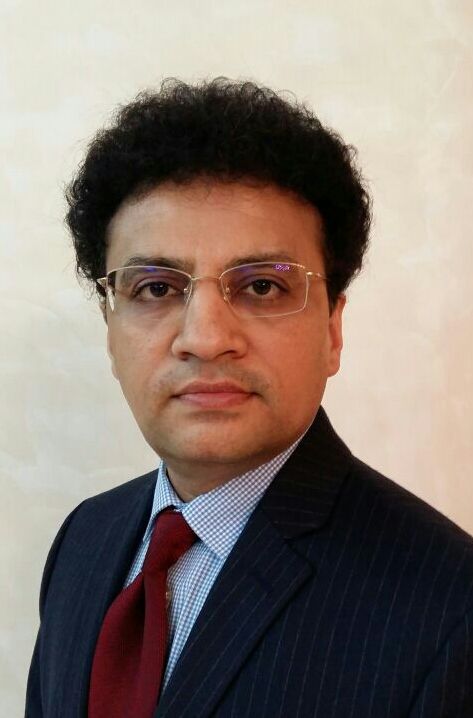
Sandy Mehta, Founder and CEO of Value Investment Principals
Sandy Mehta, CFA, Founder and CEO of Value Investment Principals Ltd. (VIP), has over 30 years’ experience in the investment and asset management industries. With a 12-year track record, VIP is focused on identifying unique deep value investment opportunities on a global basis.
Its clientele has included some of the largest as well as most prestigious money managers in the U.S. and Europe.
In 2015, Mr. Mehta founded Evaluate Research, his third entrepreneurial venture in global financial services, focusing on providing institutional quality research coverage for rapidly growing companies in the U.S. and EMs such as China, India, etc. Mr. Mehta also founded Acumen Capital Management in 2004, and incubated a long/short pan-Asia Hedge Fund with $200 million in both HF and long-only assets.
Previously Sandy Mehta was a PM of two 5-Star-rated mutual funds, including a flagship US$15 billion Global Equity Fund at Putnam Investments & Wellington Management in Boston.
In this 2,862 word interview, exclusively in the Wall Street Transcript, Mr. Mehta reveals his award winning methods for picking deep value stock winners.
“Value Investment Principals, or VIP, is an independent investment research firm.
We seek unique, deep value ideas on a global basis.
We have a 12-year-old track record. Many of the ideas that we research and we communicate with clients are ideas that nobody else actively follows. So the ideas are unique.
All have value, many with high dividends and also they have catalysts and growth characteristics.
VIP is one of three finance and investment firms that we have set up. The other two being a hedge fund, as well as another research business. And we have offices in Singapore, India, as well as in the U.S.”
One deep value example is another investment firm.
“…For example, one of the stocks that we follow is Silvercrest Asset Management (NASDAQ:SAMG). They are headquartered in New York City. This is a money management firm. It’s an investment advisory firm. They’ve had an amazing track record in all of their strategies for the past 24 years.
The stock is extraordinarily undervalued. It’s up 40%, since we got into this stock just about a year ago. The stock is trading at seven times p/e. It’s got a 4.5% dividend yield and it’s got an 18% free cash flow yield. And this company, over its 24-year history, assets under management have compounded at 31% per annum. And these guys really specialize in small cap and value investing and those strategies have really come back over the last six months. That is a huge catalyst for them.
Silvercrest has grown organically. But they’ve also made tuck-in acquisitions. They also have what they call the OCIO — outsourced chief investment officer initiative. So there are many things that they’re doing that are unique.
There are many asset management firms that are struggling because of poor performance. But this one is still, we think, relatively undiscovered with very strong performance and actual strong growth as well.”
Investment firms in China have significant growth opportunities, according to Sandy Mehta leading to their inclusion as deep value stock picks:
“Another stock is called Hywin Holdings (NASDAQ:HYW). It just recently had an IPO in March three months ago on the Nasdaq. It’s based in China. At the IPO, it had the price of $10 per share.
Today, the stock is about $8. So the stock is down 20%. And they are the largest independent wealth advisory firm in China. They also have an office in New York City.
But as the Chinese population, the high-net-worth category is the fastest growing segment of the Chinese population. And everybody, whether you’re in China or the U.S., everybody’s looking for which mutual fund in which to invest, what products to invest in to maximize your investment income.
And these guys really distribute a lot of privately sourced products. So real estate products, private equity products. That’s why they’ve been able to really grow their client base.
They just reported earlier this week on Monday 98% net income growth on 47% revenue growth for the March quarter. And the industry is only 6% penetrated in China versus wealth management advisory’s 32% penetration in Hong Kong and 62% in U.S.
This is a secular growth area.
The stock as I speak to you today is trading at a 6 p/e, 28% net cash, 18% free cash flow yield. At some point, it’s our opinion that they will likely have a sizable dividend as well.
Being listed on the Nasdaq, this is an easy way for U.S. investors to get exposure to companies overseas.”
Another China based asset manager makes the deep value cut for Sandy Mehta:
“Sun Hung Kai (HKG:0086) is a niche lender and asset management company in Hong Kong and China. Despite the recession last year, they had 23% earnings growth in 2020.
The stock is now beginning to do well; it’s up 30% year to date. We still see another 80% upside.
The stock is extraordinarily cheap and that’s why we like to talk about it. It’s trading at 0.5 times price to book. It has a 3 p/e and it’s giving a 6% dividend yield.
It’s a theme in terms of our investment style. We like to be paid while we wait. And these guys are doing a lot of good things in terms of setting up the company for future growth.
They’ve had a positive transformation disposing of their brokerage business and they’re adding fund management.
We think that despite the strong growth last year, there’s a lot more growth going forward for the company as well. For a 3 p/e, a 6% dividend yield, it’s just extraordinarily cheap.”
Sandy Mehta also sees deep value in luxury goods manufacturer.
“Another one is Movado (NYSE:MOV), which is based in New Jersey. They have their origins in Switzerland. So obviously, it’s a well-known watch brand. And what’s happening now, despite the global recession last year, and COVID still a concern globally, there’s really a boom in global luxury partially because maybe the stock markets have done well globally.
So companies that are listed in Europe such as LVMH (OTCMKTS:LVMHF), they own Louis Vuitton, Kering (OTCMKTS:PPRUF) which owns Gucci, Richemont (OTCMKTS:CFRHF), Cartier — those stocks are all trading at 30, 35 times earnings. They’ve all had very strong March quarter results.
Movado is a stock that is trading at a 6 p/e for a $30 stock, they have $8 per share in net cash and if you look at Swiss Industry Association data, watch exports out of Switzerland are booming, particularly to places like Asia and China.
This stock has risen above 40% since when we got into it, but it’s still about 40% from its five-year highs. And I think it’s really a beneficiary of strong demand for luxury products.
While its peer stocks are trading at record highs, this stock still has a long way to go, we think. We see at least 80% upside from here.”
Get more deep value top picks from Sandy Mehta by reading the entire 2,862 word interview, exclusively in the Wall Street Transcript.
Sandy Mehta, CFA, CEO
Value Investment Principals Ltd.
www.vipglobalresearch.com
email: sandy@vipglobalresearch.com

Don Harmer, President & CEO, GRASS Qualified Opportunity Zone Fund
Don Harmer is President and Chief Executive Officer of the GRASS Qualified Opportunity Zone Fund. Mr. Harmer, in addition to overseeing GRASS, is the president and CEO of Corporate Services of Nevada.
He has served as a confidential consultant and counselor to more than 3,000 clients around the world since 1993, focusing on enterprise risk management and operational and HR assessment.
He has significant experience as a leader of small- to mid-sized high-growth startups, emergent small businesses, and nonprofits, including power-generation and global energy firms, at both the key executive and board of director levels.
Mr. Harmer provides ongoing guidance in the operation and success of Corporate Services of Nevada.
He currently resides in Nevada with his wife and three daughters.
In this 3,305 word interview exclusive to the Wall Street Transcript, Don Harmer explains Opportunity Zone investing and the easy method his organization has created for this specific tax break.
“The qualified opportunity zone fund is part of the Jobs and Tax Act of 2017.
There are some subsets in that: 1400Z-1 and 1400Z-2. It has created a public-private partnership, so to speak, to encourage investors to invest in these qualified zones that have been designated by the different states and the U.S. government, based on the census tract, as mostly underserved areas, whether rural areas in Nevada or the West, and in the East often it is rural areas. It has been fairly successful.
We hybridized our fund with Internal Revenue Code 1202, which is qualified small business stock, and that has been around for quite some time.
The benefits to the investors have been bouncing around to being anywhere from a 70% to a 100% discount on capital gains, so savings to taxes.
During the Trump administration, 100% tax regains were codified into the registers. If you were to invest in our fund as a qualified opportunity zone fund under 1400, you can take gains from a previous investment and reinvest those into the fund and defer your gains taxes until December of 2026, and then get a 10% discount or a 10% step up in basis.
If you hold your investment for another period of time, as in three, five, or seven years, whatever it is, then depending on the entry point, 100% of your gains are tax free from that point forward.
Under the 1202 — that is what I refer to as fresh money investment or non-gain money — it can be invested and if held for five years and a day, 100% of the capital gains are tax free, so up to 10 times your basis, plus a basis with a maximum of $10 million.
Under 1202, there is a maximum tax-free amount of $10 million, whereas under 1400Z, it is more or less unlimited.”
The opportunity zone focus provides a variety of investment options:
“The zone is defined as contained within certain census tract borders. That was a function of the code to be able to define the locations of opportunity zones.
Each individual state was allowed to elect and designate areas, and then the federal government approved them.
They thought that was the most prudent way to identify an opportunity zone, and that is to use the pre-existing census tracts because they had all the data behind those different areas already.
We have two main focuses, and those are building very high-tech specialized aircraft hangars to be able to service Department of Defense contracts on government aircraft.
We also have the ability or a goal to build general aviation hangars for private parties that are not related to the government or the military.
We are located in a very unique location in an opportunity zone in Lyon County, Nevada.
I don’t know if you’re familiar with the Tahoe Regional Industrial Center in Nevada.
It has been in international news for quite some time now, as Google (NASDAQ:GOOGL), Tesla (NASDAQ:TSLA), Switch (NYSE:SWCH), and Blockchains, and similar companies have built big huge centers near there, as in data centers and manufacturing centers, etc.
We’re hoping to capture that private aviation market with general aviation hangars at the Silver Springs Airport.
The other area that we are investing in currently is regtech, or regulatory technology.
Regtech companies provide solutions in regulatory reporting, risk management, identity management and control, compliance, and transaction monitoring. We are specifically developing a proprietary SaaS — software as a service — to enable DOD — Department of Defense — contractors, meaning government contractors, to comply with government regulations for tracking every part that’s used on a government contract from inception to installation.
It’s been extremely challenging for those government contractors to comply so far, because there really isn’t a good, sound system out there.
We refer to it as we’re entering the regtech space because we have plans to expand into other regulatory environments after we get some ITAR approvals on our software.”
The structure presented by Don Harmer creates more liquidity options than is typical for Opportunity Zone investors:
“Most of it is going to be balance sheet supported, because we really aren’t going to be actively publicly traded in the beginning.
Now we have that option to take that next step when we close our Reg A+, after raising $50 million.
There are several options that we could pursue. We could do a full-blown registration and become publicly traded, or we could sign on for one of our tokenized security through our broker/dealer and a stock transfer agent, and trade on the secondary market.
If we went the route of the secondary market, if one of our shareholders wanted to sell, they would put the sell order through our broker/dealer or through their broker/dealer because at that time our stock could be put into IRAs.
Those are just two of the options that we could exercise. That’s why we set it up the way we did, to hopefully inspire our investors to have a long-term hold mindset and hold it for at least five years.
That being said, even after we close our Reg A+, if we don’t do that tokenized security platform — meaning sell shares on the secondary market, shareholders would still be able to liquidate their shares through the broker/dealer by placing a sell order.”
Read the entire 3,305 word interview with Don Harmer and get the complete picture on this Opportunity Zone investing vehicle, exclusively in the Wall Street Transcript.
Don Harmer
President & CEO
GRASS Qualified Opportunity Zone Fund