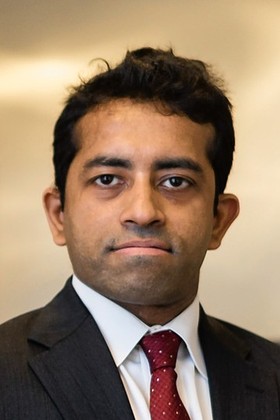
Raghuram Selvaraju, Ph.D., MBA, is Managing Director of Equity Research and Senior Healthcare Analyst at H.C. Wainwright & Co, LLC, Research Division. Dr. Selvaraju has served in these roles since August 2015. He focuses on health care research at the firm. He was previously employed at Rodman & Renshaw Research, which he had rejoined. Earlier, Dr. Selvaraju started his sellside Research Analyst career at Rodman & Renshaw in 2005. Prior to rejoining Rodman, he served as a Managing Director and Senior Healthcare Analyst at MLV & Co LLC, Research Division.
Dr. Selvaraju has been ranked by StarMine for earnings accuracy as well as The Wall Street Journal’s Best on the Street survey for his stock-picking performance. Dr. Selvaraju graduated in 1999 with a Bachelor of Science in biological sciences and technical writing from Carnegie Mellon University, a Ph.D. in cellular immunology and molecular neuroscience in 2004, a Master of Science in molecular biology from the University of Geneva in Switzerland in 2001 on the basis of his drug development research and an MBA from Cornell University’s accelerated one-year program for scientists and engineers in 2005.
In this 3,335 word interview exclusively for the Wall Street Transcript, Dr. Selvaraju develops his reasons for current optimism for his top picks in the gene therapy and biotech sector:
“In hindsight, studies were launched without the benefit of a significant underlying understanding of diseases and their pathophysiology. Today, we not only have biotechnology companies that are much more data-driven and that are able to make sense of in-depth data, whether it is genomic or proteomic in nature, but we also have a much more savvy investor base.
The H.C. Wainwright analyst sees a clear advantage to investing in these data driven stocks:
“…We are now entering the third stage of evolution of biotech companies. You are looking at firms that have a few hundred employees, but they are still able to generate tens of billions or at least up to $10 billion or $5 billion in topline annual revenue. These companies have significantly greater profitability per employee.”
To get all the details on Dr. Selvaraju’s top picks for H.C. Wainwright, read the entire 3,335 word interview in the Wall Street Transcript.

Difei Yang, Ph.D., serves as a Managing Director of Equity Research at Mizuho Securities USA LLC, Research Division. Dr. Yang is part of the Americas research team at the firm. Dr. Yang has been covering the biotech and pharma sector for nearly a decade, most recently serving as Managing Director at Aegis Capital. She has also served in senior equity analyst roles at Brean Capital, R.F. Lafferty, WallachBeth Capital and Auriga Global Investors.
In addition to her research expertise, she has also held senior science, program management and business development roles within the pharmaceutical industry and has authored many granted U.S. patents and peer-reviewed scientific publications. She holds a Ph.D. in chemistry from the University of California Los Angeles as well as an MBA from Georgia State University and a B.S. in physics from Peking University, China. In this 2,141 word exclusive interview with the Wall Street Transcript, Dr. Yang develops her search for high growth gene therapy stocks for her investors but cautions about buying the whole sector at current prices:
“TWST: Do you see a capital pullback with the sector being overheated?
Dr. Yang: Capital is not likely pulling back on investing in new companies, but existing companies that are experiencing setbacks in R&D development could see significant share price volatilities. Sometimes, a trigger event happens with a very notable company, and the entire gene therapy space realizes there may be more risks or it may take longer than originally thought. Then, the whole space cools down for a period of time, and investors’ expectations get reset.”
The gene therapy platform stocks are not widely understood, although this is changing. Dr. Yang has the insight needed to pick through the current offerings:
“Vectors generally come in two different types. AAV — adeno-associated virus — is the more mature technology, and the other is called lentivirus. AAV is more advanced as of today, but the future should be in lentivirus because that vector, which is gaining traction, has the capability to work with a bigger amount of gene material. Right now, approved products and products in late-stage development are mostly using the AAV vectors.”
To get specific stock recommendations and to learn more about this intriguing sector from Dr. Difei Yang, read the entire 2,141, word interview in the Wall Street Transcript.
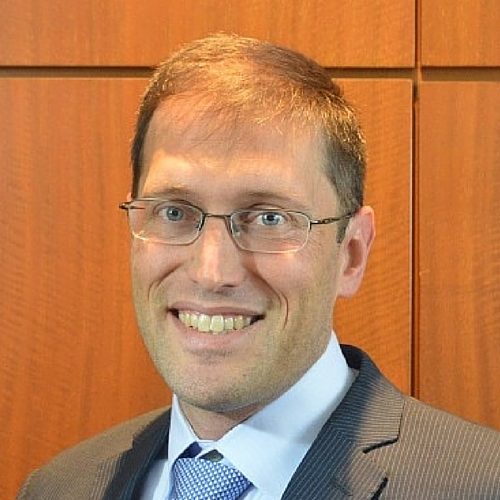
David Nierengarten, Ph.D., is Managing Director and Head of Healthcare Equity Research at Wedbush Securities. He is a senior biotechnology equity analyst with Wedbush Securities, mainly covering development-stage therapeutic companies. He began his career on the financial side of biotechnology at a venture capital firm that focused on early-stage therapeutic and medical device companies.
Additionally, prior to joining Wedbush, Dr. Nierengarten gained experience on the other side of that equation, working in a clinical-stage, venture-backed biotechnology company, in business development and clinical trial operations. He received his bachelor’s degree in biochemistry from the University of Wisconsin-Madison and his Ph.D. in molecular and cell biology from the University of California-Berkeley. In this 2,974 word interview exclusive to the Wall Street Transcript, Dr. Nierengarten reveals the top picks from Wedbush in this high growth sector.
Here is an excerpt from this fascinating interview:
“TWST: Does the clinical trial process and the FDA review of some of these gene technology companies look very different from their brothers and sisters in biotech and pharma in general, or have you been noticing different hurdles that they have to jump through, including far greater considerations? If so, what might those differences be?
Dr. Nierengarten: I am actually not sure if it is really more difficult or less difficult, but the main difference I see is that there is definitely a greater focus by the FDA on manufacturing and quality control for very good reasons. These viruses are notoriously challenging to manufacture consistently.
A lot of them have been transferred from the benchtop almost directly from an academic setting into the clinic into a more corporatized drug development setting, and that is not the easiest thing in the world either.
These are intrinsically difficult to manufacture, and then, you take an unrefined academic process and start to refine it. The FDA is rightfully concerned with maintaining quality and good clinical practices there.
That is one difference between the making of small molecule drugs that chemists have been doing for a couple of hundred years now and where gene therapy is now.”
To get more detail on the top picks from Dr. Nierengarten, read the entire 2,974 word interview in the Wall Street Transcript.

Brian K. Langenberg, CFA, Principal and Founder of Langenberg & Company, LLC, brings 30 years of experience in investments and capital markets. He first earned recognition from the Institutional Investor All-America Research Team in 1999, and he or his firm have earned subsequent awards in II along with The Wall Street Journal and Starmine. He has created several industrial sector research innovations including the seminal Multi-Industry Greybook in 2001, ROIC-based deal analysis, revenue component analysis and business unit trends. Buy-side experience includes seven years of high net worth advisory work and coverage of 70% of the S&P 500 at various points in time, and he built a trade and recommendation track record of plus 750 basis points, four times risk budget and a 60% win rate in 18 months at a large state pension.
Formerly with Credit Suisse First Boston, Wachovia Securities and Ohio Public Employees Retirement System, Mr. Langenberg provides M&A and related services to middle-market companies through ONEtoONE Corporate Finance as well as providing industrial strategy and investment advice to institutional investors with Langenberg & Company, where he is a frequent guest of CNBC, Fox Business News, CNN and other broadcast and print media. Mr. Langenberg teaches finance, business economics and manages the business internship program at Northeastern Illinois University. He also serves in various capacities with the CFA Institute – Chicago as needed and is an adult leader in the Boy Scouts of America. A proven strategic thinker, leader and mentor, he has turned around a graduate business school, built a high-profile speakers program and currently serves as a director of Power Source Technologies. Mr. Langenberg is a former Naval Intelligence Officer with deep expertise in logistics, trade and geopolitics. He made successful contributions in building country studies, expeditionary warfare planning, personnel security and intelligence collection, and received the Armed Forces Expeditionary Medal for service during Grenada in 1983. He is a member of the Veterans of Foreign Wars, or VFW; The American Legion; and the Navy League of the United States.
In this 3,496 word exclusive interview with the Wall Street Transcript, Brian Langenberg, he explains the driving force behind the recent rising stock market:
“The big change came in 2016 with the election of President Trump. He brought a sea change in regulatory relief and tax reform, which literally made every profitable business located in the United States 20% to 25% more valuable. It is simple math. If your business earned $1 million pretax, before, your after-tax profit was $650,000; now, it is $790,000. In practical terms, if you had a reasonably profitable plant in the U.S., before, you would spend enough on maintenance to keep it open and upgrade when necessary. Your new capital went offshore more often than not. Now, a company will take another look at that plant and say “Hey, the numbers are different,” and it makes sense to invest…The offset will be inflation.”
To get the specifics on Brian Langenberg’s economic projections and his top picks in the current market, read the entire 3,496 word interview in the Wall Street Transcript.
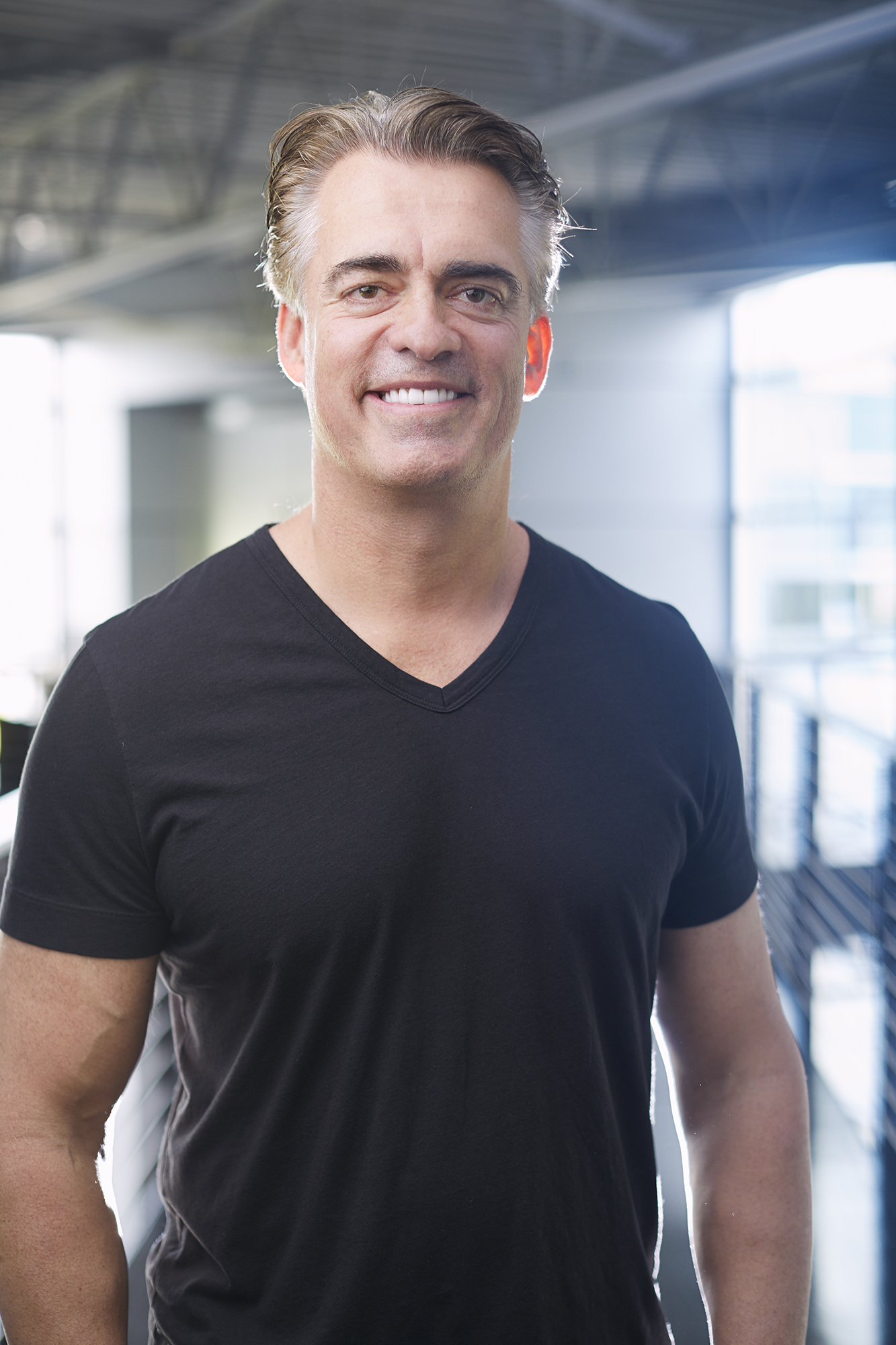
Rick Smith is the CEO and Founder of Axon Enterprise, Inc. A pioneer of technology with the vision of making the bullet obsolete, Mr. Smith founded the original company, TASER, in 1993. As the TASER device became ubiquitous in law enforcement, Mr. Smith pushed the company beyond weapons technology and toward a broader purpose of matching technology to public safety needs in order to make the world a safer place. Under his leadership, the company has grown from a garage in Tucson to a Nasdaq-listed global market leader in conducted electrical weapons, body-worn cameras and software. Mr. Smith was winner of the Ernst & Young 2002 Entrepreneur of the Year. Mr. Smith graduated from Harvard with a B.S. in neuroscience — cum laude — and later earned a master’s degree in international finance from the University of Leuven in Belgium and an MBA from the University of Chicago. In this exclusive 4,592 word interview in the Wall Street Transcript, this entrepreneur reveals the secrets of his success.
“I started the company back in 1993 after I had two friends who were shot and killed while I was living in Europe. And our mission at Axon is to, frankly, end violence through technology. We started with the idea of basically making the bullet obsolete…It seems strange to me that, in this day and age, the way that we stop people who are threatening is by blowing holes in them with the same technology we used hundreds of years ago to fight wars. So the main idea of the business, originally, was that we would create new ways to resolve conflict without killing people. Now that’s been highly successful. You see most officers, certainly in North America and across Europe, now wearing these TASER devices.”
To get the full detail on how to start and succeed with a multi-billion dollar corporate start up, read the entire 4,592 word interview with Rick Smith in the Wall Street Transcript.

Michael Ciarmoli joined SunTrust Robinson Humphrey in late 2016 as Director to cover the aerospace and defense sector. He has more than nine years of experience as a senior publishing analyst. Most recently, he was an Executive Director at KeyBanc for six years, with prior experience at Boenning & Scattergood and Emerging Growth Equities. Mr. Ciarmoli spent the previous five years as a consultant and product specialist at Accenture and Wilmington Trust Company respectively. In his exclusive 2,443 word interview with the Wall Street Transcript, this award winning equity analyst picks the best of the best in this important stock sector.
“I would say that since 2016, the most notable changes have been within the defense sector of our coverage universe. Starting with the election of President Trump, we have become even more optimistic and bullish on the defense stocks. What we’ve seen transpire since that 2016 election has been a decidedly positive uptick in the trajectory of U.S. defense spending and a commencement of a defense spending up cycle that will result in the recapitalization of military equipment, a return to readiness and increases to force structure…We’re now just starting to see the positive effects of budget increases flow through in terms of defense spending outlays as reported by the U.S. Treasury. And accordingly, the defense sector is showing an uptick in revenue growth and bookings, which is improving investor sentiment.”
Michael Ciarmoli is not seeing alot to worry about with the incipient China trade war: “Although China would probably like to potentially block future purchases and deliveries of Boeing airplanes, I think the reality is they’re going to need those planes to satisfy their demand in order to achieve their global economic growth objectives. China simply cannot shift its entire order book over to Airbus. Airbus doesn’t have the capacity.”
To find some specific small cap picks, read the entire 2,443 word intervew in the Wall Street Transcript.

Frank Martin, CFA, is the Founder and Chief Investment Officer at Martin Capital Management, LLC. Mr. Martin has 45 years of investment industry experience. While a partner at McDonald & Company, he founded McDonald Capital Management in 1987; he acquired and changed its name to Martin Capital Management. Mr. Martin holds a B.A. in investment management from Northwestern University and an MBA with honors from Indiana University at South Bend. Mr. Martin is on the boards of various charitable organizations. In this exclusive 4,206 word interview with the Wall Street Transcript, Mr. Martin reveals the market experience and insight that has fueled his long and successful career.
The basic touchstone of Frank Martin’s investing philosophy is absolute return:
“Absolute is one part of the two-word definition, and that means that we don’t want to suffer significant drawdowns. So our competitors would be considered relative return. If a relative return manager is assessing his own performance, and the market’s down 50%, and he’s down 40%, he thinks he had a good year. An absolute return investor who was down more than 10% and the market was down 50% thinks he has an awful year. Now, whether he can be aggressive enough to think he could actually be in the black, that’s another point.”
In order to attain this level of perpetual returns, Mr. Martin likes to remind his clients of the Einstein proverbs regarding investing:
“…We both have heard the Albert Einstein quotes about the theory of compound interest being the most powerful force in the universe. And as it relates to what I do more personally, there is another quote, that’s not as famous, and that is again from Einstein, and he says, “He who understands it,” that is compound interest, “earns it. He who doesn’t, pays it.” So that’s kind of our mandate and living out that mandate over the 50-plus years I’ve been in the business.”
In order to get the details on the portfolio of Frank Martin of Martin Capital, read the entire 4,206 interview in the Wall Street Transcript.
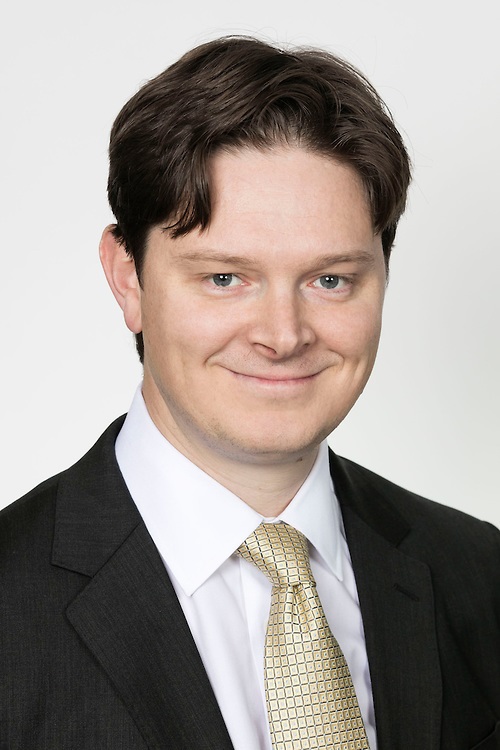
Jay Rhame is Vice President and Portfolio Manager at Reaves Asset Management. Mr. Rhame joined Reaves Asset Management as a full-time employee in 2005. He is an energy and utility analyst. He is a member of the portfolio management team and is on the risk management committee. In his exclusive 3,519 word interview with the Wall Street Transcript, Mr. Rhame details the utilities focus of his portfolio and why this current period of time will have exceptional returns to investors.
“So just as background, utilities earn a return on the infrastructure they provide. Power is actually just a straight pass through to customers. So if power prices are high or low, the utility doesn’t earn any money on that; they sell that power to customers at cost. So when costs are low, that enables the infrastructure part of the bill to take on a little bit more there. So we see power prices staying low; natural gas is cheap, and it’s abundant. Renewable energy has gotten a lot cheaper, and it’s very competitive in a lot of the country. And that creates a lot of headroom to replace a lot of wires and distribution systems, gas pipelines, water pipelines, stuff like that. So you’re starting to have these kinds of long-term backlogs of projects, which is very different.”
The specific returns are impressive:
“Most utilities are able to grow earnings in the kind of 5% range, but when you combine 5% earnings growth with a 3% or 4% dividend and also a dividend that’s growing at about the rate of earnings, the total return, it’s pretty attractive. So overall, it’s good. Interest rates will continue to be a factor, but I think it’s more of a short-term impact. Longer term, growth looks good.”
To get the specific stock picks that qualify for Jay Rhame’s Reaves Asset Management portfolio, read the entire 3,519 word interview in the Wall Street Transcript.

Randy Baron joined Pinnacle Associates Ltd. in 2012 and serves as Lead Portfolio Manager of the firm’s various international products. Previously, Mr. Baron was Senior Securities Analyst at SM Investors, an investment partnership in New York, where his responsibilities included security analysis in various industries encompassing wireless telephony, cable television, food and publishing. Mr. Baron received a B.A. in international studies with a concentration in economics from Johns Hopkins University. He earned his M.A., with highest honors, from Hopkins’ Paul H. Nitze School of Advanced International Studies, where his course of study focused dually on international economics and Latin American studies. In this exclusive 4,324 word interview with the Wall Street Transcript, Randy Baron reveals the source of his award winning international stock picking prowess.
“One of the themes that we’ve been following is the ascendant global middle class. We all know, for example, what happened after World War II in America with the rise of disposable incomes and how that led to a century of economic growth. If you look at China today, consumption accounts for two-thirds of economic growth. Whereas 10 years ago, it was, call it, 40%. So the question then becomes, what will it mean for substantial economies like India, like China, as their citizens have more and more spending power?”
“We believe one thing that a global middle class will spend its disposable income on is the internet. Over time, we expect internet usage in those two countries, India and China, to meet or exceed the levels experienced in the U.S. currently. The way that we’re investing in this theme is via publicly traded data centers. Data centers are those hubs, essentially big warehouses, where the internet physically connects. And we have two such names in our international small-cap and ADR strategies.”
To get the top picks from this eminent international portfolio manager, Randy Baron of Pinnacle Associates, read the entire 4,324 word interview in the Wall Street Transcript.
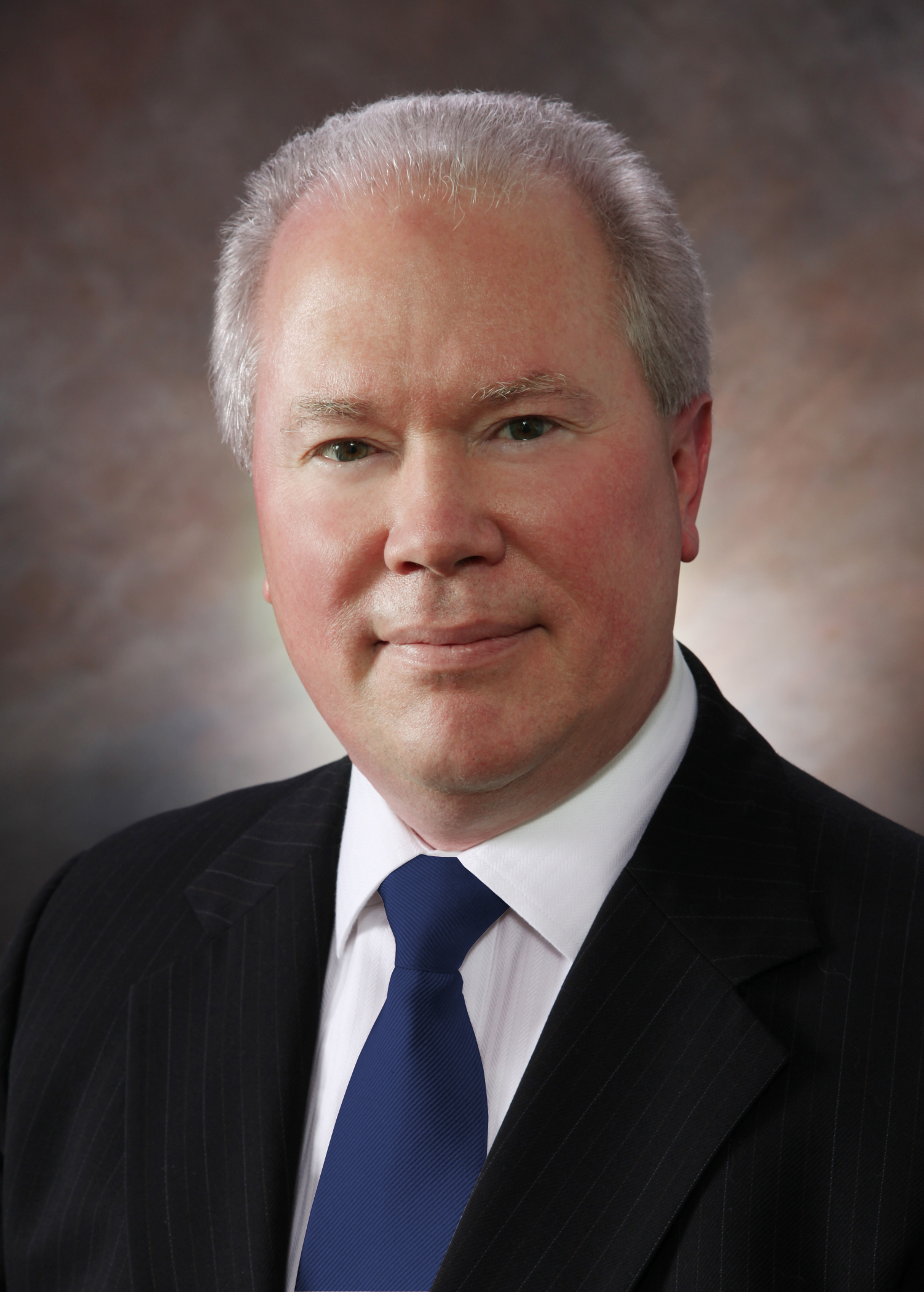
Dr. Jeffrey A. Graves has been President, Chief Executive Officer and a director of MTS Systems Corporation since May 2012. Dr. Graves was President, Chief Executive Officer and a director of C&D Technologies, Inc., from July 2005 to April 2012. C&D Technologies is a leading global manufacturer of energy storage systems. From July 2001 to January 2005, Dr. Graves was employed at Kemet Electronics Corporation, a manufacturer of high-performance capacitor solutions, where he last held the position of Chief Executive Officer. From 1994 to 2001, Dr. Graves held a number of key leadership positions with General Electric Company’s Power Systems Division and Corporate Research & Development Center. Prior to working for GE, Dr. Graves held various positions of increasing responsibility at Rockwell International Corporation and Howmet Corporation. Dr. Graves also serves as a director of Hexcel Corporation (NYSE:HXL) and FARO Technologies (NASDAQ:FARO). In this exclusive 4,008 word interview with Dr. Jeffrey Graves, there is a clear, detailed blueprint for success and an optimistic near term prediction for his stock:
“We are now a full-fledged test-and-measurement company operating globally and with roughly $800 million in revenue and a market cap just under $1 billion today. With these kinds of performance parameters, we would expect that to, obviously, rise in the coming years. So when we are meeting with investors these days, we talk to both small-cap and to midcap investors and are attracting both value- and growth-oriented folks. The fact that we have paid a dividend for 146 consecutive quarters, have never reduced the payout, with a yield today of over 2%, is also attractive to many of our long-term shareholders.”
Acquisitions are definitely on the CEO’s radar and cutting edge business partnerships are very integral to this process:
“…We can connect these simulators to testing machines in adjacent rooms to test real components and subassemblies for new vehicle designs…We have teamed up with McLaren Technologies for these new simulators, as McLaren are experts on simulation for the Formula One race environment…”
Read the entire 4,008 word interview for the complete picture of MTS Systems Corporation in the Wall Street Transcript.