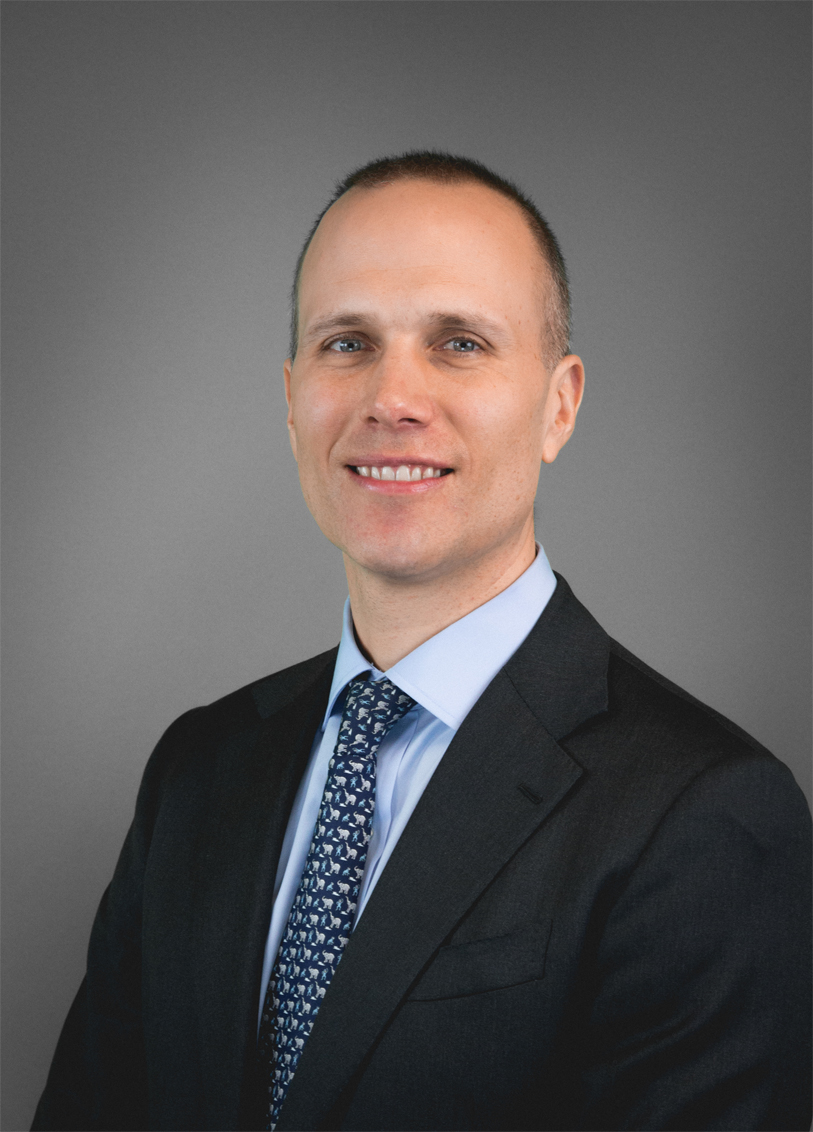
Kevin V. Dreyer is the Co-Chief Investment Officer, Value at GAMCO Investors, Inc. He serves as a portfolio manager of the Gabelli Asset Fund, the Gabelli Equity Trust, the Gabelli Dividend & Income Trust, the Gabelli Healthcare & WellnessRX Trust, the Gabelli ESG Fund, the Gabelli Global Small and Mid Cap Value Trust, and the Gabelli Food of All Nations NextShares. He is also part of the All Cap Value, Small Cap Value and ESG/SRI separately managed account portfolio management teams. Mr. Dreyer joined GAMCO in 2005 as a research analyst following the food and beverage industries. He began his career as an investment banking analyst at Banc of America Securities in the mergers and acquisitions department.
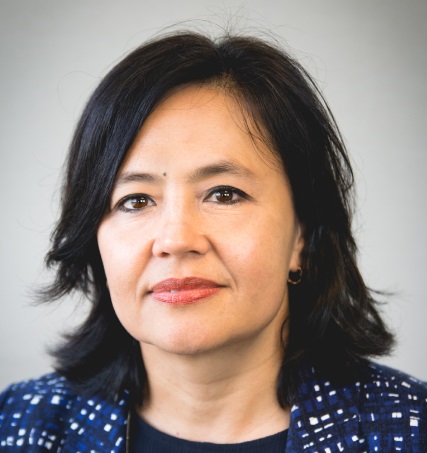
Christina Alfandary is the Managing Director, ESG and Sustainable Investments at GAMCO Asset Management Inc. At GAMCO, Ms. Alfandary oversees the company’s expansion of its ESG integration efforts and ESG investing capabilities. Ms. Alfandary has over 25 years of experience in the investment business. Prior to rejoining GAMCO, she served as Senior Managing Director, Co-Head of Nikko Asset Management Americas, Inc., until 2015. Among her responsibilities, she was instrumental in a U.S. product launch of an innovative green bond product developed in collaboration with the World Bank. Prior to Nikko AM, she was a vice president at GAMCO Investors from 2000 to 2005 where she worked with institutional and high net worth clients.
In this exclusive 3,977 word interview with the Wall Street Transcript, these two highly experienced money managers detail their methodology and their current top picks.
“Even though we are ESG investors, we are also first and foremost value investors. I think one thing that distinguishes us from some other ESG-focused funds is that we’re really marrying ESG with value and looking for companies that are employing best practices in environmental, social and governance, and with that old-fashioned notion of looking for really good businesses that are generating cash flow and that we’re buying at a good price, at a discount to what we think it’s worth over time.”
Another high return food and nutrition products company in their portfolio is a repeat successful acquisition story:
“Another one that’s done well, but in a very different way is a company called Post Holdings (NYSE:POST), which is again in the food area, which is, you can probably tell, where I came out of as an analyst. Post sounds like a cereal company, and they do have a cereal business. I really think of it more like a private equity firm that happens to focus on the food industry and uses the Post name. So they’ve grown through acquisition over time. They’ve taken the cash flows from that Post cereal business. They use those cash flows to lever up and buy additional businesses, and then, they pay down debt and then look to do that again.”
To get all the detail, read the entire 3,977 word interview in the Wall Street Transcript.

William A. Muggia is President, Chief Executive Officer and Chief Investment Officer at Westfield Capital Management Company, L.P. Mr. Muggia joined Westfield Capital Management in April 1994. In addition to his executive duties, he chairs the investment committee, serves as Market Strategist and contributes investment ideas primarily within the health care and energy sectors. In 2001, Mr. Muggia was promoted to President and Chief Investment Officer and now oversees all of Westfield’s U.S. equity and hedge fund strategies. In this role, Mr. Muggia and his team have grown the firm from $2 billion to $14 billion in assets under management. Prior to joining Westfield, Mr. Muggia worked in the Technology Investment Banking Group at Alex Brown & Sons, where his responsibilities included mergers and acquisitions, restructuring and spinoffs. Before that, he was a vice president at Kidder, Peabody & Company. Mr. Muggia graduated from Middlebury College and received an MBA from Harvard Business School. Mr. Muggia and his family are very active in community service, focusing their efforts on education for underprivileged youth. He was a member of the board of directors of City Year Boston, a nonprofit organization focused on education for inner-city children. Mr. Muggia is currently on the board of Squashbusters, a successful Urban Squash nonprofit.
In this 3,724 word exclusive interview with the Wall Street Transcript, William Muggia reveals the strategic decisions that have led to a successful portfolio management firm.
“The history of the firm — briefly — it was founded in 1989 by Mike Hazard as a high net worth shop. I joined in 1994 as an analyst and to grow an institutional small-cap business. The Founder sold it to Boston Private Bank in 1997. When the bank took TARP during the 2008 crisis, we were able to buy the firm back from the bank. In 2009, we returned ourselves to 100% employee ownership. The equity ownership is great to both attract and retain talent — that was a critical thing to do in my opinion.”
An example of the portfolio picks for Westfield is a cholesterol drug development company:
“Alex Denner was Carl Icahn’s biotech guy, and he left to form Sarissa Capital…We were involved with a company last year called ARIAD where he was an activist and got on the board. It was eventually sold to Takeda (OTCMKTS:TKPYY). We also owned Bioverativ, the Biogen (NASDAQ:BIIB) spinoff. He got involved as an activist there. That company was also acquired, and I believe Medicines Company is currently Sarissa’s largest holding. He is on the board and has refreshed the board with new talent that we feel will work in the best interest of shareholders.”
Get the full detail on this and all the other top picks from William Muggia of Westfield Capital in his 3,724 word interview in the Wall Street Transcript.

William Bales serves as Portfolio Manager and member of Bullseye Asset Management LLC. He previously served as the Portfolio Manager at Janus Capital Management responsible for the Janus Venture Fund and separately managed portfolios in the small-cap growth discipline. Mr. Bales joined Janus Capital Management in 1991 and became an analyst in 1993. He served as co-manager of the Janus Venture Fund from 1997 and became the sole portfolio manager in January 2001. Mr. Bales was selected as one of Barron’s Top 100 Fund Managers in 2001 and 2005, and received multiple awards from Lipper in 2008 for “Best Fund over 5 Years” and “Best Fund over 3 Years.” Mr. Bales was featured in Investor’s Business Daily in February 2007 under “Mutual Fund Profile.” In this exclusive 2,985 word interview with William Bales, the Wall Street Transcript reveals his top picks and methodology for our readers.
“You’ve heard before that “bull markets don’t die of old age, they die either from the ill effects of the credit cycle or from a policy mistake by the central bank tightening too quickly.” The Fed had been easing to protect the United States from going into another Great Depression, and now we’re seeing the unwinding of that process. Because the economy is strong and corporate earnings are doing very well, that’s allowing interest rates to start going back up to get to a more normalized level. This normalization sets up for a really good environment for small-cap companies.”
A good example of riding high on the bullseye investment decision is the portfolio pick Ultimate Software:
“Our research on Ultimate Software discovered a company at $5 that is worth over $275 today. That’s what we would call long-term investing. We bet on the management team that’s doing the right thing with their business plan, and we bought it at the right price. Over the years, the different business cycles will give you opportunities to buy and sell a stock, but once we find good businesses, we like to hold them. Good companies get bought, while bad companies get sold, and we’re trying to find those best-of-breed-type business models.”
Get all the top picks from William Bales of Bullseye Asset Management by reading the entire 2,985 word interview in the Wall Street Transcript.

Tony Coniaris is a Partner, Co-Chairman, Portfolio Manager and U.S. Investment Analyst at Harris Associates. He is currently a co-manager of the Oakmark Select Fund (MUTF:OAKLX), the Oakmark Global Fund (MUTF:OAKGX) and the Oakmark Global Select Fund (MUTF:OAKWX). Mr. Coniaris joined the firm in 1999, previously serving as both an Associate Analyst and Research Associate at Harris. In his 2,970 word interview in the Wall Street Transcript, Mr. Coniaris shares his top picks for the current market.
“We have a unique, bottom-up investment process, which means we build portfolios without regard to how the indexes are weighted. We have relatively concentrated portfolios, where the most diversified ones have roughly 50 companies. We go all the way down to 20 names or less in some of our portfolios, meaning they are more concentrated and, therefore, have higher conviction…Our investment process among value investors is somewhat unique. When I say we look for businesses trading at significant discounts to our estimate of intrinsic value, I would really underline the word intrinsic…”
This detailed analysis gives some interesting investment decisions for Tony Coniaris:
“You really have to peel back the onion to see the value in Google. When you do that, we believe you’re paying a midteens multiple on the core search business. If you take that $1,250 share price, back out $140 per share of net cash and back out the losses that they’re making on what they call “other bets,” such as their Waymo autonomous driving efforts, you’re paying roughly 16 times earnings for the core search business…One also has to think harder about what YouTube may be worth. We don’t believe Google has monetized YouTube to its full potential yet. If you take the hours viewed on YouTube and value them similarly to how public cable networks are valued, you get a value for YouTube in excess of $430 a share. ”
Get all the top picks from Tony Coniaris at Oakmark Select by reading the complete 2,970 word interview in the Wall Street Transcript.
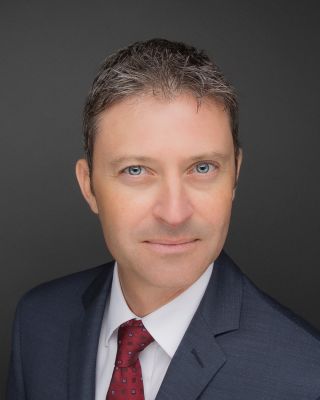
Jacques R. Elmaleh, CFA, is the Director of Research; Lead Portfolio Manager of the growth, dividend and international strategies; and Principal of Steinberg Global Asset Management, Ltd. He leads the firm’s investment committee and is an experienced research analyst specializing in equity and industry analysis and performance attribution. Mr. Elmaleh joined Steinberg Global in 2004 after six years with Earl M. Foster Associates, a money management firm in Miami. He is a Chartered Financial Analyst, a member of the CFA Institute and the CFA Society of South Florida. In 2007, Mr. Elmaleh became a shareholder of the firm. Mr. Elmaleh received his MBA from the University of Miami, where he was awarded the Patrick Cesarano Scholarship for academic excellence in finance.
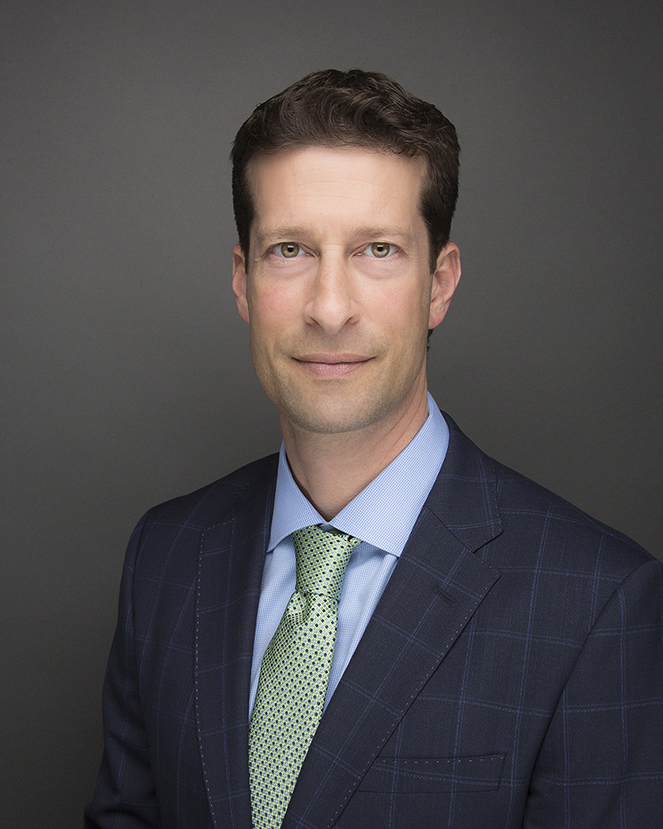
Steven J. Rothenberg is Portfolio Manager of Steinberg Global Asset Management, Ltd. He joined Steinberg Global in 2015, having spent the past 27 years as a discretionary investment adviser for affluent families, individuals and business owners. Mr. Rothenberg’s professional experience includes Smith Barney Equity Management, First Manhattan Company, Harris Trust Private Bank and Cypress Capital Group. Most recently, Mr. Rothenberg was the Director of Research with Palm Beach-based Carl Domino, Inc. Throughout his career, Mr. Rothenberg has developed and practiced a research-intensive investment discipline. Mr. Rothenberg is a proponent of in-depth fundamental analysis and is inherently oriented toward a value approach in investment selection.
Their 2,754 word interview with the Wall Street Transcript details their investing philosophy as well as their specific top stock picks.
“I think we do have some issues with the CAPE ratio. First, that’s going to adjust in the next two years or so from being super expensive to not being so as 2008, 2009 depressed earnings get anniversaried out of the equation. And also, with these recent fluctuations that we’ve had since late January in the market, earnings are really rising strongly, and valuations have at least stabilized at more reasonable levels. So the market is becoming a little bit cheaper. But it’s still difficult to find good companies that are trading cheap by historic and relative measures.”
Read the entire 2,754 word interview for the specific stock picks from these two award winning investors at Steinberg Global Asset Management.
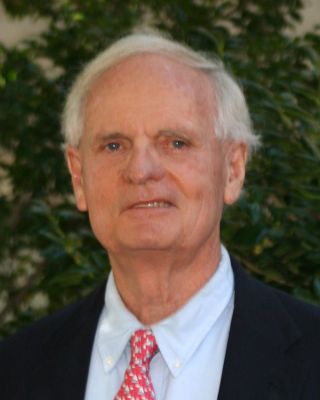
Bobby Edgerton is a Co-Founder of the Capital Investment Companies and has served as an executive officer of the companies since 1984. He is also the firm’s Chief Investment Officer and has been in the financial services industry since 1979. After winning the North Carolina State High School Golf Championship, Mr. Edgerton accepted both a basketball and golf scholarship from Wake Forest University and graduated with a B.A. in business and finance. After graduation, he attained a rank of First Lieutenant in the U.S. Army Signal Corps, where he commanded a thousand-man training company at Fort Gordon, Georgia, during the Vietnam War. During his amateur golf career, Mr. Edgerton played in four United States Amateur Championships.
In his exclusive 2,910 word interview with the Wall Street Transcript, Bobby Edgerton reveals his current market position and details his successful investing strategy.
“I fell in love with the stock market a long time ago after I had some bad experiences with brokerage firms. I taught myself by reading Forbes, Barron’s, Value Line, later on The Wall Street Transcript and listening to the best financial minds in the world. I try to know more about more different companies than any person alive. Later on, about four years ago, I sold my part of the company to Richard Bryant. I’m still Chief Investment Officer and Co-Founder, and I manage our retirement plan. So that’s pretty much what I do.”
“A long time ago, even before I got started, I devised a five-point program for investing in the stock market, which is pretty much nonchanged. I tell people, “If you follow these five principles, the most important thing to know is, you’re going to have a hard time losing a whole lot of money, and you’ll probably make a substantial amount of money.”…Number one is, if you buy essentially cash-rich, debt-free companies, you only buy them when they’re down, not when they’re up at all-time highs, but maybe selling at their yearly lows.”
To get the rest of Bobby Edgerton’s tried and true equity investing strategy read the entire interview in the Wall Street Transcript.


Bimal Shah is an Associate Portfolio Manager for Thornburg Investment Management, Inc. He joined the firm in 2014 as an Equity Research Analyst and was promoted to Associate Portfolio Manager in 2016. Prior to his joining Thornburg, Mr. Shah was a senior investment analyst at Waterstone Capital Management and a research analyst at Macquarie Securities Group. He also held various management positions at Citigroup in New York.
Connor Browne, CFA, is Portfolio Manager and Managing Director of Thornburg Investment Management, Inc. Mr. Browne joined the firm in 2001 as an Associate Portfolio Manager and was promoted to Portfolio Manager in 2006. Mr. Browne graduated cum laude from Princeton University with a B.A. in economics and a certificate in finance.
In this in depth 3,450 word interview with the Wall Street Transcript, the two finance professionals explain the construction of their mutual fund and its top returning picks, both long and short:
“Thornburg Investment Management is based in Santa Fe, New Mexico. We’re a mutual fund and institutional account manager with around $50 billion in client assets under management. The goal of the Thornburg Long/Short Equity Fund is to provide investors with a key long/short equity component within their portfolio that can produce equity index-like returns over the cycle driven by stock selection, but with much better risk characteristics than broad equity indices.”
The long/short portfolio has a very conventional construction:
“I’ll start with a brief overview of how we construct the portfolio. It’s a long/short equity fund, which simply means that we are trying to use fundamental bottom-up stock research to find stocks that we believe are trading at a discount to our calculation of intrinsic value, and those we’ll buy long. But also using our fundamental bottom-up stock research to try to find stocks that, based on our work, are overvalued, and those securities we’ll short, betting that the stock price wyuill move lower. We use fundamental bottom-up stock picking on both sides, with 30 to 40 stocks long and 30 to 40 stocks short.”
To get the complete details, read the entire interview in the Wall Street Transcript.
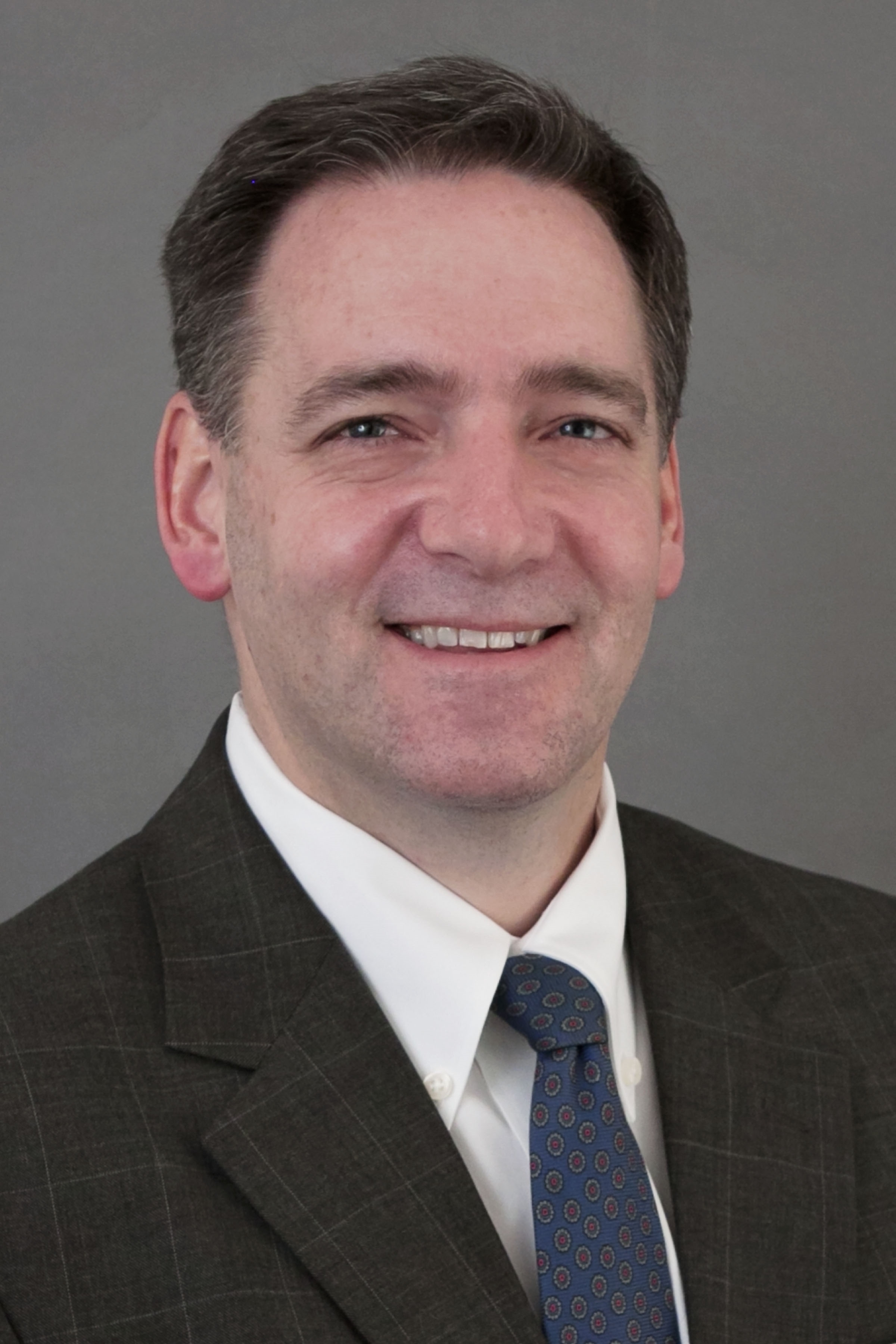
Bill Kornitzer, CFA, is a Portfolio Manager who has been with Buffalo Funds for over 17 years and has 26 years of professional investment experience. Previously, Mr. Kornitzer worked at USAA in investment management, Ernst & Young in their Moscow office in corporate finance, and at Arthur Andersen in their valuation services department. At Buffalo Funds, Mr. Kornitzer works with equity portfolios, and his focus areas include technology, financial services, telecommunications, and food and beverage.
In this exclusive interview with the Wall Street Transcript, Bill Kornitzer describes his firm’s methodology and performance:
“For the Buffalo International Fund and for all the growth funds in the firm, we are really, what I would call, a fundamental growth shop. Ten years ago we would have been called GARP, or growth at a reasonable price. Today, our underlying philosophy is that we believe, over longer periods of time, stocks should continue to follow the underlying fundamentals of a company, including revenue growth, margins, earnings, growth in cash flow. We have a longer-term investment philosophy, so we go into an investment with a general understanding that we want to have a five-year performance time horizon for the investment. To help drive what we do, the firm has identified 26-plus secular growth trends that we use to identify companies that fall within our growth universe.
Buffalo Funds stays close to their midwestern roots:
“First thing to keep in mind is that we’re based in Kansas, what the coasties would call flyover country. We don’t have trading desks around the world, in Tokyo or Hong Kong or Frankfurt or London. We honestly do take a long-term approach to investing in the companies we own and buy in the fund. We’re very patient investors, and what we look to do is to use the noise of the market and the daily flows to find opportunities to give us attractive risk-adjusted returns…We’re not trying to out-trade anybody.”
Read the entire interview with Bill Kornitzer and get the full details in the Wall Street Transcript.
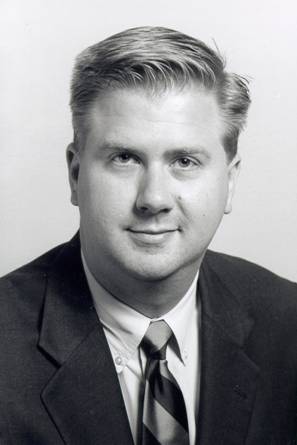
Robert Stevenson joined Janney Montgomery Scott LLC in 2015 as a Managing Director and Head of Real Estate Research. Prior to joining Janney, he was a Managing Director and the Head of the U.S. REIT Research team at Macquarie Capital following that company’s acquisition of Fox-Pitt Kelton in 2009, where he had started the firm’s REIT and homebuilding practice. Earlier in his career, Mr. Stevenson covered REITs and homebuilders for 12 years at Morgan Stanley, where he was an Executive Director and Senior Research Analyst. In this exclusive 2,540 word interview, Award Winning Real Estate expert Robert Stevenson forecasts the real estate market for investors.
Mr. Stevenson sees the higher interest rates from an interesting perspective:
“After a year of significant underperformance, REITs have been performing much better since early April; the last three months they are up more than 11%, and that’s outperforming the S&P 500 by nearly 650 basis points. Importantly, the first part of that happened through mid-May, when the 10-year Treasury yield was still increasing and spiked out at 3.11%, underscoring again that rising interest rates aren’t necessarily a “death blow” for REITs.”
The real estate assets covered by Robert Stevenson are adding value to portfolio managers in the United States: “At Janney, we continue to focus on small-, mid- and even micro-cap REITs that are underfollowed by other sellside research firms, and where we believe we can add value for investors. Since we talked last year, we’ve added nine new names to our coverage universe. In the small- and micro-cap range, we’ve added BRT Apartments (NYSE:BRT), Franklin Street(NYSEAMERICAN:FSP), Gladstone Commercial (NASDAQ:GOOD), NexPoint Residential (NYSE:NXRT) and UMH Properties (NYSE:UMH). In the midcap range, we filled out our industrial coverage by launching on DCT Industrial and First Industrial (NYSE:FR). We also launched on Douglas Emmett (NYSE:DEI) and Highwoods Properties (NYSE:HIW) to expand our coverage of the office REIT space.”
Get details on all these names and alot more by reading the entire interview at the Wall Street Transcript.
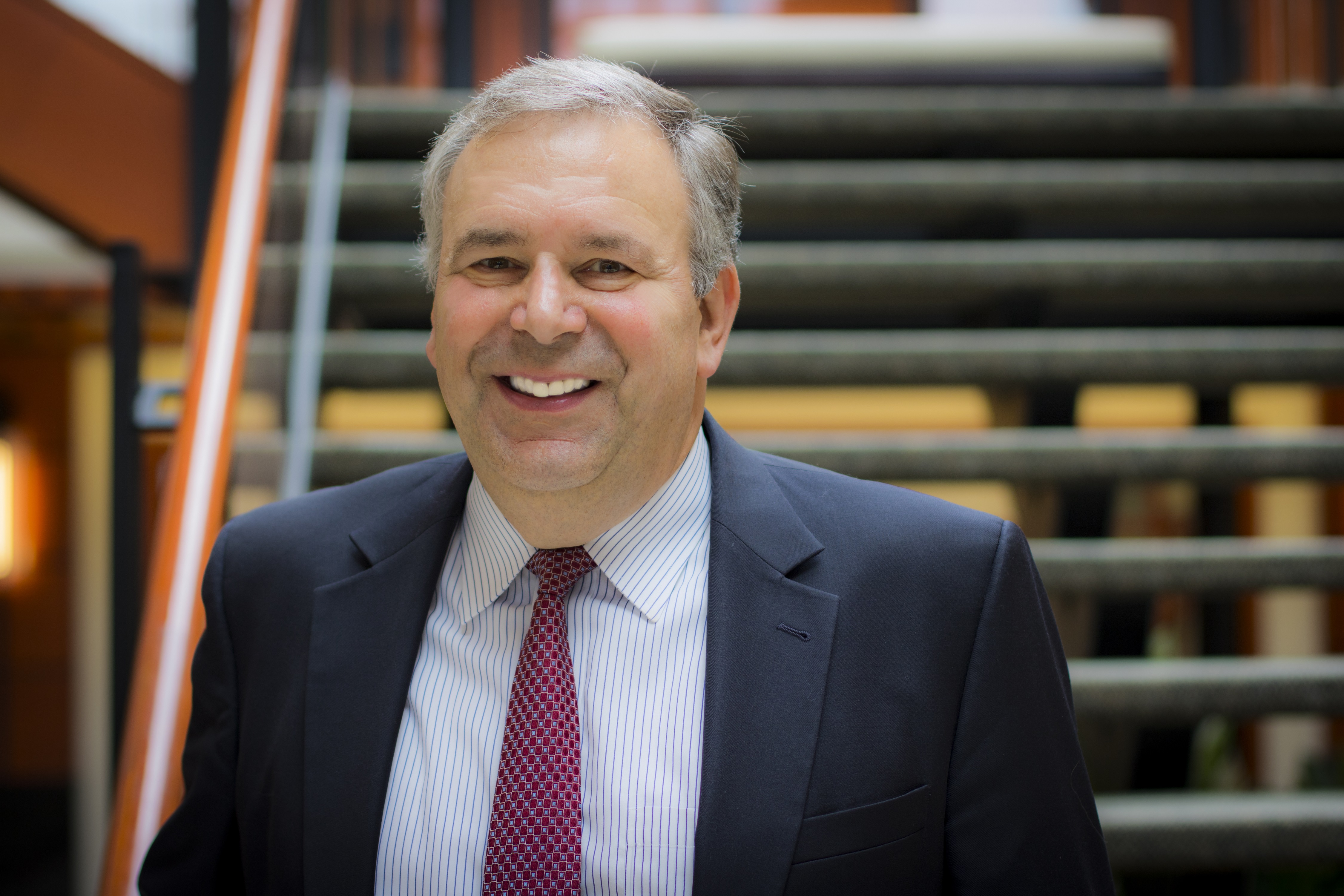
David L. Rogers is a Co-Founder of Life Storage, Inc., and serves as the company’s Chief Executive Officer, a position he has held since 2012. Before assuming his current role, Mr. Rogers served as the company’s Chief Financial Officer and Secretary from 1995 to February 2012, Vice President of Finance of the company’s predecessor from 1988 to 1995, and Controller and Due Diligence Officer from 1984 to 1988. In this 3,400 word exclusive interview with the CEO David Rogers, the Wall Street Transcripts exposes the interesting growth story of this storage building operator.
The Life Storage story is actually a multi-faceted business strategy that is rapidly growing the business: “We like to be, let’s say, in the top 75 MSAs of the country. We like to have larger stores, what we call at least second generation, but more commonly of late — the last five years or so — third generation, which are multistory, climate control, excellent security, look very unlike your father’s self- storage. They are more prone to look like apartments or office buildings than storage and pretty much in more dense areas than we had experienced in the past. We really upgraded the quality of our portfolio with the last 250 or so stores that we’ve acquired since 2012, again, focusing on denser markets, newer stores, bigger stores.”
New growth prospects have been provided by both a variety of acquisitions in key markets and also new business development:
“We’re working on a program right now that we will be announcing soon that we call Rent Now, so right online, the customer can reserve your unit, get your gate code, get your unit number, get your lock, get your lease — everything right from computer to storage without having to go through the rental process at the counter. So there are things that we’re doing on the technology front that are helpful, in addition to the traditional real estate…Certainly, the properties we bought in 2016 and 2017 are providing some real outsized growth to us.”
Get all the details by reading the entire 3,400 word interview in the Wall Street Transcript.