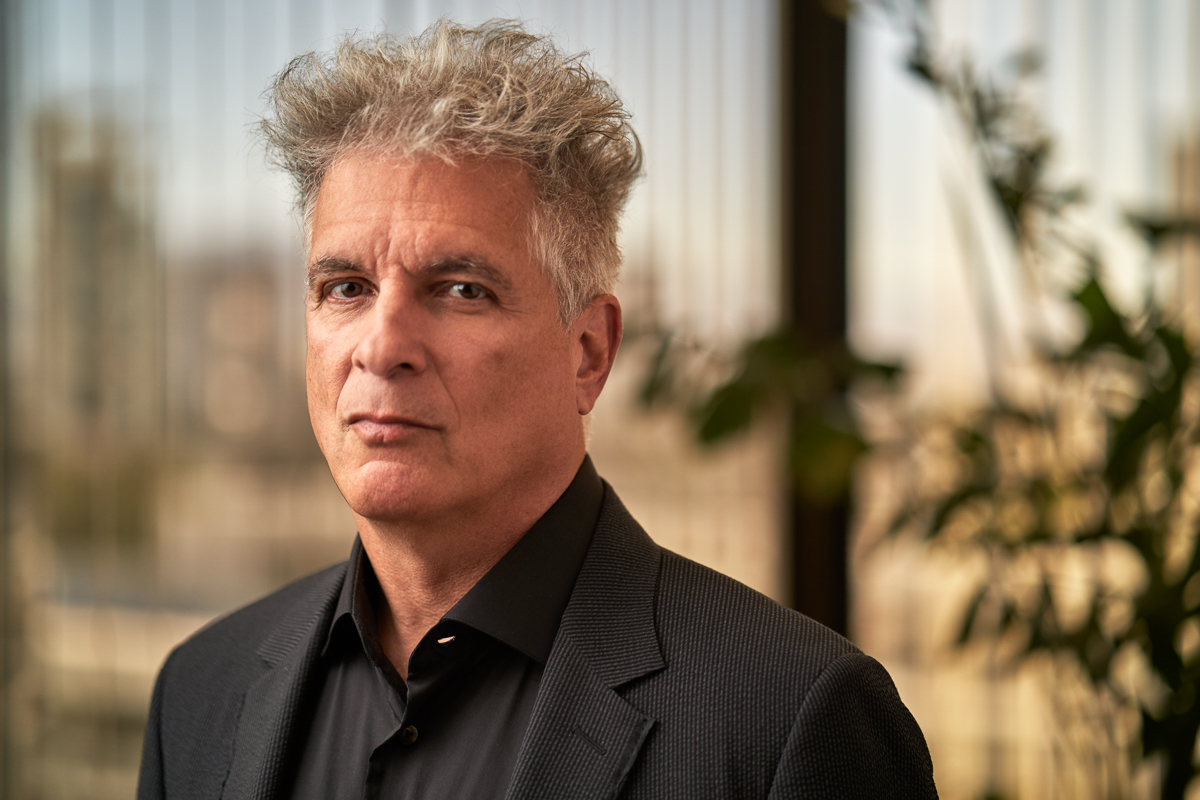
Rick Matros has served as Sabra Health Care REIT, Inc.’s Chairman of the board, President and Chief Executive Officer since its inception in 2010. He was Chairman and CEO of Sun Healthcare Group, Inc., from 2001 until the transaction that created Sabra in 2010. Mr. Matros founded and served as CEO and President of Bright Now! Dental from 1998 to 2000, remaining a director through its subsequent sale in 2010.
In addition, Mr. Matros was a Principal and Partner of CareMeridian, LLC, a company specializing in traumatic brain injuries, from 1998 until the sale of its operations in 2006. From 1988 to 1997, Mr. Matros held CEO and other executive positions at Care Enterprises and Regency Health Services, both publicly held post-acute companies.
Mr. Matros currently serves on the advisory board for RFE Partners and is the Executive Producer of Sabra Films, LLC. Mr. Matros is a lay leader in the Jewish community, an active member of the national board of directors for AIPAC and sits on the governing board of Aleh-JNF.
In this 3,753 word interview from the Best CEO Interviews Report, investors can check the CEO’s words against recent progress and determine if the 11% dividend yield is secure. The company is the owner of healthcare facilities across the United States.
“We have a pretty nice mix in the portfolio: skilled nursing, senior housing, we have specialty hospitals, we have behavioral hospitals, we have children’s hospitals. So a pretty nice mix of different businesses.
The Enlivant investment is a joint venture; we own 11 facilities, and we have a joint venture where we own 49% of the rest of the venture, which is comprised of 173 facilities.
We have an option to purchase those senior living facilities, and we expect to exercise that option, which will dramatically increase the number of assisted-living facilities that we have in the portfolio as well, which has also been a goal.”
To get the full detail on Rick Matros promises and fulfillment, read the entire 3,753 word interview in the Best CEO Interviews Report in the Wall Street Transcript.
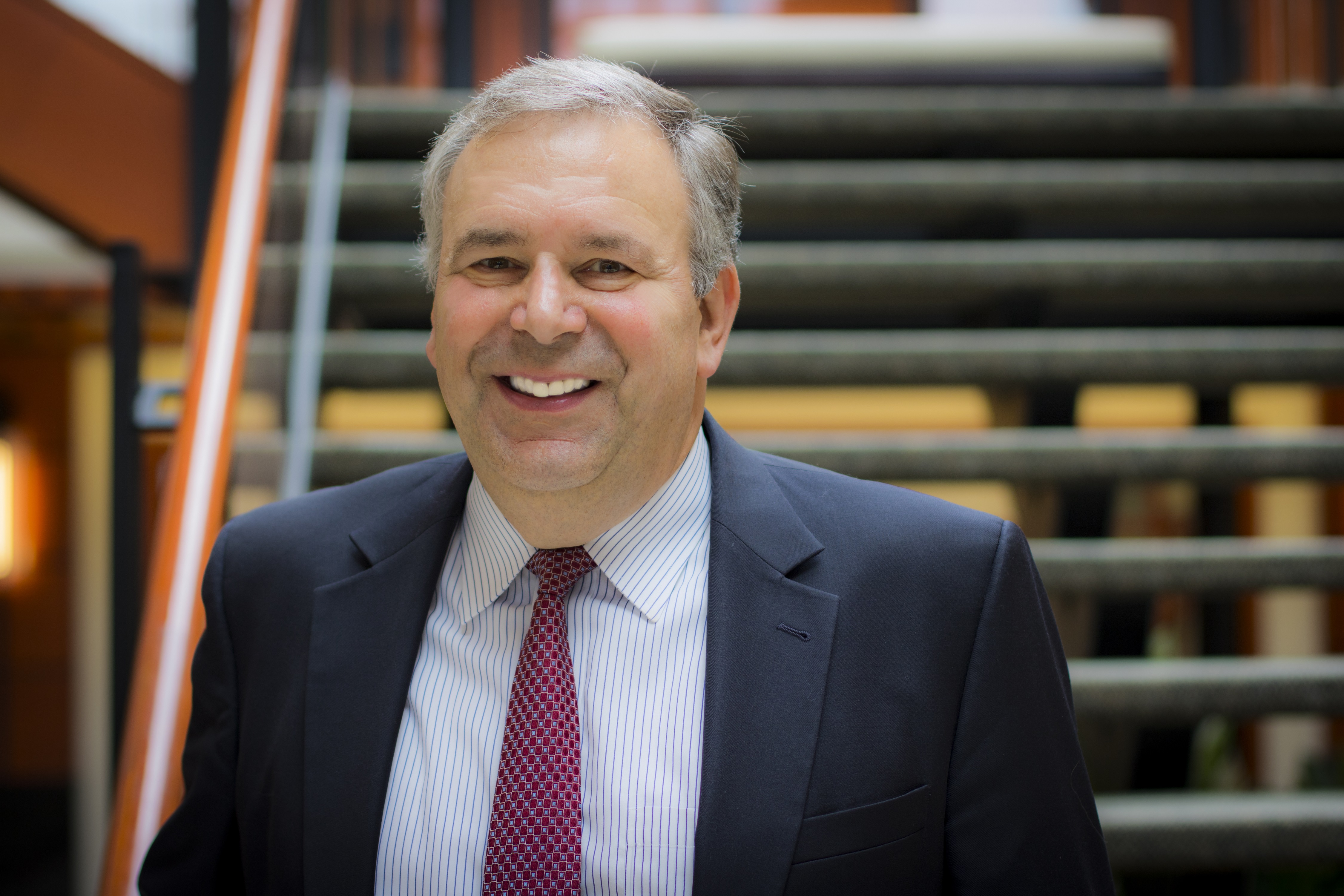
David L. Rogers is a Co-Founder of Life Storage, Inc., and serves as the company’s Chief Executive Officer, a position he has held since 2012. Before assuming his current role, Mr. Rogers served as the company’s Chief Financial Officer and Secretary from 1995 to February 2012, Vice President of Finance of the company’s predecessor from 1988 to 1995, and Controller and Due Diligence Officer from 1984 to 1988. Prior to joining the company, Mr. Rogers spent seven years as an accountant and systems analyst in both the public and private sectors.
In this exclusive Wall Street Transcript 3,400 word interview, part of the Best CEO Interviews of 2018 Report, David Rogers details his development of this high dividend payer and the strategy behind growing this income stream for investors.
“We continued as a private company till 1995, at which point we had about 62 stores. Remarkably, that was big enough to attract Wall Street’s attention, and we were a big fish in a little pond, as it turned out. And we had the platforms, we had the experience, and we had the know-how to go out and take the company public and grow it.
In 1995, we went public as Sovran Self Storage, and our trade name was Uncle Bob’s Self Storage. And then, from that point on, from 1995 through 2015, those 20 years, we grew to about 600 some stores, entered new markets out west, Texas and Phoenix, continued to grow as one of the leaders in the industry and had a pretty good run, did very well.
In 2014, we entered markets like Westchester County and all around New York, Chicago and Miami, and some bigger markets…”
Life Storage has developed its formula for growth for the future:
“We like to be, let’s say, in the top 75 MSAs of the country. We like to have larger stores, what we call at least second generation, but more commonly of late — the last five years or so — third generation, which are multistory, climate control, excellent security, look very unlike your father’s self- storage…”
Read this and the rest of the Best CEO Interviews in the Wall Street Transcript.
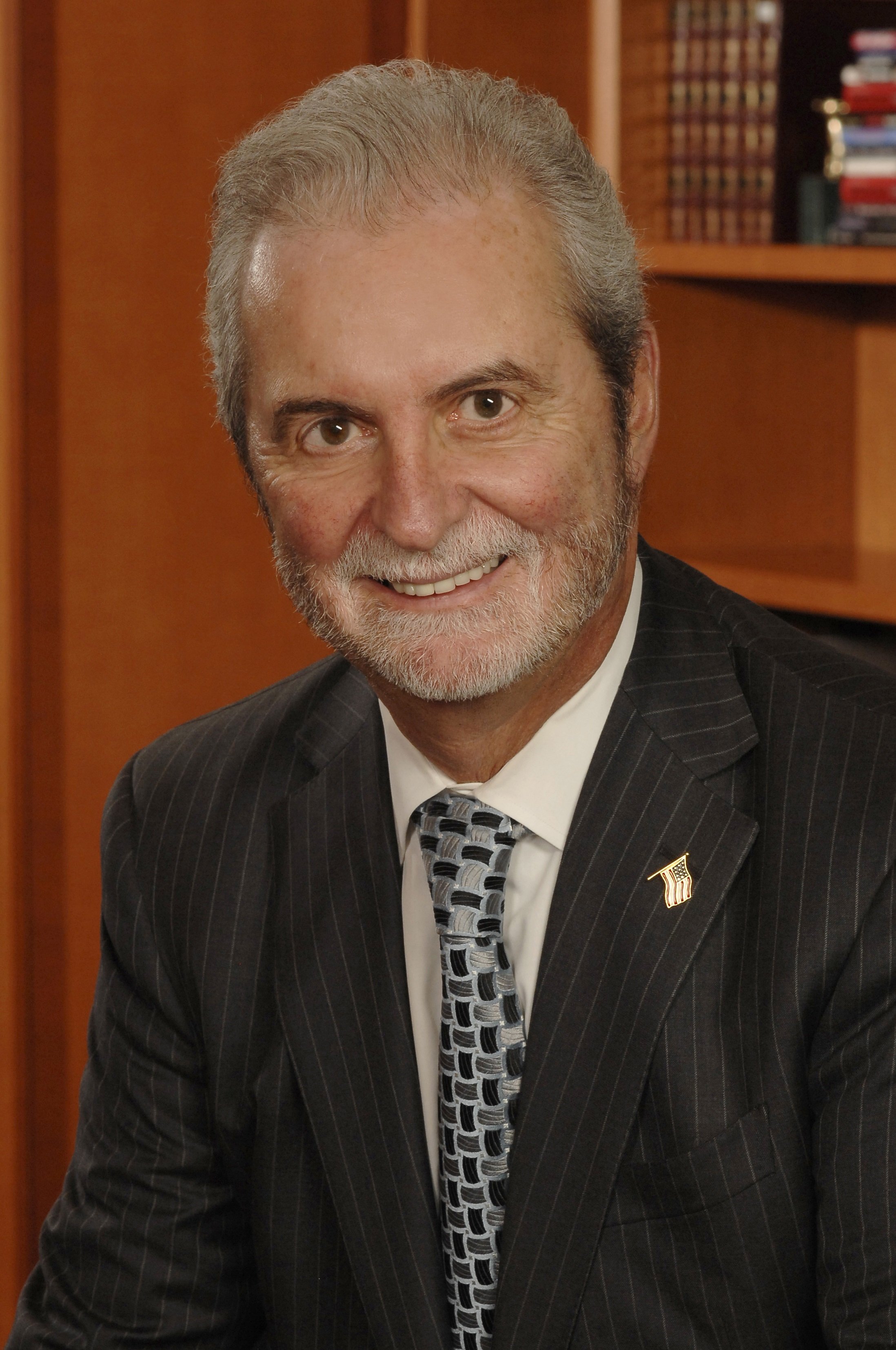
John P. Calamos Sr. is Chairman and Global CIO of Calamos Investments, a firm he founded in 1977. With origins as an institutional convertible bond manager, the firm has grown into a global asset management firm. Mr. Calamos has established research and investment processes centered around a team-based approach designed to deliver superior risk-adjusted performance over full market cycles.
With 49 years of industry experience, Mr. Calamos is often quoted as an authority on risk-managed investment strategies, markets and the economy, and he has authored two books on convertible securities. Mr. Calamos received his B.A. in economics and an MBA in finance from the Illinois Institute of Technology. He joined the United States Air Force after graduation where he served as a combat pilot during the Vietnam War and ultimately earned the rank of Major.
In this 3,521 word interview exclusively for the Wall Street Transcript, Mr. Calamos picks some winners that he holds in his portfolio and details his bear market strategy:
“It’s really across the board quite frankly, probably more small, midsize companies, but convertibles have been issued by larger companies: Intel (NASDAQ:INTC), Tesla (NASDAQ:TSLA). We’ve seen that Twitter (NYSE:TWTR) has a convert. So there’ve been larger companies, and then, you have maybe a midsize company — Workday (NASDAQ:WDAY) — new companies like that, that are forming, so it’s been across the board really.”
One particular sector that is attractive in this market downturn is a new one:
“…From the point of view of the biotech area, issuing convertibles is very interesting. They have ideas there; they need capital to execute. So we’ll see them do it — BioMarin Pharmaceutical (NASDAQ:BMRN), Allscripts Healthcare (NASDAQ:MDRX). There are interesting companies on the health care side that are utilizing convertible securities.”
Get the complete detail on these convertible securities as well as many more when you read the complete 3,521 word interview in the Wall Street Transcript.
Peter Strzalkowski, CFA, serves as Co-Team Leader of OppenheimerFunds’ Investment Grade Debt team and is a Portfolio Manager of the Total Return Bond Fund, Oppenheimer Limited-Term Government Fund and Oppenheimer Limited-Term Bond Fund. Before joining the firm in August 2007, Mr. Strzalkowski served as Managing Partner and Chief Investment Officer of Vector Capital Management, LLC, a structured products money management firm he founded.
In this exclusive 3,464 word interview with the Wall Street Transcript, Peter Strzalkowski details the best fixed income investments in his portfolio:
“When it comes to asset-backs, we’re definitely overweight, and I’m not sure if we’re overweight versus our competitors, but we definitely have an overweight in asset-backs, specifically auto ABS. We do not hold any student loan ABS. We have a small allocation to credit card ABS, and we have a small allocation to private label mortgages, but those are all legacy deals from 10 years ago. They’re just stored in our books.”
Mr. Strzalkowski is playing the over-diligence of the Federal Reserve in his bond portfolio:
“The slope between twos and 10s I believe is, over the last year and a half, something like 100 basis points flatter. So we have had a short of the two-year Treasuries expressed via futures in all of our portfolios. And the thought was basically inflation isn’t there, the Fed is being hawkish for something that really hasn’t appeared yet, they’re being proactive, I guess you could call it, and it will be the front end of the yield that will react the most, and we have witnessed that.”
The current trend of rising interest rates will continue:
“The recent capital from abroad comes because we pay people in dollars, and in essence, they buy our Treasuries. So some of the buying will continue to be external via currency flow, the current account flows globally, but I expect that also for the dollar to weaken from a current strong position if those deficits continue, and rates are going to have to be higher at some point. I think it’s a gradual rise, but I think rates will gradually creep up higher over the next two to three years.”
To get the full macroeconomic analysis from Peter Strzalkowski, read the entire 3,464 word interview in the Wall Street Transcript.
J. Jeffrey Auxier is President of Auxier Asset Management LLC and Founder of the Auxier Focus Fund. Prior to forming Auxier Asset Management in 1998, Mr. Auxier spent 16 years at Smith Barney — formerly Foster Marshall-American Express, then Shearson — where he was on the Portfolio Management Advisory Board and the Chairman’s Council, and was Senior Vice President of Investments and Senior Portfolio Management Director.
In his exclusive 2,874 word interview with the Wall Street Transcript, Mr. Auxier lists some stocks that he like to own on a pullback in the market:
“We’re looking for strong business franchises that are utilizing platforms and data analytics. For instance, companies along the lines of an Alphabet (NASDAQ:GOOG). It’s not quite a buy right here, but it’s one that, longer term, we would like to own in a bigger way. They’re a leader in predictive data analytics and artificial intelligence.
YouTube is growing twice as fast as Facebook (NASDAQ:FB) and has over 1.8 billion users. It achieved 20% revenue growth this past year. And they’ve got Waymo, the industry leader in self-driving cars. It took six years to test the first 1 million miles. This year, they went from 7 million to 8 million miles in one month. This model represents a powerful platform that has exponential possibilities in a linear world.
The balance sheet is solid, with $100 billion in short-term securities or cash. It’s very disruptive. In total, advertising in the U.S. right now is running at the lowest rate since 1946. So digital advertising still has huge potential. Companies that have the best data can help the customer better target their market.”
Another stock that has become quite cheap is also on Jeffrey Auxier’s screen:
“Another one that’s really out of favor and is struggling is Wells Fargo (NYSE:WFC), which has been working hard to earn back their customers’ trust with customer-friendly initiatives such as Overdraft Rewind and minimizing standard monthly service fees. Now you’re kind of forced to buy bad news. Either you have to pay a higher price or deal with controversy. That’s another company that’s really cheap, although they’ve got some pretty serious problems, but we think those problems are fixable.”
Read the entire 2,874 word interview in the Wall Street Transcript to get all the top picks from Mr. Auxier.
Bill Caton, CFA, is a Research Analyst and Senior Trader at First Wilshire Securities Management Inc. With responsibilities in portfolio management and trading, Mr. Caton joined First Wilshire’s internship program over 20 years ago and advanced through the ranks. Today, he is a member of the investment committee. He holds a bachelor’s degree from the University of California at Los Angeles with a specialization in business administration.
In this 3,296 word interview, exclusive to the Wall Street Transcript, Mr. Caton describes how his firm builds a portfolio and suggests some top picks for investors:
“We specialize in small-cap value equities where we believe the best long-term returns can be found but also dive a little into midcap, large cap, but our bread and butter is small cap, and we are bottom-up fundamental investors.
We have a very long-term buy-and-hold strategy, and we typically focus in the U.S., some in Canada. We also run an international fund that invests globally with a similar strategy of small-cap value, and our assets under management right now are approximately $375 million.”
One investment example is Tutor Perini Corporation (NYSE:TPC):
“One that I would find very interesting would be Tutor Perini Corporation (NYSE:TPC). As background, it’s the second-largest U.S. contractor in the transportation market and the third-largest U.S. heavy domestic contractor. They are very large civil contractors that also do specialty mechanical, and they also build commercial buildings.
In terms of valuation, it’s trading at about 8.5 times fiscal year 2018 p/e and under seven times fiscal year 2019 p/e. So if you compare it to its peer group, it’s trading at a big discount. In terms of price to book, it’s trading about half of book, relative to its peers that are four times that. So it offers a lot of value, absolute value and relative value, and a key thesis is the backlog has been growing very strongly.
It went from $6.2 billion backlog at the end of 2016 to $7.3 billion backlog at 2017 to now $8.7 billion in 2018…”
To get all the investment detail on this and many others, read the entire 3,296 word interview in the Wall Street Transcript.
Geoffrey Gerber is President and Chief Investment Officer of TWIN Capital Management, Inc. Having founded TWIN in 1990, Dr. Gerber oversees the entire quantitative investment process and general management of the firm. Recognized as a specialist in institutional quantitative investment management, he has been quoted in the financial press and authored numerous articles in books and journals.
Outside of TWIN, Dr. Gerber is a faculty member for the Aresty Institute’s Wharton Executive Education Program on Investment Strategies and Portfolio Management. He participates in a number of foundations’ investment committees and boards, including the Burroughs Wellcome Foundation, the Jewish Federation of Greater Pittsburgh and the Jewish Healthcare Foundation.
Dr. Gerber is also a member of the Editorial Advisory Board of the Journal of Investment Consulting. He holds a Ph.D. in economics and finance, University of Pennsylvania, and a B.S. in economics from the University of Buffalo. In this exclusive 2,775 word interview in the Wall Street Transcript, Dr. Gerber details his proprietary portfolio development took and the top picks it is currently predicting.
“The heart of our investment philosophy is that systematic application of in-house quantitative research coupled with rigorous risk control in portfolio construction affords the best chance of achieving excess return over a benchmark or market index on a risk-managed basis.
Our job is to identify and capture the reliable and predictable sources of returns while minimizing any impact for more arbitrary sources of risk. TWIN differentiates itself from the mainstream investment community with the application of our proprietary Fundamental Tilt, which provides the top-down thematic perspective that complements our bottom-up model.”
This proprietary portfolio investment philosophy has delivered consistent out performance:
“The advantage that TWIN provides can be seen by our Prime strategy. Our Prime strategy has outperformed the market on average in up months, in down months and in sideways months, and that is a fairly unique opportunity for institutional investors. Typically, managers outperform the market on the upside because they’re growth-oriented or they outperform the market on the downside because they’re defensive or value-oriented.
Our TWIN Prime strategy, which is our largest strategy, has generated over almost a 15-year period outperformance in up and down markets. So having the ability to have positive upside capture — meaning outperform the market on average in up markets — as well as outperform in down markets is a feature that our institutional clients really value.”
To get more details on this strategic portfolio development, read the entire 2,775 word interview in the Wall Street Transcript.
Eric Green, CFA, is Director of Research, Senior Portfolio Manager and Senior Managing Partner at Penn Capital Management Company, Inc. Mr. Green began his career at Penn Capital in July 1997. As Director of Research, Mr. Green is responsible for guiding the firm’s day-to-day investment research process.
He also serves as the Portfolio Manager for Penn Capital’s Small Cap, Smaller Companies Growth and Mid Cap equity strategies as well as chairing the Penn Capital Equity Strategy Committee. Throughout his career, Mr. Green has focused on the energy, media, gaming and leisure industries.
In this exclusive 2,950 word interview in the Wall Street Transcript, Mr. Green illuminates his stock picking process and delivers the good news to investors for 2019.
“The uniqueness about Penn Capital is that all of our analysts and portfolio managers cover the entire capital structures of the companies that they follow. For example, if I am looking at a company, I’m looking at the bank debt, the bonds, the converts, the preferreds and the equity. We believe this perspective provides a competitive advantage versus our peers that only focus on one piece of the capital structure.”
One example of this investment style is Golden Entertainment (NASDAQ:GDEN):
“We’ve most recently accumulated a position in Golden Entertainment (NASDAQ:GDEN). Golden owns local properties in Nevada and a small property in Maryland. They recently bought the Stratosphere and Arizona Charlie’s from a private equity firm.
We believe they will invest money into Stratosphere and allow the returns to be significantly higher than they are right now. Valuation is very attractive as they will be paying down the debt once they finish their capital expenditures with the Stratosphere. Golden has an extremely talented management team and is likely to acquire additional properties or become an acquisition candidate themselves.”
Get the complete picture on many of the other top picks from the Penn Capital portfolio by reading the entire 2,950 word interview in the Wall Street Transcript.
Andrew Alexander is Director and Portfolio Manager of Brookfield Global Listed Infrastructure Income Fund at Brookfield Investment Management Inc. Andrew Alexander has 14 years of experience and is a vice president on Brookfield’s global infrastructure team. He is responsible for covering energy infrastructure as well as infrastructure securities that focus on the water and transportation sectors in Europe and Australia/New Zealand.
Tom Miller, CFA, is Director and Portfolio Manager of Brookfield Global Listed Infrastructure Income Fund at Brookfield Investment Management Inc. Tom Miller has eight years of experience and is a director of Brookfield’s global infrastructure equities team. He is responsible for covering North American infrastructure securities focusing on MLPs and the energy infrastructure sector.
In this exclusive 3,435 word interview, these two award winning asset managers detail their stock picking prowess and explain their top picks to investors for the Wall Street Transcript:
“Our process starts with our proprietary screening tool that we use across our infrastructure universe. Within this screening tool, we break it down into three different components. There is the asset quality component, a management quality component and then valuation as the last leg of the stool.
For asset quality, we are really trying to evaluate to understand the quality of the underlying assets and the cash flow trajectory. We are looking at it from a Porter’s Five Forces type of business model…”
The fund is focused on international infrastructure investments:
“Infrastructure, as we define it, consists of natural monopolies with significant barriers to entry, so these are typically long-life, long-duration assets with stable and predictable cash flows. Typically, these types of companies have underappreciated and sustainable growth.
It is similar to the concept of a royalty stream on global economic growth. The sectors are typically toll roads, airports, telecommunication towers, energy infrastructure and utilities…”
Read the rest of this 3,435 word interview in the Wall Street Transcript to get the full detail and multiple stock picks.

John A. McCluskey is President, Chief Executive Officer and Director of Alamos Gold Inc. He has been the President and Chief Executive Officer of Alamos Gold Inc. since 2003. Mr. McCluskey began his career with Glamis Gold Ltd. In 1996, he founded Grayd Resource Corporation, where he was CEO until 2003 and co-founded Alamos with mining hall of famer Chester Millar.
Mr. McCluskey was named Ontario’s 2012 Ernst & Young Entrepreneur of the Year, based on a judging panel’s assessment of financial performance, vision, leadership, innovation, personal integrity and influence, social responsibility and entrepreneurial spirit. Today, Alamos is an established intermediate gold producer with four operating mines in North America and a portfolio of development-stage projects in Turkey, Mexico, Canada and the United States.
In this exclusive 3,291 word interview in the Wall Street Transcript, Mr. McCluskey details his experience in building a gold mining company from the bottom up and explains the future upside:
“… When we purchased the project, gold was around $265 per ounce, and frankly, not a single ounce that had been drilled out by Placer Dome could be produced at a profit given the very low gold price, but that’s typically the time you have to buy. We stepped in and bought it, and we ultimately permitted, financed and built the mine. It’s now been in production since 2005, so roughly 14 years. We’ve produced close to 2 million ounces of gold, and we’ve made over $400 million in free cash flow from that mining operation. So that was the start of the company.”
John McCluskey is excited about the prospects for his new mine in Turkey:
“In addition to that, we have three projects in Turkey that collectively contain about 3 million ounces of gold. This includes a deposit called Kirazli, another called Agi Dagi and the third called Camyurt. The first of those three is under construction right now, and that’s the Kirazli project. It should be in production by the second half of 2020.”
To get the full picture of his Turkish mine as well as many other new projects coming on line for Alamos Gold, read the entire 3,291 word interview in the Wall Street Transcript.