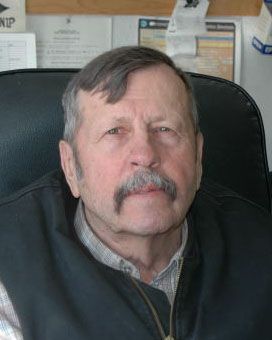
John C. Lawrence is the Founder and CEO of the United States Antimony Corporation, eastablished in 1969. He mined antimony underground from 23 drifts at Thompson Falls, Montana, built and operated a flotation mill to process antimony ore, and he also built and operated an antimony leach plant, reactor, and electrowinning circuit proprietary furnace systems to produce antimony metal, sodium antimonite and antimony oxide, and remove impurities such as arsenic, lead, bismuth, silver and gold. He is also responsible for smelted ore from China, Mexico, Europe, Bolivia, Peru, Alaska, Canada, Honduras, Guatemala, Australia and the United States. This is the only significant antimony plant left in the United States. Mr. Lawrence holds a B.A. in geology and mineralogy from Hamilton College and a Master of Arts in geology and mineralogy from the University of Wyoming.
In this exclusive interview with the Wall Street Transcript, John Lawrence details the strategic vision for United States Antimony. “The problem is that the world reserves are being depleted. China, which normally would mine 100% of their smelter feed, is importing 40% of their feed at the present time. The consolidated Murchison mine in South Africa was shut down a couple years ago. The strong Bolivian production is a fraction of what it used to be when Bolivia dominated the world production of antimony. Australia is losing production. And the Beaver Brook Mine in Newfoundland is shut down. So we have increasing demand with a diminishing reserve. In fact, we’re in a position right now that we’ve sold everything that we can produce. And the demand is very strong. ”
There are other minerals besides antimony in the future product mix. “So currently, we have 30,000 tons stockpiled that has been mined. It’s primarily gold, and then second in value would be silver, and third would be antimony. And we are ready to start milling that rock and look forward to mining vigorously. We are not sure at this point, but we are thinking that it will be at least a 500-ton mill.”
To learn more about the future value of this Antimony miner, read the entire interview in the Wall Street Transcript.
Mary L. Pierson is the Co-CEO and Portfolio Manager at Fairpointe Capital, LLC. She is part of the Mid-Cap Investment Team, serving as Co-Portfolio Manager for the midcap strategy, including the AMG Managers Fairpointe Mid Cap Fund, the Parvest Equity USA Mid Cap Fund, and institutional separate accounts. Prior to co-founding Fairpointe Capital, Ms. Pierson served for seven years as a member of the Mid-Cap Investment Team at a predecessor firm. She co-managed the Aston — now AMG — Mid Cap Fund, the Parvest Equity USA Mid Cap Fund and separately managed institutional accounts as well as providing research and analysis of existing and potential midcap equity holdings.
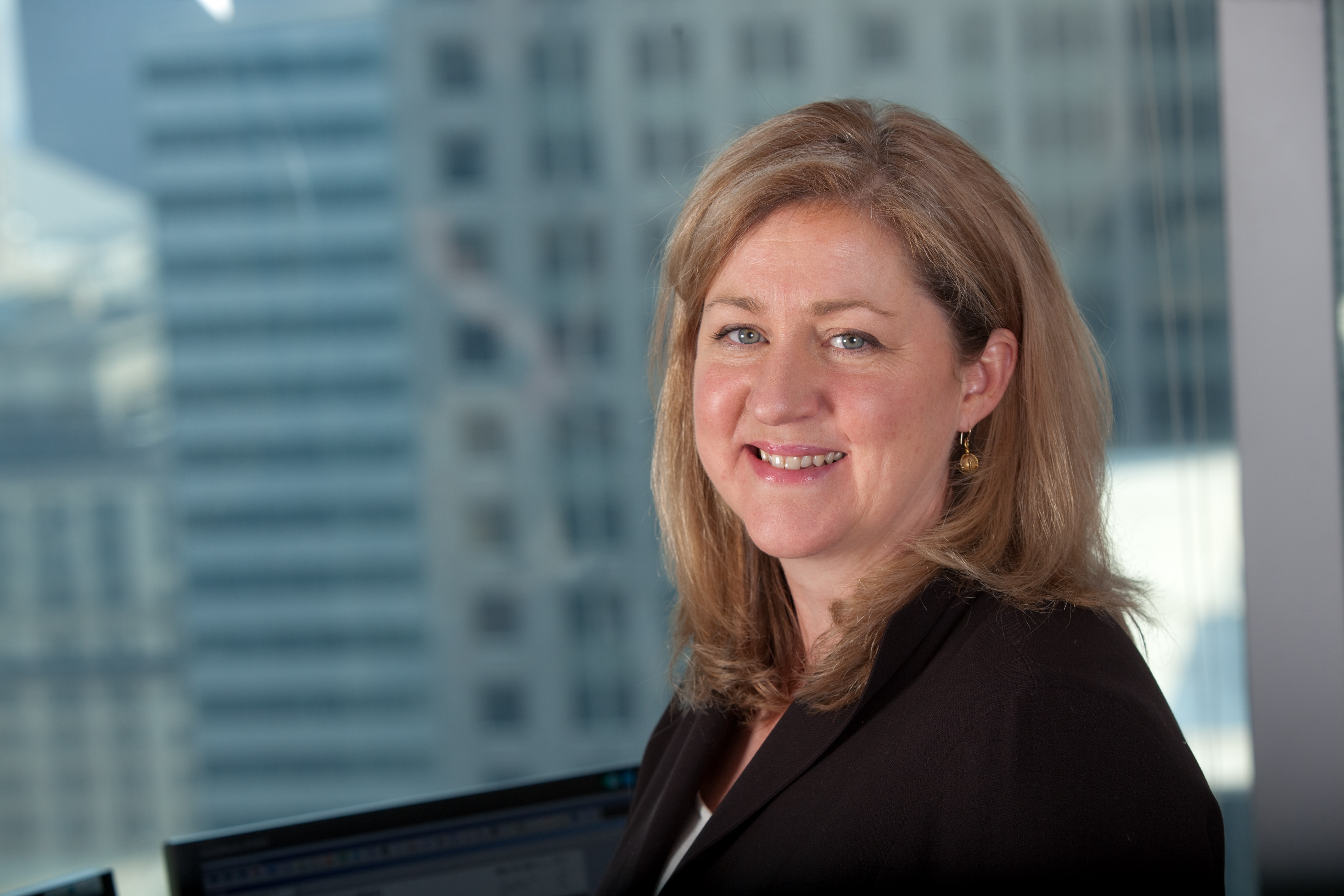
Marie L. Lorden is a Portfolio Manager and the Co-Founder of Fairpointe Capital, LLC. Ms. Lorden serves as a member of the Mid-Cap Investment Team and the firm’s executive team. Her responsibilities include serving as Co-Portfolio Manager for the midcap strategy, including the AMG Managers Fairpointe Mid Cap Fund, Parvest Equity USA Mid Cap Fund, and institutional and private client accounts. Prior to co-founding Fairpointe Capital, Ms. Lorden was, for eight years, a member of the Mid-Cap Investment Team at a predecessor firm. She co-managed the Aston — now AMG — Mid Cap Fund, the Parvest Equity USA Mid Cap Fund, and institutional and private client accounts, as well as providing research and analysis of existing and potential midcap equity holdings. Ms. Lorden held positions specializing in equity product analysis with Zurich Insurance Group, Driehaus Capital Management and The Burridge Group.
The two women own and manage the investment company. “We are 100% employee-owned and 100% female-owned at this time. We had $5.1 billion in assets under management at the end of October. We subadvise two mutual funds, the AMG Managers Fairpointe Mid Cap Fund as well as the Parvest Equity USA Mid Cap Fund, and we also manage a number of institutional relationships. There are 15 people at the firm. Our primary strategy is midcap. We have an 18.5-year track record. We are very interested in the midcap space and always have been. We think there is a lot of potential there. Midcaps are generally less risky and have a more mature capital structure than small caps, offer better liquidity.”
One of the top picks detailed in this exclusive interview with the Wall Street Transcript is “LKQ (NASDAQ:LKQ). I think we’ll talk about that. LKQ stands for like-kind quality. And they buy over 200,000 salvage vehicles a year. They repair and replace; they offer alternative and specialty parts for automobiles. So when a car gets in an accident and you need to repair something, you take it into the shop. Well, some of the parts can be from the OEMs — original equipment manufacturers — but oftentimes, what insurance will pay for is like-kind quality parts that are not OEM level. And what’s interesting about LKQ is they have a CRM or IT system that is second to none, where they can inventory parts they need, what prices they should pay. ”
To get more of the top picks from Marie Lorden and Mary Pierson of Fairpointe Capital, read the entire interview in the Wall Street Transcript.
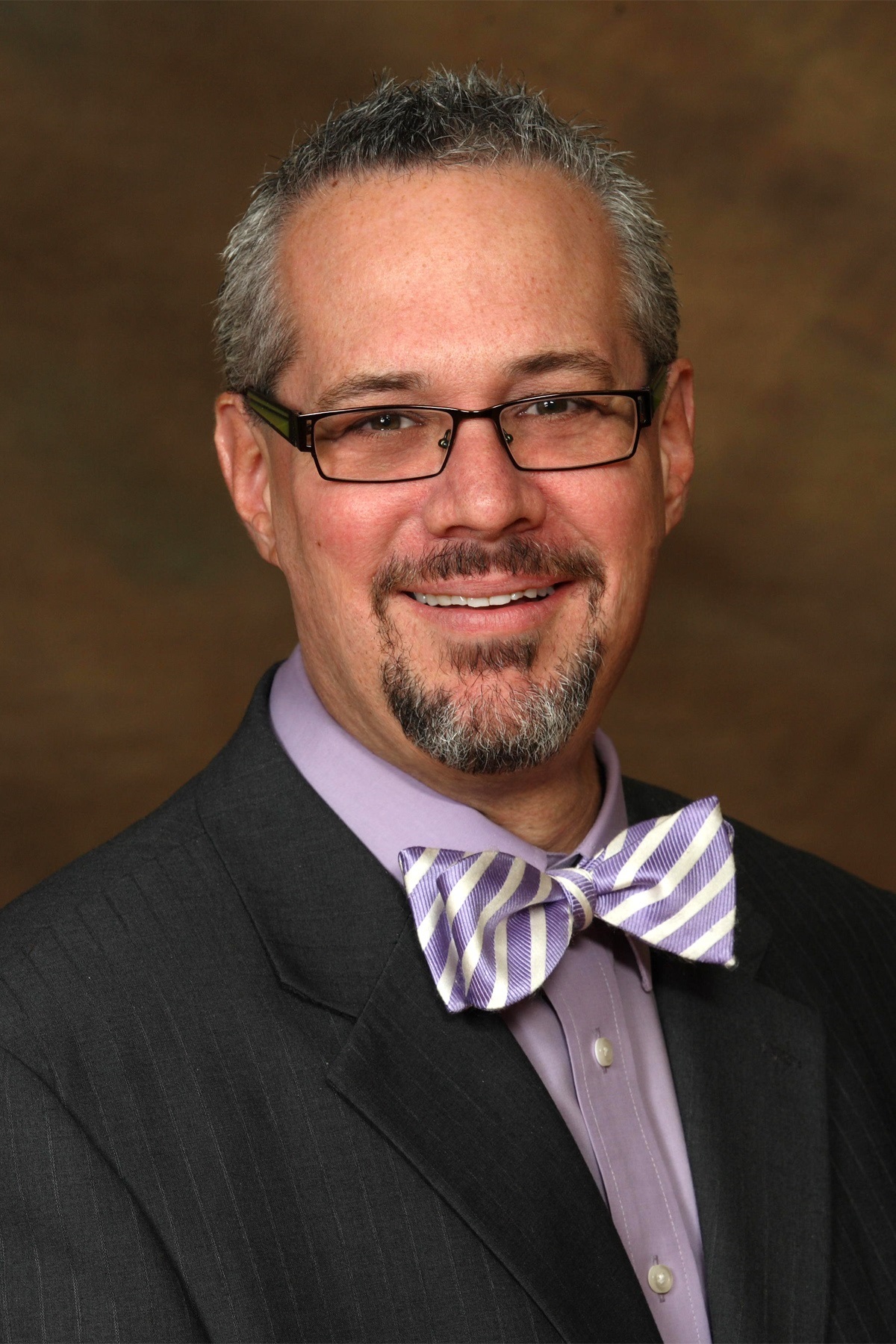
Malcolm E. Polley is the President and Chief Investment Officer at Stewart Capital Advisors, LLC. He oversees the investment process and provides the philosophical underpinning for the firm’s research and asset management. Earlier, he has worked at S&T Wealth Management, Marquette Trust Company, Marquette Advisory Services and West Bank. He received a BBA in finance from Iowa State University and is a member and past President of the CFA Society of Pittsburgh. In this exclusive interview with the Wall Street Transcript, Mr. Polley gives detailed rationales for some of his top portfolio picks.
“We call ourselves business-perspective investors. What that means is that we really take the perspective of business owners, as that is what you are when you own a stock. You are a fractional owner in the business, and so we want to understand how the businesses generate cash, how that cash grows and the capital returns associated with that, and then, we discount that back to present, and we don’t like to pay full price.”
One of Mr. Polley’s picks is FMC: “…there’s another company that we find very interesting. It’s FMC Corporation (NYSE:FMC). They are also going through a bit of restructuring, which is a positive. They are splitting into two pure plays. One will be an ag chemicals business; the other will be a lithium business, which will really give investors an opportunity, and we believe the only pure play lithium company in the marketplace. So it will give investors an opportunity to invest in a really exciting space. ”
An seeming arbitrage situation also is one of the picks for Mr. Polley in this interview: “…a name that people might not be aware of, or you maybe because they’ve since sold their operating business, is a company now called Altaba (NASDAQ:AABA). Altaba used to be Yahoo. When Yahoo sold their operating business to Verizon (NYSE:VZ), it became a registered investment company, or a RIC, and so like most RICs, the company should trade, its stock price should trade relatively close to its net asset value. Well, it doesn’t, and Altaba is nice enough to list their net asset value on a daily basis on their website.”
To get all of Malcolm Polley’s picks, read the entire interview at the Wall Street Transcript.
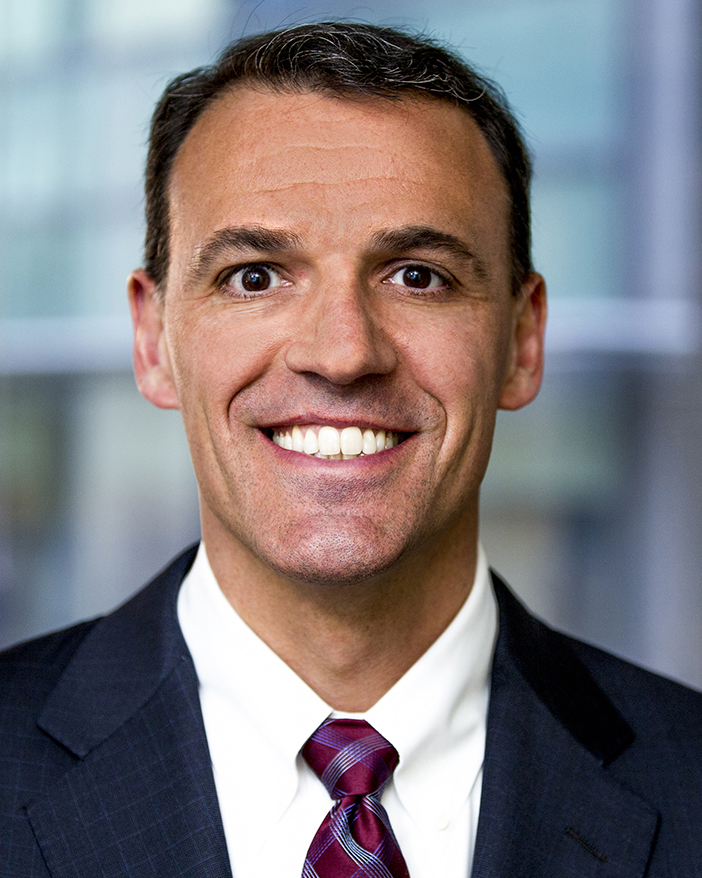
George J. Schultze is the Founder of Schultze Asset Management, LP, chairs the company’s investment and strategy committees, and together with his team makes the final decision on all investments for the portfolio. He is widely recognized as an expert on distressed and special situations investing, and is often quoted in the media regarding high-profile reorganization cases. Mr. Schultze is also author of The Art of Vulture Investing: Adventures in Distressed Securities Management and is a frequent speaker at industry conferences and graduate schools such as Harvard Business School. Prior to founding Schultze Asset Management, LP, he honed his activist distressed-investing approach with M.D. Sass. Before that, he was employed with Fiduciary Partners fund of funds, the Mayer Brown & Platt law firm and Merrill Lynch. Mr. Schultze is a joint MBA/J.D. graduate of Columbia Business School and Columbia Law School. In his exclusive interview with the Wall Street Transcript, Mr. Schultze details his vulture investing protocol.
“The focus of Schultze Asset Management is to concentrate on distressed and event-driven situations, both long and short. Over the years, Schultze Asset Management has grown a fair amount, and I think we’ve done a great job for our clients around the world, focusing on that singular mandate all along. The one thing that has changed is the opportunity set that the market presents us with. From the start, the way we designed our investing strategy is to be able to benefit from a variety of cycles, and that’s why we invest before, during or after distress.”
“For instance, picture a fixed income mutual fund, a fixed income ETF, an insurance company, a CLO that owns original-issue bond or loan debt that was extended to a company in the U.S. When things change, if that loan or bond stops paying regular interest and principal, those original-issue investors often become forced sellers. They don’t have a long-term appetite to remain in that security and see it through a workout.”
To see specific examples from the Schultze Asset Management portfolio read the entire interview at the Wall Street Transcript.

Randy Watts is the Chief Investment Strategist at William O’Neil + Co. Inc. With more than 25 years of equity asset management experience, Mr. Watts has a specific focus on large- and small-cap growth stocks. He started his career as an Equity Analyst at Freedom Capital Management in Boston, before spending nine years at Westfield Capital Management as an Equity Analyst and then as a Partner and Portfolio Manager overseeing a $500-plus million growth stock portfolio. While at The Boston Company, Mr. Watts was a Senior Managing Director with responsibility for small- and midcap growth investments. He managed $4 billion in long and long/short equity portfolios and hired, trained and managed a team of investment professionals.
In this exclusive interview with the Wall Street Transcript, Mr. Watts details his firm’s investing philosophy: We “would say both as part of the William O’Neil philosophy and as part of my own personal philosophy in investing and in life, there’s nothing new under the sun. So one of the reasons this methodology works is because investors’ patterns of behavior repeat themselves over history. And in addition, innovations, new products, new industries, etc., those have always existed. There are always new products and new companies and new industries coming into being that offer great investment opportunities. And so I think by studying what’s worked in the past and then also trying to identify investments with those same kinds of catalysts and drivers today, I think that offers an attractive and profitable way to invest.”
In the full interview, Randy Watts details many stocks in the full interview. “…One stock we find interesting that’s kind of fun to talk about is a U.S. restaurant company called Wingstop (NASDAQ:WING). They own and franchise cooked-to-order chicken wings. And they’ve got currently, I believe, 1,088 restaurants in eight countries. That includes 994 U.S.-based restaurants, of which 971 are franchised and 23 are company-owned. Outside the U.S., they have 94 franchised restaurants in seven countries.”
“The way their revenue currently breaks down is they get about 63% of their revenue from royalty revenue and franchise fees and about 37% of revenue from their own company-owned stores. They are more focused on takeout than dine-in, so most of their business is driven by take-away. They are, we think, one of the faster-growing restaurant brands in the United States. They have recently reported a quarter which we thought was strong. They had strong same-store sales that came in over 4%. They think, this year, that they’re going to be able to expand their units in the low teens, so kind of 13% to 15% with positive same-store sales and earnings growing north of 20%. So we think the earnings growth can be in the 20% to 25% range.”
Visit the Wall Street Transcript to read the complete interview.

Brian Boyle is the Founder, President and Chief Investment Officer of Boyle Capital. Mr. Boyle founded Boyle Capital in 2004, and as President and Chief Investment Officer, he is responsible for investment management and asset allocation at the firm. He graduated summa cum laude from the University of Northern Iowa with a bachelor’s in finance. In this exclusive interview with the Wall Street Transcript, Mr. Boyle details some interesting guidance for the current market.
“Growth is enjoying the longest outperformance relative to value on record. The two longest periods before this were the late 1990s, early 2000s and the early 1970s. In both cases, the underperformance of value relative to growth corrected, and when it corrected, the correction was rather sharp. We are not predicting a major market correction, but it is important for investors to understand where they’re at in the cycle. And from where we sit, the growth over value is extremely long in the tooth.”
Brian Boyle does pick at least one sector to outperform in the next two years. “Energy is one area we see value today as it is among the most hated sector and maybe the most hated it has ever been relative to the broader market. Within the energy sector, some of the areas that we find to be attractive would be more in the natural gas space. When we look at supply-and-demand fundamentals, we look at the third quarter as being kind of an important quarter for the overall energy markets. The consensus has been for the last year and a half that prices are going to stay lower for longer and that there is an abundant amount of natural gas in the ground that can be accessed at almost any price. And yet, what we see is that supply growth, while it’s up a little year over year, has slowed considerably over the last couple of years to the point where the non-weather demand growth is now exceeding supply growth by quite a margin.”
To see specific names that Mr. Boyle has chosen, read the entire interview at the Wall Street Transcript.
Frederic G. Burke is the Senior Vice President and Manager of Sandy Spring Trust. Mr. Burke has over 25 years of extensive experience in fiduciary and asset management. Prior to joining Sandy Spring Trust, he served as President and Chief Investment Officer of Johnston Lemon Asset Management. Mr. Burke has published numerous articles and monthly essays on current fiduciary and investment issues, has been commended by the Washington Business Journal for “his level head and ability to avoid bubbles,” and continues to be interviewed by business publications regarding wealth management strategies. Sandy Spring Trust is the fiduciary and investment entity of Sandy Spring Bank. Sandy Spring Trust has a long-established reputation for patience, consistency and skill in the management of investment and fiduciary relationships. We currently manage around $1.4 billion for trust, high net worth and not-for-profit organizations in the Washington, D.C. area.
Frederic Burke points out that the macro picture has many dark points but is overall bright. “Rather than focusing on known risks with unknown outcomes, most markets appear to be focused on underlying fundamentals. New records are being set by stocks, investor sentiment is positive, and households’ exposure to equities is not at an extreme, all of which suggest that this market has some “legs.” Economic growth and consequently investment growth is an incredibly complex process. The current market will be followed by a bear market, and a significant tightening by the Fed will provide the signal.”
Mr. Burke reveals a large number of his top tier large cap portfolio picks, and has invested in money center banks at this point in the economic cycle. “A good example of a large cap with a strong dividend policy which we favor is JPMorgan Chase (NYSE:JPM). They have a great franchise with a nimble management team. They have done a fantastic job of taking costs out and understand the implications of the regulatory environment. Johnson & Johnson (NYSE:JNJ) and Citigroup (NYSE:C) have similarly aggressive management teams.”
For more large cap recommendations from Frederic Burke, read the entire interview at the Wall Street Transcript.
Bobby Edgerton is a Co-Founder of the Capital Investment Companies, and has served as an Executive Officer of the companies since 1984. He is also the firm’s Chief Investment Officer and has been in the financial services industry since 1979. After winning the North Carolina State High School Golf Championship, Mr. Edgerton accepted both a basketball and golf scholarships from Wake Forest University and graduated with a B.A. in business and finance. In this exclusive interview with the Wall Street Transcript, Mr. Edgerton details his investment philosophy and top picks for his investors.
Mr. Edgerton has a multi-step discipline to choosing the stocks for his portfolio. “The fifth part of the five-point program is the two ways you make money in the stock market. Number one is by buying good companies and never selling them, then you don’t pay any tax. That works fine in a lot of cases. I bought Apple in 1995 for me and my father’s profit-sharing plan at $36 a share. I bought 500 shares; it split two-for-one, so it went from 500 to 1,000, and then to 2,000, and then split seven-to-one, so it’s now 14,000 shares — $18,000 is worth over $2 million now. I’ve never sold a share, and this is in our retirement plan. Now, will I ever sell and diversify? Maybe.”
Some of the portfolio positions are under the radar of most professional money managers. “Another stock that most people have never heard of is the monstrous FANUC, the symbol is FANUY. They are the largest maker of industrial robots in the world. They have $7 billion in cash, they have no debt, and they are a monster. I’m probably the only guy who buys stocks and in a sense hopes the stocks go down, because I want more shares. I guess my wish hasn’t been granted. FANUC has gone from $16 to $22…”
Overall, Bobby Edgerton concludes that “if you buy a good stock when it’s down and it goes up substantially over time, and during that time you have one stock that’s up and maybe two, three, four, five that are down, they are probably just as good a company, they’re just on a down cycle. You multiply one stock into three, five or six, and then you keep doing that over time, and the stock multiplies, kind of like a chain action in physics…I remember when Firestone back in 1975 had a tire called the 500 which went bad; Wall Street dumped the stock, which they are prone to do on any kind of bad news, and it was around $7. Nine years later, Bridgestone (OTCMKTS:BRDCY) bought Firestone at $80 a share. “
To get more of the Bobby Edgerton positions and their basis for purchase, read the entire interview at the Wall Street Transcript.
Matt Sweeney is the Managing Partner of Laughing Water Capital. Laughing Water Capital is a private investment fund formed in February of 2016 which employs a value-based strategy to identify mispriced securities for inclusion in a concentrated portfolio of eight to 20 investments that the Managing Partner believes provide the opportunity for anomalous returns over three-to-five-year periods. While the fund’s mandate allows it to seek long and short investments across geographies, market caps and capital structures, the fund primarily invests long in small and midcap U.S.-based equity securities that are off the radar of larger, less patient investors. In this exclusive interview with the Wall Street Transcript, this highly regarded value investor discusses his recent top picks.
Matt Sweeney points out the key investing characteristic for his portfolio. “We are looking for situations where over the next three to five years, something drastic is going to change, whether that be operational improvement at the company or a change in perception by the Street or some kind of combination of both of those factors.” This strategy has yielded returns far above the market comparisons.
The stocks identified are far off the beaten path. “An example of something that we would look at that is just off the beaten path for most investors would be Redknee Solutions (TSE:RKN), and it is a Canadian microcap stock. When you look at it on the surface, it basically has all of the things that Wall Street hates. It has some operational problems. In fact, a year ago, they ran into balance sheet problems and had to do some restructuring and then announced they were undergoing a strategic review. More recently, they completed a rights offering, whereby they raised money to fund a turnaround of the company.”
“We generally avoid turnarounds, but what I think is interesting in this case is that prior to the rights offering, when the company first announced that they were putting themselves up for a strategic review, there was a bidding process whereby two of the world’s best software investors essentially fought for the right to invest in this company.”
To get more insight into Matt Sweeney’s investment philosophy and details on more of his top picks, read the entire interview in the Wall Street Transcript.
McGavock Dunbar is a Principal and the Equity Analyst at Vulcan Value Partners. Mr. Dunbar joined Vulcan Value Partners in 2010. Vulcan Value Partners was founded by C.T. Fitzpatrick in 2007 after he left Southeastern Asset Management in Memphis, where he served as a Portfolio Manager for 17 years. “We opened to outside investors in 2010, and that’s when I joined the firm. Today we manage over $14 billion across five strategies, with most of the capital in the Large Cap and the Small Cap strategy.”
In this exclusive interview with the Wall Street Transcript, McGavock Dunbar details his firm’s investing philosophy. “We have just one guiding strategy, and that is to identify really high-quality businesses that have inherently stable values, and then wait for an opportunity to buy them at a discount to intrinsic value. We are value investors, but we don’t look for cheap stocks. Instead, we spend our time looking for good businesses with inherently stable values and follow them very closely. Then we wait for the market to give us the opportunity.”
The porfolio positions itself based on these relative value situations. “We are constantly trying to minimize the weighted average price-to-value ratio of the portfolio. We are often trimming names with higher price to values and redeploying that capital into companies with lower price to values, all while maintaining a very high-quality bar.”
A few examples show the philosophy in action. “So let’s use Boeing (NYSE: BA) as an example. As one of the best performers in the S&P, we sold that position when we thought it reached our estimate of intrinsic value, and we’ve been allocating that capital to more discounted names with a greater margin of safety. Some examples of those are in U.S. drug distribution industry, including McKesson (NYSE:MCK), AmerisourceBergen (NYSE:ABC) and Cardinal Health (NYSE:CAH). The stock prices for these companies have not performed well. However, we think they are very good companies and competitively entrenched with stable intrinsic values.”
To see more of the portfolio’s top picks, read the entire interview at the Wall Street Transcript.