
Kimball Brooker Jr. is the Deputy Head of the Global Value Team and a Portfolio Manager for the Global, Overseas and U.S. Value Funds at First Eagle Investment Management. Sean Slein is the Co-Head of the High Yield Team and Portfolio Manager of the First Eagle High Yield and Global Income Builder Funds at First Eagle. Together they revealed their top picks and investing methodology in this exclusive interview with the Wall Street Transcript.
The two asset managers discuss in detail their methodology for creating their portfolio for the Global Income Builder (MUTF:FEBAX). “To say that necessity is the mother of invention is getting a little bit too dramatic, but in the post-global-financial-crisis world, with the repression of yields in just about every asset class, the traditional means through which people invested for income has been upended…investors…wanted another vehicle that they could use to generate income, but with a value-based philosophical approach.”
The picks were not easy to find: “…there are very few places to hide. If you look at the median multiple stocks, for example, in the S&P 500, trades at something like 25 times next year’s earnings, which is 45% higher than the 50-year average. Then you have the 10-year Treasury bond in nominal terms, which are arguably at or below long-term rates of inflation.”
The First Eagle team was dedicated to finding good investments for their customers. “The mandate is to strive to generate meaningful and sustainable income while also growing the capital base in real terms. By meaningful and sustainable income, we mean income that’s durable and also dependable.”
One example is an Australian farm supplier: “Nufarm (ASX:NUF)…has 6.375% coupon bonds that are due October of 2019. Nufarm is a global manufacturer and supplier of crop protection products, primarily in Australia, New Zealand, Europe and the Americas. They produce herbicides and pesticides…We like Nufarm because it’s a relatively defensive name…Net leverage is low at less than 2.25 times cash flow, and they generate a fair amount of free cash…Management has been focused on managing costs, which is good.”
To get detailed insights to the rest of the many First Eagle high yield value picks, read the entire interview at the Wall Street Transcript.
Ryan Kelley is a Portfolio Manager who brings nearly 20 years of financial analysis, trading and portfolio management experience to Hennessy Funds. Mr. Kelley manages several portfolios and is quite optimistic about the Hennessy Gas Utility Fund (MUTF:GASFX). In his exclusive interview with the Wall Street Transcript, he explains his thesis: “…large reserves and healthy supplies are helping to keep natural gas prices relatively stable and low compared to other energy sources. Add to that the fact that natural gas is considered to be one of the cleanest of the fossil fuels, and natural gas has become the energy source of choice for the nation right now. ”
The commodity price risk has been eliminated from the fund: “…the companies in the fund essentially collect a toll based on volumes. Every time that natural gas goes through a pipe and is delivered to your house for cooking or heating, that’s essentially more revenue for these companies, regardless of the price of the commodity. ”
An example of just one of the many stocks Mr. Kelley identifies in his interview is “Enbridge Energy (NYSE:ENB)… a North American natural gas and oil pipeline company. They recently acquired a very large, similar company named Spectra Energy, and they now have a pipeline network that extends from Canada down to Mexico, which gives them access to the Pacific and Atlantic as well as the Gulf Coast. It has an attractive…dividend yield…”
To see all of Mr. Kelley’s top picks in all of his portfolios, read the entire interview here in the Wall Street Transcript.
Rafael Resendes is the Co-Founder of The Applied Finance Group, LTD., a Founding Managing Director of Toreador Research and Trading, and a Founding Managing Member of AFGI. His detailed and thorough investing methodology has yielded some counter-intuitive portfolio positions that have consistently outperformed the market.
One such example is this home run chip stock. “For instance, we purchased the AI chip-maker NVIDIA (NASDAQ:NVDA) at around $14 a share at the end of 2011…We continued to hold it all the way with a p/e over 100.”
Mr. Resendes syndicates his team’s stock picking process in a variety of platforms. “We’re very excited to provide the AFGI 50 to investment houses via direct model delivery at a fraction of the price of most separately managed account — SMA — products, with considerable additional benefits to our clients. We created an RIA specializing in portfolio management services to consult and deliver this product from a stock list into a full turnkey portfolio research product. Since AFG launched the list, the product has outpaced the S&P 500 by approximately 122 bps annually.”
For his customers, the investing methodology avoids the duplication of risk: “…for instance, Home Depot (NYSE:HD) and Lowe’s (NYSE:LOW), those stocks’ prices are predominantly driven by the same underlying macroeconomic conditions. We don’t want to own both because, essentially, we are just doubling our bet on that one aspect of the sector.”
Another top pick is from the beaten down REIT sector: “Host Hotels (NYSE:HST) is a relatively new addition to the portfolio because REITs were broken out as a separate sector within the GICS classifications last year. Number one, Host showed up as one of the more attractively priced REITs in the universe. And as we broke down its business, what we found is that its cash flows, for the most part, were supported through business expenditures as opposed to individual retail expenditures. ”
Yet another contrarian investment is in the retail sector: “Target (NYSE:TGT) happens to be in one of those areas investors don’t want to touch right now. Yet you think about the retail environment, there is no arguing that Amazon (NASDAQ:AMZN) has built a fantastic business, but it would be naive to think that sophisticated brick-and-mortar retailers such as Target and Wal-Mart (NYSE:WMT) do not have a unique set of advantages that can battle an Amazon.”
For more of Mr. Resendes’ top picks and details on his investing methodology, read the entire interview at the Wall Street Transcript.
Matt Arens is CEO, Senior Portfolio Manager and Founder of First Light Asset Management, LLC. Mr. Arens has followed small-cap stocks since 1997, with a particular focus on identifying companies with high growth potential in the health care sector. In his exclusive interview with the Wall Street Transcript, Mr. Arens details some small cap stocks with huge potential.
“Typically, health care trades at a premium to valuations across the broader market, and that’s because it oftentimes delivers superior growth. But in this current environment, we are seeing health care trade at a discount to the normal valuation it’s historically carried…the health care sector should be trading at least at that historical premium to the market…”
One theme that will unleash large returns for small cap healthcare investors is that “additional mergers and acquisitions…greatly benefit our portfolio because the companies we invest in on the drug side of our investments are really finding innovative new therapies that can be very attractive to a large pharmaceutical company as they look to fill out their salespeople’s bags with effective drugs and rely on volume growth as opposed to price increases.”
Mr. Arens also highlights several top picks: “…another name we are very excited about is Immunomedics (NASDAQ:IMMU), which is in the biotechnology space. I think it is a great example of what we discussed before about a company that’s come up with an innovative product that could advance to market and generate significant sales in the future, but it also has the potential to be a very attractive acquisition candidate for a larger company…”
To see all of Mr. Aren’s hot stocks, read the entire interview at the Wall Street Transcript.
Alexander D. Goldfarb is a Managing Director and the Senior REIT Analyst in the research department of Sandler O’Neill + Partners, L.P. In his exclusive interview with the Wall Street Transcript, Mr. Goldfarb details his investment philosophy and reveals his top picks in the REIT sector. He declares that the market reaction to Amazon’s encroachment on retail has been overblown: “In fact, right now, and for the past year or so, it’s been more a case of just a disconnect rather than a prophecy.”
“Retail is doing well. When you look at the companies and you see 95% occupancies, low-double-digit re-leasing spreads, an ability to backfill tenants who are moving out — from those stats you’d say, “The sector is fine.”…Our view is that given we’ve been in this internet-competitive environment for a few years now, if that was really the case, you’d see it in the stats. You’d see it in occupancy rates declining. You’d see it in an inability to generate positive mark to markets on rent. But when you look at what’s going on, the stats tell a different story.”
Mr. Goldfarb gives a number of his top picks and details his predictions of above market returns:
“Our top pick for the year is AvalonBay (NYSE:AVB). Apartments are recovering. As a developer, they actually get a quarter of their earnings from their development program, which has been exceeding expectations because they started these projects long ago, they own the land, and they are also very good at it. ”
To see the rest of this expert’s top REIT picks, read the entire interview at the Wall Street Transcript.
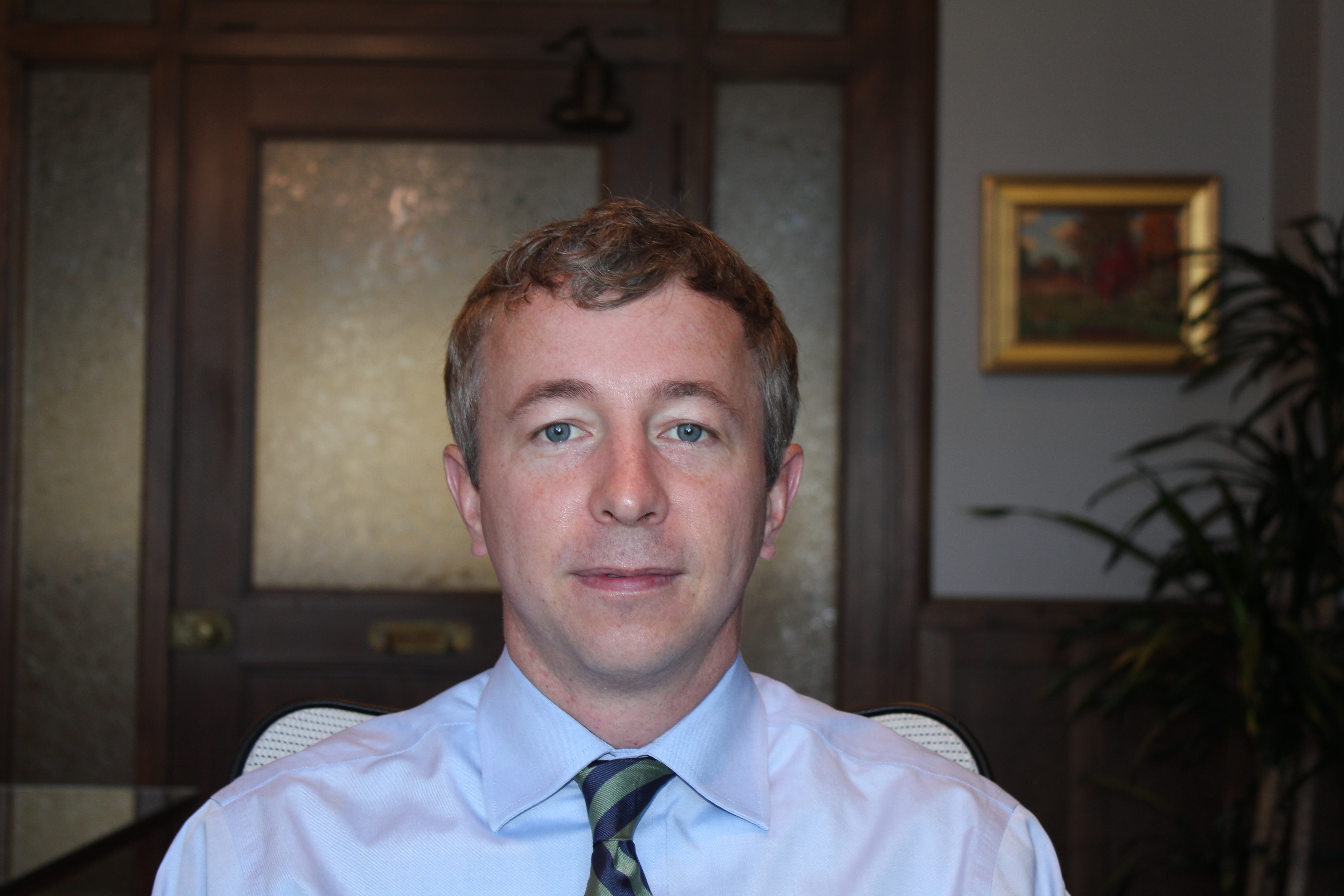
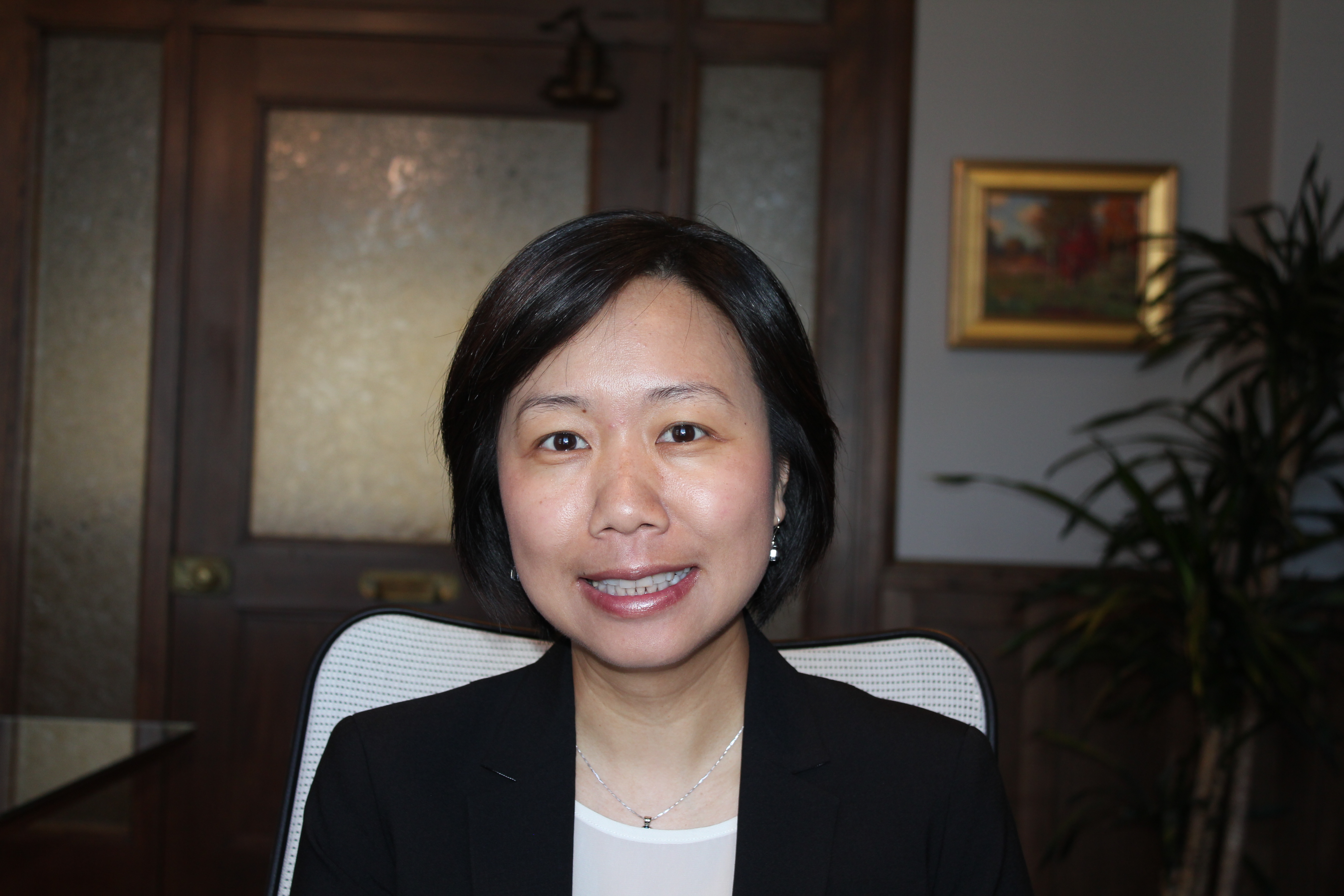
Stuart Rigby and Liping Cai, CFA are Portfolio Managers and Senior Research Analysts at Grandeur Peak Global Advisors, LLC. Mr. Rigby and Ms. Cai run the Grandeur Peak Global Reach Fund — GPROX. In their exclusive interview with the Wall Street Transcript, they detail their extraordinary ability to put high return stocks in their portfolio.
Mr. Rigby explains how his organization with multiple research analysts can find unknown quality companies around the world: “Having global analysts gives us a unique opportunity to connect global dots. Anywhere we go, we usually know who the competitors are regionally and globally, as well as who the players are in adjacent spaces. We’re looking for companies that can stay ahead of their competitors wherever they’re located.”
Ms. Cai states that their global ability to screen and source companies leads to unique investments. “There have been a number of times when we gave a local broker a list of names which we had identified through our internal screening process, where the broker said something like, “I’ve been a broker here for 10 years, but I don’t know several of these companies.” Or, we will visit a company and the management team will say something like, “You are the first U.S. investor we have seen.”
Ms. Cai gives an interesting example from the portfolio: “…the China Medical (HKG:0867) sales army covers over 10,000 hospitals in China, and until recently has mostly been selling products the company in-licensed from Western pharmaceutical companies. In the past couple of years management started to shift their strategy and has spent over $1 billion in acquiring assets and product rights, to gain better control of products.”
To get more top picks from Ms. Cai and Mr. Rigby and see more detail on the investing methodology of Grandeur Peak Global Reach fund, visit the Wall Street Transcript for their exclusive interview.
Peter C. Thoms, CFA, is Founder and Portfolio Manager of Africa Capital Group LLC. In his exclusive interview with the Wall Street Transcript, Mr. Thoms details how he put his lifelong experience living in Africa to work uncovering the top tier of African publicly traded equities.
The reasoning behind an exposure to African securities is based on the future growth in consumer spending for the young population: “…the striking difference between Africa and most of the rest of the world are the demographics and how Africa is by far the youngest continent. Actually, with the average African being only 19 years old, it’s by far the youngest region, and so most of the consumer spending lies in the future for much of the population.”
One result of this youthful population is the explosive growth of leapfrog technology companies: “Safaricom (NSE:SCOM), for example, is a dominant mobile phone service provider in Kenya, and they are catering to a very young and increasingly tech-savvy urbanizing population…The thing we like about Safaricom is that it also is the owner of a system called M-Pesa, which means mobile money in Swahili, and it’s a system by which someone can text, basically text someone money from their M-Pesa account to the other person’s M-Pesa account. ”
Another Kenyan based company that is creating real returns for investors is “KenolKobil (NSE:KENO)…,a company, Nairobi, Kenya-based company, that is a service station owner, or gas stations…this is a theme that plays right into the growing power of the urbanization of the African consumer…KenolKobil is about a $250 million market cap, run by a sharp guy, and we think it’s got plenty of growth potential over the next several years.”
Mr. Thoms reveals the rest of his top picks and details on his investment philosophy in his exclusive interview in the Wall Street Transcript.

Linda Marban, Ph.D., is the President, CEO and Director of Capricor Therapeutics, a publicly traded biotechnology company (NASDAQ:CAPR). Dr. Marban has been with Capricor since 2005 and became its Chief Executive Officer in 2010. She combines her background in research with her business experience to create a path to commercialization for its novel stem-cell cardiac therapies. Dr. Marban began her career in academic science, first at the Cleveland Clinic Foundation working on the biophysical properties of cardiac muscle. That work continued when she moved to a postdoctoral fellowship at Johns Hopkins University. Dr. Marban earned a Ph.D. from Case Western Reserve University in cardiac physiology.
The U.S. Food and Drug Administration (FDA) has granted Rare Pediatric Disease Designation to CAP-1002, Capricor’s development candidate for the treatment of Duchenne muscular dystrophy. In her exclusive interview with the Wall Street Transcript, the CEO stated that “…our first investigational product is a cardiosphere-derived cell — CDC — product known as CAP-1002. It is a progenitor/stem-cell product.” Now that this drug therapy has gotten initial approval, the company may be able to extend its applications to a wide variety of disease conditions including aging.
Cardiac diseases were the target. “The cells that were tested in the CADUCEUS clinical trial sponsored by Cedars-Sinai Medical Center in collaboration with Johns Hopkins were autologous, which means that they were taken from the patient and given back to the same patient…injecting a large number of these cardiac-derived cells changed the size of the scar, and for the first time, we saw therapeutic regeneration, meaning new healthy heart tissue was formed in response to the delivery of the cells.”
But the action that creates the therapeutic regeneration seems to be applicable to all tissue degeneration as Dr. Marban explains in her interview. “We believe that the exosomes may be useful in other indications outside the heart because of their healing properties. They have been shown to reduce scar and cause generation of new tissues. So in almost any disease that has scar generation, we may see potential utility of the exosomes.”
CNN reported recently that this may mean that Capricor has discovered a “fountain of youth.” What does this mean for Capricor investors? The interview with Dr. Marban reveals the company strategy: “Perhaps the most important person we’ve brought in is our Executive Chairman, Frank Litvack, M.D. Dr. Litvack has been involved with three companies with successful exits, most notably as CEO of Conor Medsystems, which sold for $1.4 billion to Johnson & Johnson. We have other members of the executive team who came from Genentech, Amgen and Nektar.”
You can read the entire interview with this exciting company at the Wall Street Transcript.
John R. Benda is a Senior Equity Research Analyst covering REITs for National Securities Corporation, with a focus on the multifamily rental REIT sector. In his exclusive interview with the Wall Street Transcript he details his top picks in REITs and his personal investing methodology for choosing them.
The senior analyst with the National Securities Corporation sees a continuing them of consolidation within apartment rental REITs, driven by record breaking rent rates:
“Basically, it’s like a perfect storm for these guys. Everything is really working in their favor and not against them whatsoever. The biggest drivers are median asking rents, which is at a record high for the nation. You’re at $910 for the whole nation right now, which is up 7.4% year over year. You had the Northeast up 12% quarter over quarter and a 21% year-over-year increase, which is very significant. Even the Midwest, which is kind of a sleepy geographic region, is up year over year…So you’re seeing huge increases in median rents across the country.”
Mr. Benda notes that the rate increases are being driven by record levels of debt within the age range that usually buys rather than rents:
“There’s a negative correlation between the percentage of the population with a bachelor’s degree and the homeownership rate under 35; they’re inverse. As more people get educated, less and less people have the funds to service mortgage debt while they service their student loans.”
This in turn is driving mergers in the REIT sector:
“That’s why you’ve also seen a lot of consolidation of the larger players in the industry. MAA (NYSE:MAA) recently purchasing PPS — that was a very big acquisition, but that’s because they’re so strong. In the multifamily sector, in the last 18 months, 24 months, you’ve had four acquisitions. You had AEC being acquired, IRT (NYSE:IRT) bought TSRE, HME was taken private, and MAA bought PPS.”
To see the entire list of Mr. Benda’s current REIT recommendations, read the entire interview in the Wall Street Transcript.


Jeffrey P. Cornell and Michael S. Jordan are Portfolio Managers and Principals of Johnson Investment Counsel. In their exclusive interview with the Wall Street Transcript, the two highly experienced asset managers develop their philosophy and top picks for their growth portfolio.
Mr. Jordan puts it succinctly: “First and foremost, we are looking for a 10% earnings growth hurdle as we look to find new names.”
The two investors discuss their top picks in the interview: “I think most folks are expecting iPhone 8 to be a fairly substantial improvement over iPhone 7. It should be more revolutionary versus evolutionary. So we’re holding Apple (NASDAQ:AAPL) primarily in anticipation of the new phone release. Apple is our largest position right now.”
Technology stocks dominate the portfolio weighting at the current time. “Our second-biggest holding is Google/Alphabet (NASDAQ:GOOG)…they’re working on that a lot of people don’t even know about. They have a large opportunity in the long-term development of the driverless car. They have a gigantic database of data that can be used for many applications. They are also sitting on a lot of cash.”
Other sectors are not in favor by the team. “Currently, we have no weight in utilities, telecom, REITs or materials…Certainly, in telecommunications and utilities, the growth requirement is difficult to meet. At times, we’ve owned materials; we just don’t have any exposure today.”
For more top picks from Cornell and Jordan read the entire interview at the Wall Street Transcript.