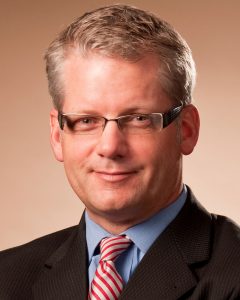
Jon Christensen discusses his firm’s investment strategy. Mr. Christensen says the firm’s portfolios focus on high quality as a business characteristic. He aims to find companies that have a sustainable competitive advantage; companies that can grow, protect and nurture their markets over long and multiple economic cycles. The firm finds these companies by doing intense research.
Full interview available here.
Chief Investment Officer of QCI Asset Management H. Edward Shill II says that once Wells Fargo & Co (NYSE:WFC) gets past the recent accounts scandal, it will be an outperformer, which means right now is a huge buying opportunity for investors.
A somewhat politically incorrect name at this point would be Wells Fargo. They’ve obviously had a scandal where they took advantage of setting up accounts for over 5,000 of their customers that didn’t ask them to get set up, and they’ve had their hands slapped for that, and you know, the world’s all upset with them. They have a wonderful bank franchise. We will get past this scandal, if you will, and I’m going to say, a year from today, people are going to forget that this happened.
And there has been a huge divergence gap between Wells Fargo and the better brethren of the banking industry — say, JPMorgan (NYSE:JPM) or something like that. While I wait, I’m getting a 3.5% dividend yield. I’m only paying 10 times earnings for this company, and I do believe that there will be a closure gap as we get further away from the scandal. The CEO just resigned — Mr. Stumpf — and I think they’re going to start cleansing those demons. The stock will rally, will close the gap versus the rest of the banks, and this will be an outperformer in 2017. So it’s one of our biggest holdings in the financial services group.
I think [the scandal has] created a huge buying opportunity, and it’s created a huge buying opportunity versus the group, so you really kind of want to like the group by itself. But you know, year to date, for example, Wells Fargo was down 16% year to date. JPMorgan is up 4%. I mean, there is a huge gap there. They normally trade, if you did an overlay graph, they would normally trade right in the line with each other.
So that’s an exciting opportunity for us to think that Wells Fargo is going to be able to have a closure gap as you get on the other side of the scandal. This is not a magnitude event like the ExxonMobil (NYSE:XOM); while these incidents are something of that nature, this is not that magnitude. This is 5,000 people, and they got raked over the coals by Congress. Congress had their day in the sun, and we think that the magnitude shift going forward will be a positive for Wells Fargo relative to people’s vision of them and expectations.
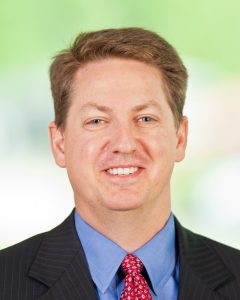
Kevin Walkush discusses his firm’s flagship product, the Quality Growth Fund, which is is a large-cap quality growth product. Mr. Walkush looks for quality companies that are well-stewarded with strong management teams. He defines his strategy as all-weather and long-term.
Full interview available here.
Portfolio Manager Kevin Walkush of Jensen Investment Management says his firm has held Microsoft Corporation (NASDAQ:MSFT) for a long time, as he sees the company as one of the top global cloud service providers.
They are an enterprise and consumer software company, which also provides hardware products such as tablets and PCs. The company’s focus and leading growth driver is the adoption of cloud computing in the enterprise and consumer software markets of which they are a leading market participant.
We think they are one of the top global cloud service providers. People may not realize they were an early market entrant and offered a full suite of cloud services, and that enabled them to establish a strong early position in the market. Now they’re benefiting from that early-mover advantage with a market-leading offering.
Another unique thing about Microsoft I would point to is the company is both an enterprise and consumer IT company, which is unusual. IT companies usually stick to one end market group, but Microsoft caters to both and does it well in our opinion.
…Right now enterprise migration to the cloud is a fundamental change in software, and Microsoft is one of the key leaders driving that. We think Microsoft will benefit greatly over the long term as a result. We believe recent cloud success has shifted investor focus away from concerns about historical PC market weakness. However, we believe the PC market is beginning to stabilize, and the company’s success with Windows 10 is fundamentally changing investor perception of this strong, cash-flow-generating business.
H. Edward Shill II discusses QCI Asset Management. Mr. Shill uses asset allocation to run balanced accounts. He tries to determine if the market is overbought, oversold or in the middle. If it is overbought or oversold, he takes the necessary action with his investments. Mr. Shill thinks the market is currently overbought, so as a result, his equity positions are reduced, and he has a risk-off mentality. Taking this approach provides him with dry powder that he can redeploy when the market becomes sloppy.
Full interview available here.
Cornelis Vlooswijk discusses Robeco and the Afrika Fund. According to Mr. Vlooswijk, despite the difficult periods since the financial crisis, the fund has performed well relative to its competitors. Mr. Vlooswijk pays close attention to reducing risk and having enough liquid stocks in the portfolio. With his investment philosophy, Mr. Vlooswijk starts with top-down analysis to ensure the right country exposure. He then uses a quantitative model to screen individual stocks within the universe. From there, he will do in-depth fundamental analysis to identify which stocks are the right ones to buy. Being in an emerging market like Africa, Mr. Vlooswijk knows there will always be negative developments or news headlines. His advice to investors is to be prepared for that and stay calm.
Full interview available here.
Randy Swan discusses his firm’s Defined Risk Strategy, or DRS. Mr. Swan believes modern portfolio theory is limited. The DRS involves paring options with underlying positions in equities or other assets. Mr. Swan says it all comes down to building a better portfolio with better tools. He says the motto of the Defined Risk Strategy is “always invested, always hedged.” He says the value his firm provides is coming up with a cost-effective way to hedge the portfolio as well as generate income by selling short-term options.
Full interview available here.
J. Jeffrey Auxier discusses Auxier Asset Management LLC. Over the long term, Mr. Auxier aims to beat market indexes, but his first focus is on the power of compounding. Based on this, Mr. Auxier believes it is critical to know the companies he owns. He uses a passionate and persistent daily research effort to mitigate risk. Mr. Auxier is interested in companies with the ability to endure and buys them when they are out of favor. However, if he does not find a compelling risk/reward, Mr. Auxier will remain disciplined to his approach and stay in cash.
Full interview available here.
Chief Investment Officer H. Edward Shill says Corning Incorporated (NYSE:GLW) has a very exciting profile, with a platform between now and 2019 where they will return half of the company’s market cap back to shareholders.
This is a company that makes the cover glass that goes on your iPhone, they make the cover glass that goes on your iPad, they are making a big push in the glass and automotive, and they are with a joint venture with a company called OLEDWorks moving into the OLED lighting business.
And from our perspective, the profile of Corning is very exciting. They have a platform between now and 2019 where they’re going to generate an aggregate somewhere between $25 billion and $30 billion of cash, and give half of that cash to shareholders. And I said $25 billion to $30 billion in cash between now and 2019; the market cap on this company is only $23 billion to begin with. So you’re going to get roughly half of the market cap given back to you in dividends and share buybacks between now and the end of 2019.
That’s a stock that has got a risk/reward ratio of probably 10 up and two or three down from here. So that’s the name that I really don’t care if the market’s overbought or oversold; I don’t care if the economy is going into a slowdown. I think that’s a name that can work very well over the next 18 to 24 months as this cash starts to come back to shareholders.
Robert White discusses Oldfield Partners LLP. As a member of the firm’s global team, Mr. White concentrates on investing in Japan. He is a long-only value investor and runs well-diversified concentrated portfolios. Mr. White looks for stocks that are unloved by the rest of the market. Due to regulatory changes in Japan, companies are beginning to include outside directors in their decision-making process. Mr. White believes this will help unlock the value in these companies and provide shareholders with improved returns on their investments.
Full interview available here.