Ryan J. Donmoyer and Christopher Stern of Bloomberg wrote a story today entitled, Bailout Executive-Pay Curbs Use Loophole-Rich Tax Law. The piece analyzed the latest iteration of the proposed restrictions on executive compensation. The story is a worthwhile read if you are concerned with executive compensation, golden parachutes and or their possible limitation.
Kevin Dobbs wrote an incisive piece for the American Banker that focused on newly hired bank CEOs (Alan Fishman for WAMU and Charles Rhinehart for Downey Financial) and what they typically need to bring to the table. According to Dobbs,
Deep into a pulverizing credit cycle with no clear turning point, newly minted chief executives at banking and thrift companies are increasingly garnering more attention for past experience selling companies—experience that many expect them to have to draw upon soon.Against a backdrop of mounting investor discontent, analysts said, swift action to salvage shareholder value is the task at hand.
Dobbs does not bring anything new to the table but he does offer a good overview.
Given the current turbulent market climate- and the price of oil at present- you wouldn’t think that Transportation would be a space that’s doing very well right now. However, the analysts on our Transportation roundtable this week say that this is exactly the case.
They point to the Dow Jones Transportation Index that is up “probably 9% or 10% year to date versus an S&P that has been down 14%”. Why is this the case? Analyst Todd Fowler of KeyBanc Capital Management tells us:
“In reality, the real driver of the group has been the fact that as diesel prices continued to move up during the first half of the year and as freight demand remained relatively soft, a lot of capacity was rationalized, especially in the full truckload market. So a lot of the marginal players, the small mom and pop trucking fleets that might have five or fewer trucks, either ended up filing for bankruptcy or parking their trucks because it just wasn’t profitable to drive in that environment. The amount of capacity that came out of the market helped the surviving players as there was a flight to quality, to the more financially stable carriers within the space. In addition, there was a shift of freight from the carriers that were no longer in business to the surviving trucking companies.”
For the full Transportation roundtable, including an outlook for where this space is headed and stock picks, click here.
Richard Dean Mergenthaler (University of Iowa), Shrivaram Rajgopal (University of Washington), and Suraj Srinivasan (University of Chicago) published CEO and CFO Career Consequences to Missing Quarterly Earnings Benchmarks(June 27, 2008). For those really interested in key executive turnovers and their potential impact the paper is a worthwhile read. A quick abstract of what the authors found is as follows:
… missing quarterly earnings benchmarks, especially the analyst consensus earnings number, is associated with career penalties in the form of a reduced bonus, smaller equity grants, and a greater chance of forced dismissal for both CEOs and CFOs during the period 1993-2004. These results are obtained after controlling for the magnitude of the earnings surprise, operating and stock return performance, and are significant in a statistical and in an economic sense. Career penalties for failing to meet the analyst consensus estimate are higher for firms that give quarterly earnings guidance and in the post-SOX period. Our evidence suggests that (i) boards appear to react directly to managers’ ability to meet earnings targets or to the information that is reflected in meeting such benchmarks; and (ii) senior managers’ preoccupation with meeting earnings benchmarks might be based at least partly on career concerns.
Download the paper and see for yourself.
Yesterday the board of directors of Unisys UIS (NYSE), the computer services firm, announced that Joseph W. McGrath, the company’s president and CE O, had agreed to step down by year’s end. McGrath had been in his position for three years. Unisys and particularly McGrath have been under intense pressure from shareholders to make major changes at the firm.
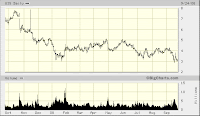 The company has been languishing for sometime now and has seen a decline in revenue over the last few years. Special pressure has been applied by MMI Investments LLP, an activist shareholder who owns over 9% of the firm. Back in January of 2008, MMI wrote an angry letter to Unisys management. A portion of the letter stated,
…we are mystified by management and the board’s inaction in the face of Unisys’ ruinous stock price performance over the past year. We believe Wall Street’s utter rejection of Unisys stock is indicative that the restructuring benefits are not enough to correct Unisys’ dramatic undervaluation. We believe that Unisys has serious flaws in its strategic configuration, which impair stockholder value due to the taint of the secularly declining Technology business and obscure market recognition of the highly-valuable U.S. Government business. Therefore we believe it is crucial that Unisys move immediately to announce the engagement of an independent, qualified investment bank to perform a review of all available strategic alternatives, with a particular focus on the potential realization of the U.S. Government business through a sale, tax-free spin-off or subsidiary IPO. This assignment should include undertaking the prompt execution of whichever transaction or transactions will lead to maximizing stockholder value.
Management at Unisys initially resisted MMI’s efforts but in May after growing pressure from shareholders and a declining stock value the company was forced to relent a bit. Unisys gave MMI’s president , Clay Lifflander, a board seat and as requested by MMI’s January letter the company retained Goldman Sachs to help recommend strategic options for the firm. The steps taken in May ultimately were not sufficient to make the changes in the company as requested by MMI and other shareholders. MMI has continued to place pressure on Unisys to to spin out its government outsourcing division as a new company. The activists finally got McGrath’s head. The change at the top is a positive for the firm but we will have to see who they end up hiring and what he/she intend to do with the firm.For more:Unisys Press ReleasePhiladelphia InquirerCNET AsiaPC WorldInformation-AgeValley WagPhiladelphia Business JournalWall Street 24/7
Michelle Leder of Footnoted.org wrote an interesting entry in her blog yesterday on the issue of executive compensation. Her piece was written in light of the impending bailout legislation from the U.S. Treasury and pressure from parts of Congress to impose some form of limitation on executive compensation for financial firms that might participate in the plan. I highly recommend the quick read.
Nothing really surprising about the news yesterday that Circuit City CC (NYSE) CEO, Philip Schoonover was finally out. The troubled electronics retailer and its CEO have been under intense  pressure for sometime now. Many analysts and others (see earlier blog) have been predicting his demise for more than a year. Schoonover resigned yesterday in the midst of a proxy fight. His resignation appears to be a victory by activist investor Mark Wattles (owns nearly 6.5% of the firm) who has been seeking a solution for the firm’s continuing struggles. The real question is whether or not Wattle’s success in finally getting Schoonover out as CEO will ultimately be just a pyrrhic victory.
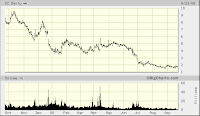 The board named James Marcom, a current member of the board, as the acting president and CEO. He joined the board back in June. He is an ally of Wattles and was originally nominated by Wattles to become a member of the board. The board also appointed Allen B. King as the new chairman. According to a story by Ylan Q. Mui of the Washington Post,
Marcum has held executive roles at two of Wattles’ ventures, retailer Ultimate Electronics and Hollywood Entertainment video rental.
The company is probably still looking to be sold. In a Business Weekstory back in June, Wattles was quoted as saying,
… he wants the company sold as soon as possible.
We will just have to see what Marcom does. I can not see a scenario right now where the company could be sold. According to the sameBusiness Week story,
Whether Marcum decides to sell the company or turn it around, he has his work cut out. He’s taking over amid a contracting economy and credit crunch, when retailers are filing for bankruptcy left and right. “There’s deceleration in all key consumer electronic products,” says Andy Hargreaves, an analyst at investment bank Pacific Crest Securities in Portland, Ore. “With all these headwinds, Marcum doesn’t have an easy job.”
Schoonover over his two year tenure as CEO of Circuit City made a series of management blunders that ultimately may be impossible to come back from. This is one situation investors should pay close attention to.For more:Information WeekCNETBloombergWall Street JournalBarron’s Tech BlogBloggingstocksSeeking AlphaMarket Beat WSJ Blog
Dupont Co. DD (NYSE) the hug chemical manufacturer has shown American industry how succession planning at the top should be managed. Today the company announced that Charles Holli day, a 38 year veteran of the firm and the company’s CEO for the last ten years, will be stepping down as of January 1. The board announced that Holliday will be replaced at the time by Ellen Kullman. Kullman currently is an executive vice president and a member of Dupont’s office of the chief executive. She has been with the firm since 1988. According to Reuters,
“Kullman has been groomed for the top position over the last two years,”
Kullman will be named president and director on October 1. Both Kullman’s background and great success at the firm appear to make her a great fit for the CEO position. According to an AP story,
Revenue in the company’s safety and protection segment increased from $3.5 billion to $5.5 billion while she was group vice president from 2002 to 2006.
Dupont’s succession planning may ultimately serve as a case study for large firms. Keep a close eye on Kullman as she moves to succession and takes over the reins of one of the largest chemical companies in the world.For more:Delaware OnlinePortfolio.comMarketWatchBloomberg
Gamestop GME (NYSE), the red hot video game retailer, has taken tangible steps to handle its tremendous growth and effectively deal with its growing international expansion. Earlier in the month the company reported outstanding results. According to a recent report by Zacks,
(Gamestop’s) second quarter sales were $104 million above the consensus forecast, and EPS beat the consensus estimate by $0.04, which is about 19x our 2009 EPS estimate.
Yesterday the company announced it would split the chairman and CEO positions.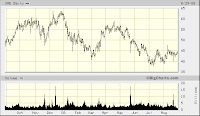 An unusual change for a company performing so well. The company has recognized that to go to the next level it would need to improve its bench and delegate more authority (see press release). The longtime chairman and CEO, R. Richard Fontaine who has maintained his dual role since 1996 agreed to give up his CEO position and remain as chairman. In his place, the company promoted Daniel A. Matteo the chief operating officer. According to an AP story that appeared inForbes,
As part of the changes approved by the board, R. Richard Fontaine, chairman and CEO since the company’s inception in 1996, will relinquish his CEO title to the company’s operating chief, Daniel A. DeMatteo, 60, who has been the chief operating officer since 1996 and vice chairman and COO since 2004.Fontaine, 66, will focus on international operations, acquisitions and strategic development as executive chairman…. In addition, J. Paul Raines, 44, the former executive vice president of U.S. stores for The Home Depot Inc. will become the company’s new COO, effective Sept. 7.
Gamestop seems to be way ahead of the curve when it comes to management change and corporate functioning. The management changes make a great deal of sense and should serve the company well as its moves forward. Keep a close eye on the company.
Today’s New York Times DealBook contained a piece on the continuing struggles Sears SHLD (NYSE), (which today means hedge fund investor Eddie Lambert),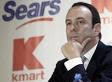 has been facing. Lambert, who at one time was viewed by many with the midas touch, has continued to fail in his efforts to make something out of his huge investment in Sears Holdings. According to The Times piece,
The continued slack performance by the firm had Breakingviews calling for Mr. Lampert to fire himself as chairman. Noting the investor, has not been shy about pushing for the ouster of other executives at firms his hedge fund invests in, the column argued Thursday that he should turn some of that acumen toward his own lackluster performance at the helm of Sears.
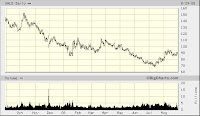 While it is unlikely Lambert would fire himself, he really needs to find new and particularly strong top management with heavy retail expertise, unlike himself, to run the show. Such a change would mean he would have to cede a good part of his power and agree to put in more funds to get the operation going again, if that is even possible.Stay tuned.For more:Bloggingstocks